Lando Norris Claims Pole Position in Madrid Qualifying Masterpiece
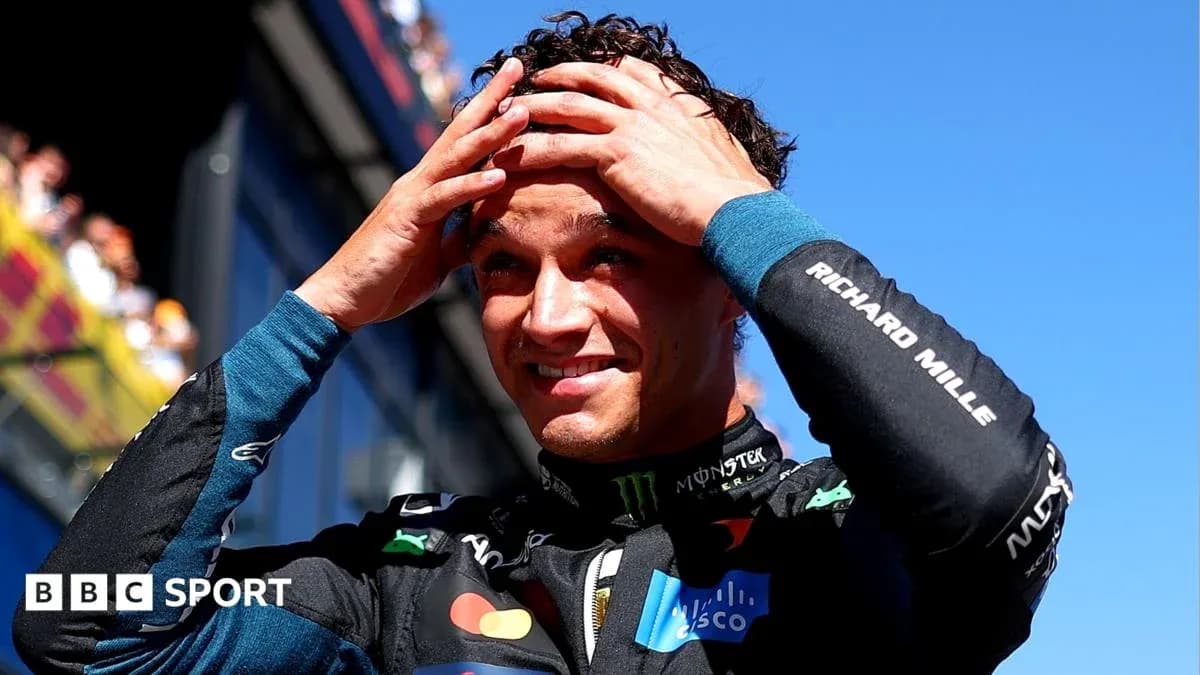
Lando Norris did not so much steal pole in Madrid as rip it out of a race that looked destined to belong to someone else.
On a brand-new street circuit snaking around a convention centre by the airport, in a car that was not supposed to be the class of the field, he produced a qualifying lap that left even hardened paddock veterans searching for the right superlative. Andrea Stella, who has spent decades poring over telemetry from Michael Schumacher and Fernando Alonso, settled on one: “a masterpiece”.
The numbers back him up – and then some.
A lap from nowhere
Between his first and second runs in Q3, Norris found 0.701 seconds. In modern F1, with fuel loads fixed and track evolution modest, that kind of jump does not happen. Not at this level. Not at the front.
Yet there he was, hauling the McLaren from the fringes of contention to a pole that had never truly looked on the cards. And he did it by 0.011 seconds over Kimi Antonelli’s Mercedes – a wafer-thin margin that tells only half the story.
Because Norris then admitted he made a sizeable error at the final corner. Stella put the time loss at 0.35 seconds. In other words, this was a pole lap that could have been a demolition.
“The most impressive thing,” Stella said, “is the fact that it's a pole position despite having lost 0.35secs in the last corner, which means that it would have been a pretty convincing pole position without this issue.”
Norris thought he was headed for the wall.
“I thought I was in the wall and that was just from over-pushing,” he said. “I got a bit excited in the car and I just over-pushed the entry.”
He got away with it. Barely. The mistake turned a crushing statement into a knife-edge triumph, but it did nothing to dim the quality of what came before.
Precision on a knife-edge
What made the lap so striking was not one outrageous moment of bravery. It was the relentlessness of its accuracy.
Stella talked about “the precision – the braking, the speed you carry in entry, the striking of the kerbs, the going on power. Everything is executed with a pretty unique level of precision.”
Norris felt it from the cockpit.
“Most tracks, you know what is perfect, what you really want to achieve in a perfect lap,” he said. “Until the last corner, I think I matched that perfection level in pretty much every corner.
“So, yeah, it's a dream to achieve a lap like that. So it was easily one of the best laps I've ever done.
“Everything came together perfectly. I got the timing of everything so dialled in, with the kerb hits, how you hit the kerb, brake points, all of these things. It's so easy to make a mistake on a day like today and a track like this, but really I just got it right on the most important lap I had to do.”
He did it without the crutch most drivers rely on: the live delta on the steering wheel, constantly telling them whether they are up or down on their previous effort.
“I don't need my delta,” Norris said. “I can feel when I do what I need to do and when I get a good exit, when I'm on the limit of things. When I'm kind of a bit uncomfortable in corners is normally when it's going pretty well.
“So, I could feel it and I feel like I just made all the right things. My feet were doing what I wanted, and that's normally when things are going well.”
On a circuit described as “very high risk” and with “less margin than Monaco” by George Russell, that level of instinctive commitment is not for the faint-hearted.
A brutal new arena
The Madring layout is hardly glamorous. The track threads its way around an exhibition centre on the outskirts of Madrid, boxed in by walls that loom close and then angle back towards the racing line on corner exits. From the air it looks like an improvised loop around a trade show. From the cockpit, it is something else entirely.
The barriers punish even small misjudgements. Two red flags in final practice – one courtesy of Lewis Hamilton, another from Haas rookie Oliver Bearman – seemed a warning of what qualifying might become.
It never did. Against expectation, the session ran without interruption. No carbon fibre scattered, no yellow flags. Just drivers dancing millimetres from concrete at speeds that made Russell’s “very high risk” assessment feel like an understatement.
The race may not be so kind.
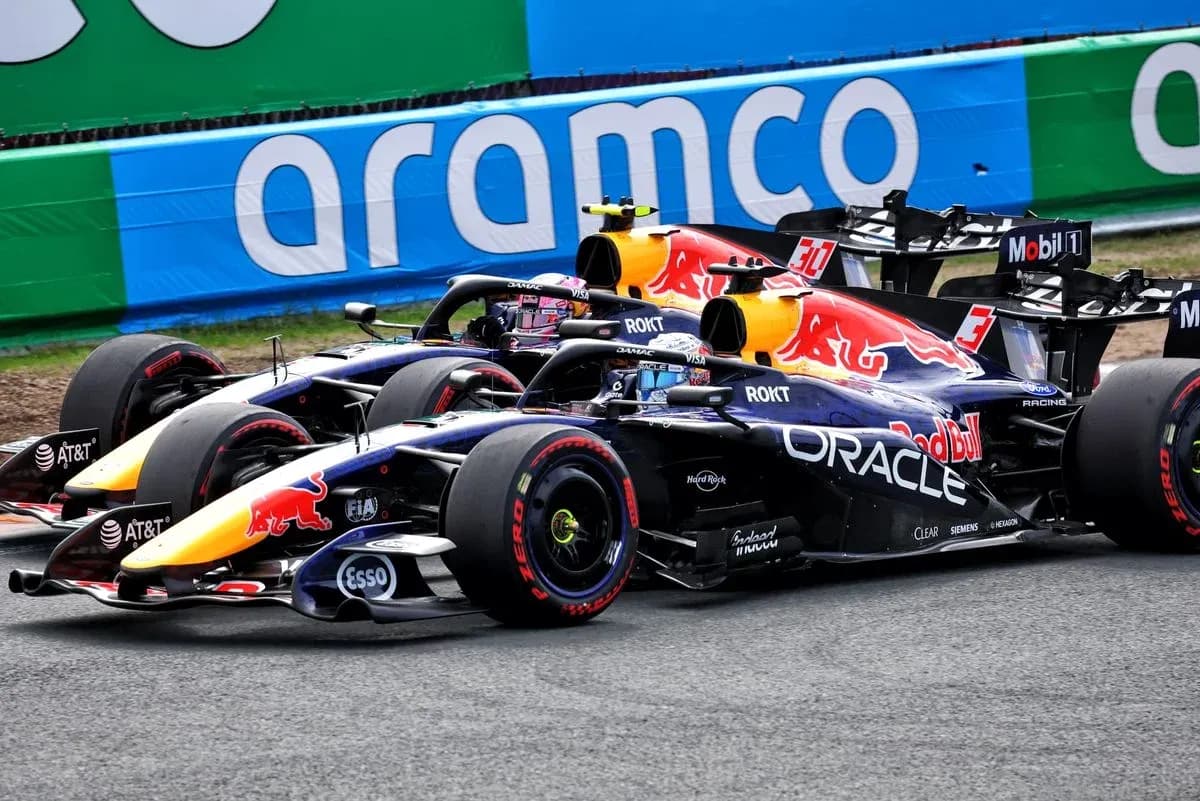
Overtaking looks brutally difficult. The straights are short, the braking zones arrive already loaded with steering angle, and the few corners that might invite a move shut the door with awkward cambers and tight exits.
Max Verstappen, who will start third, did not bother sugar-coating it. “You can't overtake,” he said. “In some places, the braking zones, like, they need to learn that it should never be that you have to steer, that you have to combine under braking, because it doesn't allow any kind of overtaking.”
Antonelli echoed the frustration. “It's going to be tight. I spent two laps behind the Williams, trying to painfully get past. But it's just really difficult.
“And when you're behind, it's tough. Yeah, the only thing you can do is try to put pressure on the car in front, trying to make them do mistakes or make them deg a bit more.”
Norris, for his part, called it “a little bit of everything” – a technical, varied challenge that tests every part of a driver’s toolkit. As a qualifying venue, it delivered. As a racing circuit, it may yet come under heavy scrutiny.
A pole that masks a weakness
This is Norris’ third pole of the season. The previous two – in Hungary and the Netherlands – turned into dominant victories, races in which McLaren held a clear pace advantage and simply drove away.
Madrid is different.
“Tomorrow is going to be a very tough day,” Norris said. “It's not going to be as straightforward as in Zandvoort and Budapest. There we were the quickest car. Yes, I'm on pole now, but we're not in the quickest car. It took a perfect lap to get me on pole by 0.011secs today.”
That perfect lap came despite a heavily compromised build-up. Norris missed almost all of second practice with a gearbox problem, losing the very session teams lean on for long-run work and tyre understanding.
Not only does that make the pole even more impressive, it strips McLaren of valuable race data on a surface that is new to everyone.
The track is smooth and high-grip, the pit lane the longest of the year – Norris jokingly called it “6km long”, a lane bizarrely split in two by a building. On paper, that combination screams one-stop strategy: pitting is so expensive that teams will do almost anything to avoid a second visit.
Tyre degradation may tear up that plan. Early runs showed rubber falling away sharply if drivers pushed too hard too soon. Antonelli summed up the likely response: “Probably is going to be grandmother driving in the first 10 laps – we saw how steep the degradation can be, especially if you push too early.”
Nursing tyres while defending track position on a circuit where a single lock-up can send you into the wall is a delicate balancing act. Norris knows he will be walking that line from the moment the lights go out.
A rare chance, and a long night ahead
If overtaking is as painful as the drivers suggest, pole here is worth more than usual. Even in a car that may not be the outright fastest, Norris has a golden chance to bank a third win of the year and slice into Antonelli’s championship lead.
The ingredients are clear: track position, tyre care, and mistake-free execution under relentless pressure from a Mercedes and a Red Bull that expect to be stronger on race pace.
“As he put it: “It's a long race, it's a new track. You've got to know what corners to push, what corners not to push, all of these different things, what the battery's then going to do.
“There's a lot of stuff that I've got to spend my time doing tonight. So, it's probably going to be a late one to try and get ahead of the game in some sorts. But the main part of the job was done today, so that's the bit I'm most happy about.”
The masterpiece is on the board. The question now is whether Norris and McLaren can turn one of the laps of the season into the kind of victory that changes the shape of a championship.