Lando Norris' Podium Finish Marred by Virtual Safety Car Controversy
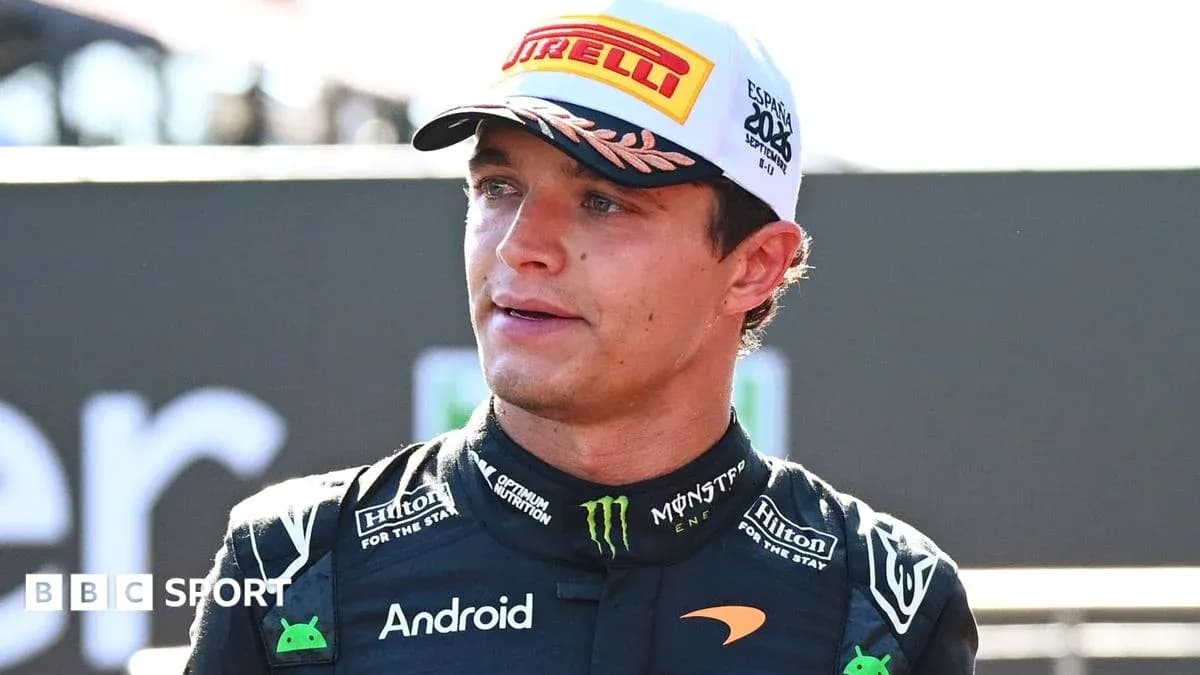
Lando Norris walked away from Madrid with a podium, a furious sense of injustice and the feeling that a race win had been snatched away by a line of code.
He called it “insanely unlucky”. It felt worse than that.
A masterpiece undone in seconds
This was supposed to be Norris’ day. Pole on Saturday, described by McLaren boss Andrea Stella as “a masterpiece”, turned into controlled dominance on Sunday. Thirteen laps in, the orange car was gone, more than six seconds clear of Kimi Antonelli’s Mercedes and dictating the Spanish Grand Prix from the front.
Then came the moment that changed everything.
As Norris swept past the pit entry to start lap 15, Lance Stroll’s Aston Martin stopped in the run-off at Turn 20. A Virtual Safety Car was triggered almost immediately. Norris was already committed; every rival behind still had the option to dive for the pits.
Antonelli and Max Verstappen didn’t hesitate. Both stopped for hard tyres under the VSC, banking a time gain that would define the race.
By the time Norris came back around, the VSC had ended. No reduced-speed pit stop. No discount. Just full-race pace and a brutal calculation: a stop under green is roughly 11 seconds more expensive than one under VSC.
The lead evaporated in a single tour of the Madring.
The only man without a choice
That was the sting. Every other driver had a decision to make. Stop or stay out. Gamble or hold track position.
Norris had nothing.
“I was the only one on the whole grid that didn't get the chance to do the pit stop,” he said. “That's just unfortunate… It's probably one of the first times a win has been lost simply because of it.”
By the time McLaren serviced his car – and even that went wrong, with issues on both right-hand tyres costing another five seconds – Norris rejoined more than 15 seconds behind Antonelli and over nine behind Verstappen.
On raw pace, he was still the fastest man out there. On this circuit, that barely mattered.
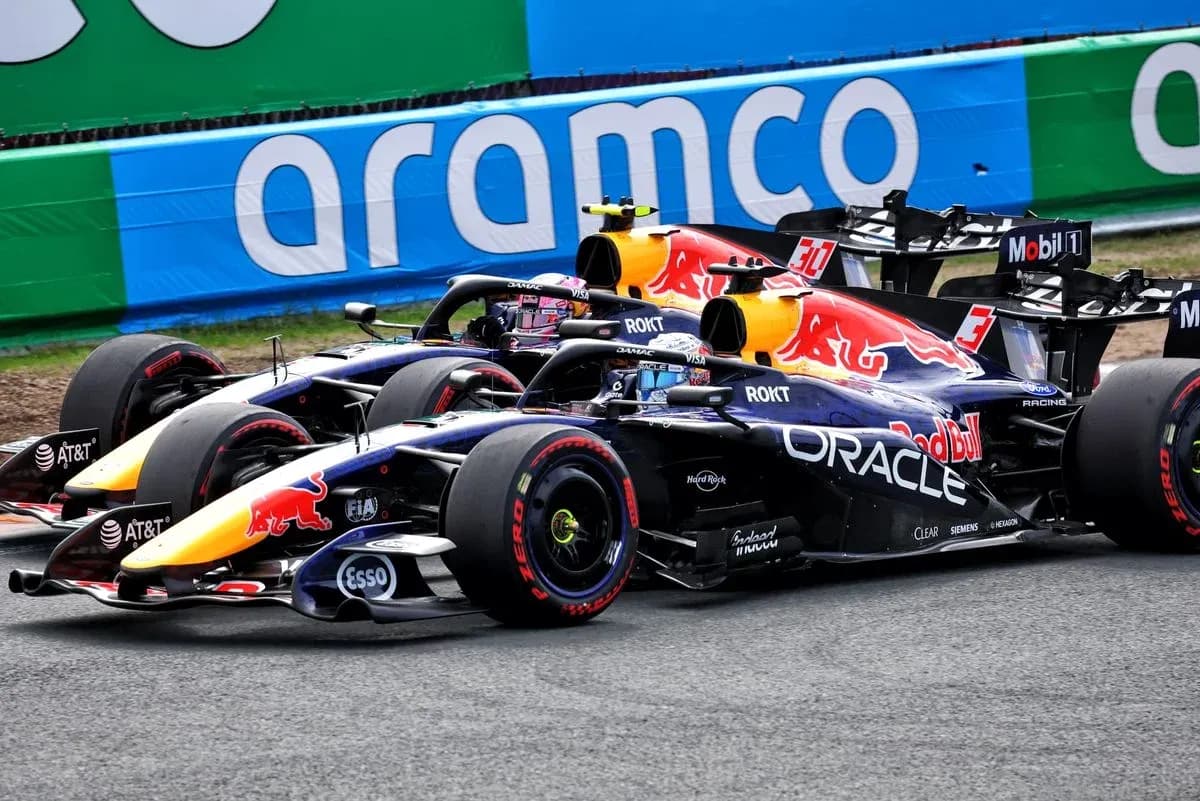
He hunted Verstappen down, erased the gap and filled the Red Bull’s mirrors. But the new Madring street layout, tight and awkward in all the wrong places, left him boxed in.
“In the race, you're just stuck behind,” Antonelli admitted. Norris lived that reality all the way to the chequered flag, trapped in third with a car quick enough to win.
Even the winner says he didn’t deserve it
Antonelli crossed the line first, extended his championship lead to a commanding 81 points and then promptly acknowledged the elephant in the room.
“If I have to be realistic and honest, today we didn't deserve to win,” he said. “Lando deserved to win, and so I think our result was probably P2 or even P3.”
It was a rare, blunt confession from a driver who benefitted most from the timing of the VSC. The Mercedes had the result, but not the moral victory.
Norris, meanwhile, was left staring at the rulebook and the track map.
A track that won’t let you race
On most circuits, with his pace advantage on the hard tyre, Norris would have fancied his chances. Catch Verstappen, clear him, then go after Antonelli. Simple in theory.
Not here.
The Madring’s pit entry sits before the final corner. Norris was already in that last turn when the VSC was called. One corner later, on the next lap, it ended – with him at Turn 21, again just before the pit entry. Antonelli, having already stopped, was behind in Turn 19.
The margins were cruel. The layout made them decisive.
Norris did not hide his frustration with the design.
“I don't know how someone looks at this design and goes, ‘Mint,’” he said, skewering the circuit with one line. He did, though, acknowledge “a lot of opportunity” to improve it for next year.
The race itself made the case for change. A fast car, on the right tyre, with clear speed over its rivals, could do nothing once it arrived in traffic. The Madring, on debut, produced a strategic lottery and a tactical stalemate.
Could McLaren have done anything else?
Once the VSC appeared, McLaren’s options were limited. Stay out on worn mediums while Antonelli and Verstappen ran fresh hards? Or pit at the first opportunity and hope the undercut, plus pace, dragged Norris back into contention?
Norris was clear: he had to stop as soon as he could.
“I had to come in at the end of the lap because it was the only chance,” he said. The medium was “destroyed”. The hard, as the race proved, was “amazing”.
McLaren’s modelling agreed. “You have to accept the fact that now you are on relatively used medium tyres,” Stella explained. “And the people behind you will be on new hard. So you're never going to open a gap on people on new hard.”
The more uncomfortable question came earlier: should McLaren have anticipated a VSC and pitted Norris before it was deployed?
“In hindsight, that would have been a good idea,” Stella admitted.
But the Madring’s pit lane is the longest on the calendar. A stop under green costs 27 seconds. Call it wrong, pit from the lead without a VSC, and you hand the race away on a hunch.
“So a good rule,” Stella said, “is to respond to what is a fact, to what is the real condition of the circuit.”
On Sunday, the facts arrived one corner too late.
A rule under the microscope
Norris’ anger was not just about one race. He and Verstappen both said this exact scenario – a VSC of such short duration that only one driver, usually the leader, is robbed of the choice to pit – has been raised repeatedly with the FIA.
“I've won from it in the past, I've lost from it in the past,” Norris said. “Over the course of a season, it's hard to know if it's a good thing or a bad thing. It probably equals out over time. Of course, it just hurts more, the fact that I lose a win.”
His frustration cut deeper with one final line: “There's literally nothing I could do as a driver today to do a better job.”
Verstappen, who has seen title fights shaped by safety car timing before, expects the debate to return behind closed doors. “We'll probably talk about it in the next briefing and see if there is anything that can be done,” he said.
Stella went further, suggesting the sport may need to look at the VSC itself.
“Perhaps there's a wider reflection that the Formula 1 community should apply as to whether you keep things like they are or you introduce ways of maintaining more fairness,” he said. One idea he floated: a minimum VSC duration of at least one full lap, ensuring every driver experiences the same conditions and has the same strategic choices.
Or does Formula 1 simply “keep it in the hands of the gods, and sometimes you are lucky, sometimes you are not”?
Stella admitted he is “puzzled” about the right answer. Any change would have to grind its way through the Strategy Advisory Committee, then the F1 Commission, then into the sporting regulations. It will not be quick, unless the FIA and Formula 1 itself decide the current system can’t stand.
A win lost to timing – and a warning for the title fight
For now, the record books will show Antonelli as the winner in Madrid, Norris third, Verstappen wedged between them. They will not show the six-second cushion, the destroyed medium tyres, the 11-second VSC delta or the five seconds bled away in the pit box.
They also won’t show the look on Norris’ face as he processed a race that slipped away not through a mistake, not through a lack of speed, but through a timing quirk he could neither predict nor control.
Antonelli walks away with an 81-point lead and the comfort of a championship that looks increasingly secure. Norris leaves with a car quick enough to challenge, a team that executed almost everything right, and a stark reminder that in this era of hyper-controlled racing, sometimes the most decisive move of all belongs not to a driver or a strategist, but to a virtual safety car delta on a marshal’s screen.
If this is how wins can be lost, how many titles might one day turn on the same invisible switch?