Kimi Antonelli's Historic Win at Monza
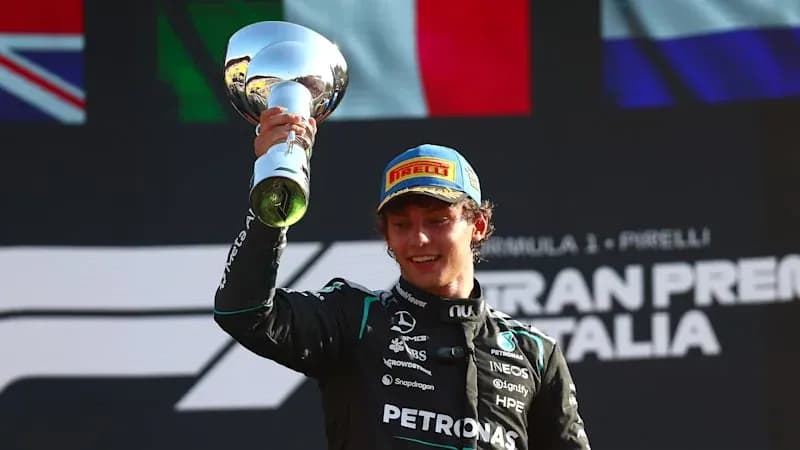
Kimi Antonelli arrived at the grid a distant 19th, buried in the noise and heat at the back of the pack. He left Monza a national hero.
On a day that swung wildly between chaos and catharsis, the 20-year-old Italian tore through the field to win his home Grand Prix, fending off Mercedes teammate George Russell in a breathless finale to one of the standout races of the 2026 season.
By the time he crossed the line, the Autodromo Nazionale Monza was shaking.
An Italian finally conquers the Temple of Speed
Monza has waited a long time for this. Not since Ludovico Scarfiotti in 1966 had an Italian driver won here. Generations have come and gone through the old royal park, flags waved, hearts broken. On Sunday, the drought ended.
Antonelli started marooned on the penultimate row, his afternoon apparently destined to be one of damage limitation. Instead, he produced the drive of his life. The circuit’s long straights and heavy braking zones, the very characteristics that make Monza the “Temple of Speed”, became his hunting ground.
Lap after lap, he picked off cars. The early chaos helped, but it did not define him. His racecraft did.
By the end, as he stood on the podium, he was wiping away tears, struggling to process what he had just done.
“Unbelievable. I am so happy. I could never have imagined to be here today. We managed to pull it off, and I am really happy,” he said afterwards, still sounding more stunned than triumphant.
To grasp the scale of the achievement, only John Watson has ever won from further back on the grid, storming from 22nd to victory at the 1983 United States Grand Prix. That is the company Antonelli now keeps.
Russell’s nightmare twist
For Russell, this was supposed to be straightforward.
Pierre Gasly had claimed a superb maiden pole and dared to dream of repeating his shock Monza win from six years ago, but his Alpine simply did not have the pace to live with the Mercedes. Russell pounced early, seizing the lead and quickly settling into a rhythm that screamed “comfortable victory”.
Then Monza bit back.
In the opening laps, Charles Leclerc slammed into the barriers in a huge accident that silenced the tifosi before sending them into a different kind of hysteria. The impact mangled the barriers and forced a 30‑minute delay while marshals and officials repaired the damage.
The restart reshuffled the deck. It dragged Antonelli into play. It pulled Oscar Piastri into contention. And it turned what looked like a controlled Mercedes one‑two into a strategic minefield.
The two Silver Arrows duelled relentlessly once racing resumed, trading sector times and inches of tarmac. Russell held track position, but the tension inside the Mercedes garage grew with every lap.
Then Lance Stroll triggered a virtual safety car. That was the moment.
Mercedes rolled the dice, calling Antonelli in for a stop. Russell stayed out, left exposed on ageing tyres as his younger teammate rejoined with fresher rubber and clear intent. The gap shrank. The pressure rose. The outcome flipped.
Russell defended, but the momentum had turned. In the final laps, Antonelli closed, attacked and broke his teammate’s resistance, snatching the lead and the win that had seemed nailed on for the Briton.
Russell kept his composure in front of the cameras, but did not hide his surprise.
“I thought we were both going to stay out, I was surprised to see him pitting,” he admitted. “In the end, it was a roll of the dice both ways.”
On this occasion, the gamble landed in Antonelli’s favour and left Russell with a bitter second place.
Verstappen claws, Piastri slips
Behind the Mercedes drama, Max Verstappen did what Max Verstappen so often does: he found a way.
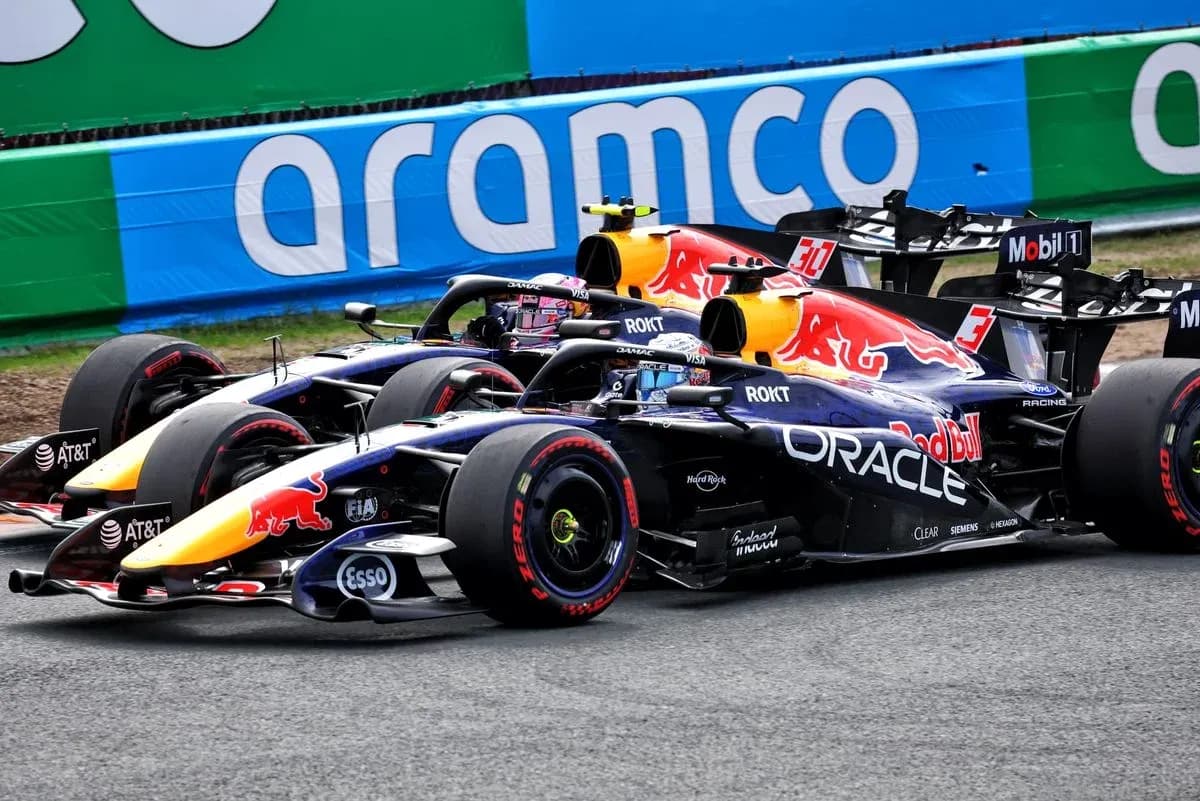
The Red Bull driver battled fiercely with Oscar Piastri, the pair locked into an extraordinary fight for the final podium spot. Piastri had been thrust into the frame by the Leclerc crash and the ensuing strategy reshuffle, and for a long stretch he looked capable of standing on the Monza rostrum.
Verstappen refused to yield. He harried, probed, and eventually forced the door open, grabbing third and slamming it shut before Piastri could respond.
Just when the Australian thought he might salvage fourth, another blow landed. In the dying seconds of the final lap, his McLaren teammate Lando Norris swept past, demoting him to fifth and twisting the knife on an afternoon that had promised far more.
The tension between the orange cars had been simmering. Norris launched an aggressive move on Piastri earlier in the race, the pair running perilously close.
“He pushed me off track,” Norris complained over the radio. “That was dangerous.”
McLaren’s engineers quickly stepped in, reminding Piastri to keep it “clean racing”, a pointed message in the heat of battle. The Australian, chasing his first podium since finishing third at the Miami Grand Prix in May, could only watch as his chances evaporated in the final corners.
For a driver desperate to turn strong performances into silverware, fifth at Monza will feel like a missed opportunity, not a result to savour.
A day Monza will not forget
Around them all, the old circuit did what it always does: it amplified everything. The slipstreams, the lunges into Turn 1 and 2, the roar from the grandstands as cars darted through the Ascari chicane and blasted down to Parabolica. Monza’s 5.793km layout, 53 laps of high-speed risk and reward, turned a routine Sunday into theatre.
David Croft captured the mood in the commentary box as the chequered flag fell: “You can’t script things like that.”
He was right. You do not script an Italian, starting 19th, winning at Monza for the first time in 60 years. You do not script a teammate denied by a strategy call that will be dissected for weeks. You do not script a young Australian watching a podium slip away in the final seconds.
You just watch it, feel it, and wonder what this race will mean for the rest of their season.