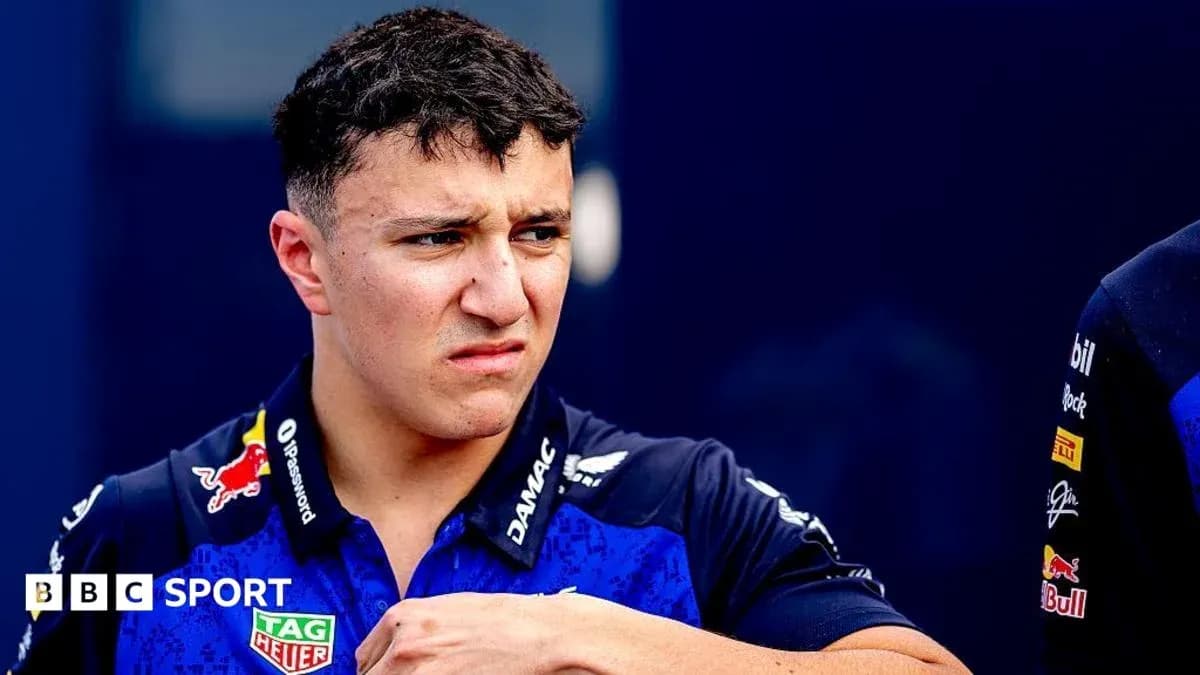
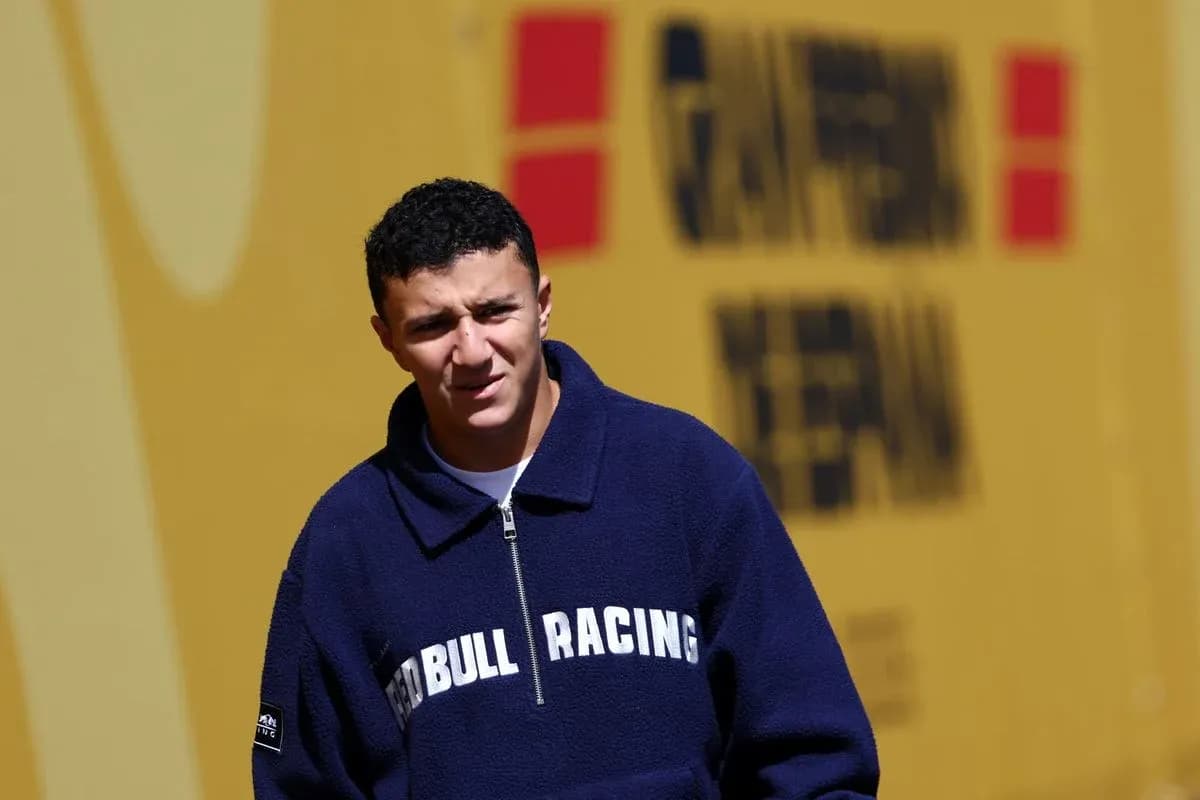
Kimi Antonelli: Italy's Hope for Formula 1 Glory
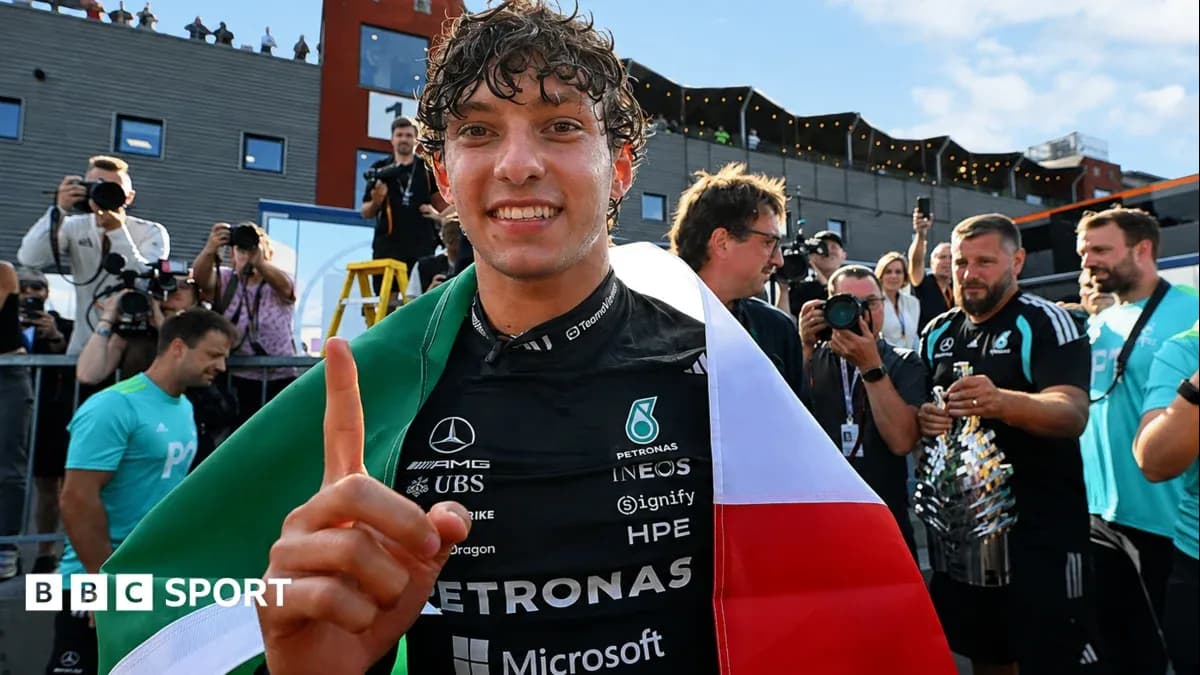
At Monza, the flags tell one story. The whispers tell another.
The grandstands are drenched in red, the old hymns to Ferrari rolling off the terraces as they always have at the Temple of Speed. Yet the driver carrying Italy’s greatest hope of a world champion in more than seven decades sits not in a scarlet cockpit, but in a silver one.
Kimi Antonelli, 19 years, seven months and four days when he became the youngest championship leader in Formula 1 history with victory in Japan back in March, arrives at his home grand prix with a 59-point cushion and six wins already banked this season. He has led the standings ever since.
He does it for Mercedes.
Ferrari versus the future
For Thomas, born and raised in Monza, this is a conflict of the soul.
“Ferrari is my heart,” he says, standing by the circuit that has defined his town. Nearby, Emanuele, here with his daughter Matilde, doesn’t even try to dilute it. “It’s a religion. In Italy, we do support other teams and other sports, but there is only one Ferrari.”
That is the core of the tension. In Italy, Ferrari is not just a team; it is the sport. The joke that the Scuderia’s team principal matters almost as much as the Pope carries a sting of truth. Maranello is a spiritual centre as much as a factory.
When a Ferrari driver wins the world title, the country erupts. Adrian Hussain, a member of the Scuderia Ferrari Club Silverstone and half-Italian, has seen it.
“It’s like the second coming effectively; everyone’s in the streets singing, dancing, church bells are ringing. It’s a party in the streets.”
Those bells last tolled for a Ferrari world champion in 2007, when Kimi Raikkonen stole the title by a single point. Italy’s own wait stretches much further back: Alberto Ascari, back-to-back titles in 1952 and 1953, draped in il Tricolore. Since then, the idea of an Italian world champion has felt like folklore.
This year, that myth has a name and a number on the side of a Mercedes.
A new kind of Italian idol
Antonelli’s rise has forced Italy to reconsider its rules of allegiance.
“Antonelli is disrupting the traditional rules of fandom in Italy,” says Giulia Toninelli of La Gazzetta dello Sport. His “strong personality”, she argues, has cut through the old tribal lines, especially among younger fans. The badge on the nose of the car matters less than the flag on his racing licence.
In the Monza fanzone, that generational split plays out in cotton and polyester. Alessandro wears Ferrari red from head to toe. His girlfriend, Emma, is in Mercedes silver.
“Of course, I am a little bit of a Ferrarista because I’m Italian. But honestly, I love Kimi, I support him,” she says.
If Antonelli seals the title this year – with the finale potentially at Imola, just 25 miles from his hometown Bologna – both of them agree on one thing: it would mean “Italy is back on top”.
Marco Melandri, a five-time MotoGP race winner, sees it too.
“I think Kimi is living the dream, even of the Italian fans,” he says on the Chiacchiere da Box (Paddock Chatter) podcast, which he co-hosts with 2012 GP2 champion and F1 pundit Davide Valsecchi. “But in Italy, a lot of people are very close to Ferrari, they are pushing for Ferrari. So sometimes they are fighting themselves to understand, to choose who is their favourite driver. But I think Kimi is doing something amazing.”
Valsecchi nods in the same direction.
“We are loving it. It’s a big surprise for everyone, knowing that an Italian driver, so young, is leading the championship, is driving so well, and is mentally so strong. So, at the moment, everything is perfect for us.”
Perfect, that is, apart from the colour of the car.
Raised in silver, coveted in red
Antonelli has been a Mercedes project since the age of 11. The team has grown around him, protected him, pushed him, and this year handed him the keys to one of the most pressurised seats in sport.
After just a single season in Formula 2, Toto Wolff moved decisively. When Lewis Hamilton chose Ferrari in a blockbuster switch for 2025, Mercedes didn’t scour the market. They went to their teenager.
The early F1 education was brutal. Last year’s debut campaign brought a bruising European run: four retirements, only three points, and a final position of seventh in the championship. The raw speed was obvious; the scars came with it.
Mercedes never let him face it alone. When an 18-year-old Antonelli crashed in his first practice session at Monza two years ago, Wolff’s voice came over the radio almost instantly: “All good, Kimi. All good.”
For Toninelli, that environment is everything.
“I think Kimi is in the right place at the moment. Mercedes is a family he has known for a long time, one that has nurtured him as a driver and given him a level of protection that would be impossible for him to have at Ferrari right now.”
Valsecchi goes further. Distance from the “extreme” edge of the Italian fanbase, he believes, is a blessing.
“Sometimes in Italy, we lack a bit of patience. We just push for you when you are strong and then underline with red pen every time as soon as you make little mistakes.
“For this reason, as a rookie, it is better to be away and to be on another side, and then come to Ferrari only when you are a big man with already a championship and a complete driver.”
The implication is clear. If Antonelli does one day wear red, he should arrive as a finished article – and perhaps as a world champion.
Chasing records, dividing homes
If he closes this title out, Antonelli will do more than end a 73-year Italian drought. He will rewrite the age records of the sport.
Sebastian Vettel was 23 years and 134 days when he became the youngest world champion in 2010. Antonelli would beat that by three years.
Not everyone in Italy is sure how to feel about that scenario. Daniele, at Monza with his sons Tommaso and Demis, weighs it up.
“We support Hamilton and Leclerc – we support Ferrari,” he says firmly. The youngest, Demis, leans closer, almost conspiratorial, and admits Antonelli is “really good”.
Thomas, the Monza local, wrestles with the same hierarchy.
“I’m happy for Kimi, of course. But I’m not supporting him like Ferrari, because Ferrari is up there,” he says, hand raised high above his head.
The numbers on Antonelli’s season demand respect regardless of allegiance. He became the youngest polesitter in F1 history, converted that into a first win in China in March, then added the Monaco Grand Prix – the most prestigious race on the calendar – to his collection.
The blips stand out only because there are so few: an engine failure in Barcelona, 15th at Silverstone, and now a grid penalty at Monza for taking a new power unit that will send him to the back on Sunday.
Even so, his lead has held. Victory in Belgium, podiums in Hungary and Zandvoort, and a steady stream of points have given him breathing room over Mercedes team-mate George Russell and Hamilton, both locked together on 183 points.
Inside the Ferrari community, there is no hostility, Hussain insists.
“It would be very nice to have an Italian driver in Italian colours winning races and championships. Everybody within the club, certainly in our group chats, everyone’s supportive of Kimi winning races. There’s no animosity towards him.”
Melandri can already picture the next step.
“It should be a dream to see Antonelli get a victory in Ferrari in the future. That’s for sure.”
Leclerc, Hamilton and the shifting centre of power
The emotional weight of Ferrari right now rests on Charles Leclerc’s shoulders. The Monegasque has been the tifosi’s adopted son since 2019, fluent in the language, steeped in the culture, and relentless in his stated desire to bring titles back to Maranello.
He has signed a long-term deal. He has won twice at Monza. He has 162 grands prix and nine Ferrari victories to his name.
Yet questions are beginning to creep into the red sea.
“I start to see, after many years, for the first time, some fans start to say, maybe he’s not as strong as we think before, because Hamilton is doing better than him, and Antonelli is doing much better with another car,” says Melandri.
At the Belgian Grand Prix in July, that dynamic played out in a lighter moment. After Antonelli had been seen with five-time Grand Slam champion Jannik Sinner, BBC F1 correspondent Andrew Benson asked him who, out of the two, is more famous in Italy.
Antonelli didn’t hesitate. He pointed at Leclerc, sitting next to him.
“It’s Charles. He’s probably the most famous man in Italy right now.”
It was a joke, but it cut to the heart of Ferrari’s current reality: Leclerc is still the face of the Scuderia, still the central figure in the country’s racing identity. Yet there is a new Italian star, and he is doing his winning elsewhere.
Monza’s dream scenario
This weekend, the script is complicated. Antonelli’s power-unit penalty means he will start from the back. Ferrari, on home soil, with Hamilton and Leclerc, have a head start.
On paper, the tifosi want a red one-two. On emotion, many of them also want a charge from the teenager in silver.
If Antonelli can slice through the field and reach the podium, would a Ferrari one-two with the Italian prodigy in third be the perfect compromise?
“Of course, sharing the podium with a Ferrari would make it even more special, but regardless of that, he will have the full support of his fans,” says Toninelli.
“Part of the Italian audience may indeed favour Ferrari over Kimi, while another section may feel the opposite, but that won’t stop the Italian celebration at Monza, which will bring both fanbases together.”
The bells in Maranello have not yet started to ring. The flags at Monza still fly red. Somewhere in between, an Italian in silver is rewriting the country’s racing story – and forcing a nation to decide what matters more: the colour of the car, or the colour of the flag on the top step.