Kawhi Leonard's Return to Toronto After NBA Sanctions
There’s a familiar character in too many pro locker rooms: the uncle, the cousin, the childhood friend who suddenly becomes “management.” Trusted with the money. Trusted with the future. Trusted, until everything blows up.
In Kawhi Leonard’s world, that figure was Uncle Dennis.
Dennis Robertson has been a shadow presence in NBA circles for years, a man with a hustler’s reputation and a star client whose quiet dominance gave him leverage. On Wednesday, the league finally drew a hard line. As part of sweeping sanctions against the L.A. Clippers for circumventing salary-cap rules, the NBA banned Robertson from any dealings with teams, players or employees for five years.
The hammer didn’t fall out of nowhere. Around the league, executives had traded stories for years about the asks coming from Leonard’s camp. Those stories turned into a formal record after a year-long investigation by law firm Wachtell, Lipton, Rosen & Katz, which detailed how Robertson pushed for benefits that live far outside the lines of the Collective Bargaining Agreement.
- Equity.
- Housing.
- Private transportation.
- Off-court income.
- Endorsement deals tied to team business.
He tried it with the Raptors. He tried it with the Lakers. He tried it with the Clippers.
Only one of those teams said yes.
Raptors hold the line, Clippers cross it
Back in 2019, Leonard hit free agency as the league’s most coveted prize. Fresh off a Finals MVP and a title run that rebranded the Toronto Raptors as a serious destination, he could have written his own ticket. That’s when Robertson’s demands started to test how far franchises were willing to go.
In Toronto, the answer came from the very top. Raptors owners, including Larry Tanenbaum, chair emeritus of Maple Leaf Sports & Entertainment, and Rogers Communications executive chair Edward Rogers, refused to play ball. They were prepared to make Leonard fabulously wealthy within the rules. They would not blow up the system for Uncle Dennis.
That stance, quietly admired across front offices at the time, now reads like a line in the sand.
The Clippers took a different path. Steve Ballmer, the former Microsoft chief executive and by far the richest owner in the NBA, agreed to much of what Robertson wanted, according to the league’s findings. The report outlines a plan to target US$10-million in endorsement income for Leonard on top of his on-court money — a contract that will pay him US$50.3-million next season.
The Clippers’ ecosystem delivered. Leonard collected tens of millions of dollars through four companies that did business with the team. Three of those companies paid him a combined US$18-million with almost nothing asked in return. The investigation found that Leonard’s only confirmed activity under any of the agreements was a single visit to a military base and signing some memorabilia.
The numbers are stark. The work, almost non-existent. The intent, in the NBA’s eyes, clear.
On Wednesday, commissioner Adam Silver answered with one of the harshest punishments the league has handed down in years: five first-round draft picks stripped from the Clippers and a US$30-million fine.
Draft picks are the lifeblood of an NBA franchise. Losing five is not a slap on the wrist. It’s a wound that lingers for a decade.
Ballmer wasn’t spared either. The courtside regular and influential board member has been suspended from all league activities for one year for “knowingly seeking to help Mr. Leonard obtain off-court income opportunities.” For a man used to being at the centre of every room he walks into, the exile will sting.
Leonard returns to Toronto, and owns the fallout
Amid the chaos in Los Angeles, the twist comes north of the border. Leonard is headed back to Toronto.
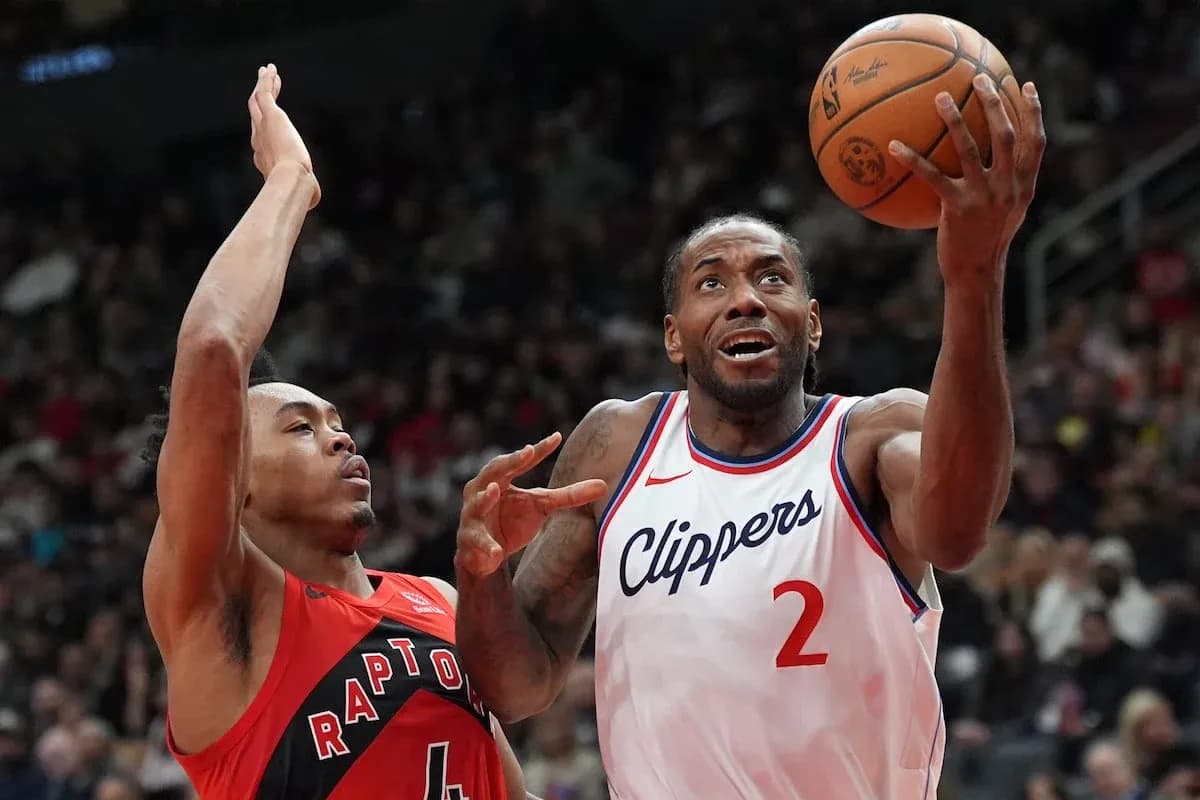
The Raptors, who once watched him walk away in free agency, will welcome him back for the final year of a US$149.5-million, three-year deal once the trade with the Clippers — agreed in principle in June — is formally approved by the league. A player who delivered the greatest moment in franchise history now returns to a city that never quite stopped dreaming about him.
For Tanenbaum, Leonard’s homecoming lands like a vindication. A career spent preaching the value of doing things the right way now has a headline example. The Raptors refused to cave to Robertson’s demands, took the reputational hit when Leonard left, and now get the player back with their principles intact.
For Edward Rogers, the timing is almost too good. Rogers Communications is trying to sell institutional investors on a minority stake in its sports assets, valued at $25-billion, as the telecom giant works to raise cash and pay down debt. Leonard’s face — and that iconic, bouncing, series-winning shot over the Philadelphia 76ers — will be front and centre in the sales pitch to the world’s largest fund managers.
The Raptors, once a franchise that struggled to lure marquee free agents, suddenly have their transcendent star back in the fold, just as they’re trying to reassert their relevance on and off the floor.
Leonard, for his part, isn’t ducking the mess his uncle helped create.
As part of the sanctions, he will pay the NBA US$700,000 to cover travel, tickets and gifts he received and never paid for. It’s a fraction of the money that changed hands around him, but it is a formal acknowledgement that his camp crossed the line.
In a statement released through his new agent, Leonard said he accepted “full responsibility for lapses in judgment by people within my inner circle and regret the distraction this situation has caused the fans and my family.” It is as close as a superstar usually comes to publicly washing his own house.
This is not an easy break for him. Robertson became Leonard’s mentor after Leonard’s father was murdered at the car wash he owned when Kawhi was just 16. Their bond was forged in tragedy, then carried into the high-stakes world of NBA business. That history doesn’t excuse what happened, but it explains why the guardrails failed.
Now, Leonard is trying to reset.
He has kept a more visible profile around the Raptors this off-season than he did during his first, famously quiet stint. This summer, he stood alongside Tanenbaum, both grinning, at a news conference where Kyle Lowry returned for a day to retire as a Raptor. It was a reminder of what Leonard means to the franchise, and what the franchise still means to him.
“As I return to Toronto, I am focused on what I can control, closing this chapter, and moving forward with a clean slate,” Leonard said in his statement.
A culture test, and a parting gift
Toronto has long fought the perception that elite talent views it as a stopover, not a destination. Leonard’s original departure reinforced that narrative. His return cuts against it.
Landing an NBA superstar in his prime — again — says something about the Raptors’ culture that no marketing deck can match. It speaks to stability at the top, to a willingness to hold firm when the rules are tested, and to a belief that if you build the right environment, players will eventually choose it.
For Tanenbaum, expected to sell his stake in MLSE to Rogers for $4.35-billion this fall, Leonard’s comeback is a powerful final flourish. A bittersweet parting gift: one more season of the player who delivered a championship, and now arrives as a living symbol of the organization’s moral high ground.
For Rogers, it’s timing that borders on perfect. A franchise re-energized. A global star back in the country’s biggest market. A corporate sales pitch supercharged by the return of the man whose shot still loops endlessly on highlight reels.
The Clippers are left to count lost picks and lost credibility. The Raptors are left to count the days until Leonard pulls on their jersey again.
The league has made its statement. Now we find out what Kawhi Leonard, and the franchise that once built a title around him, can do with their second chance.