How Serious Is Jannik Sinner’s Knee Issue?
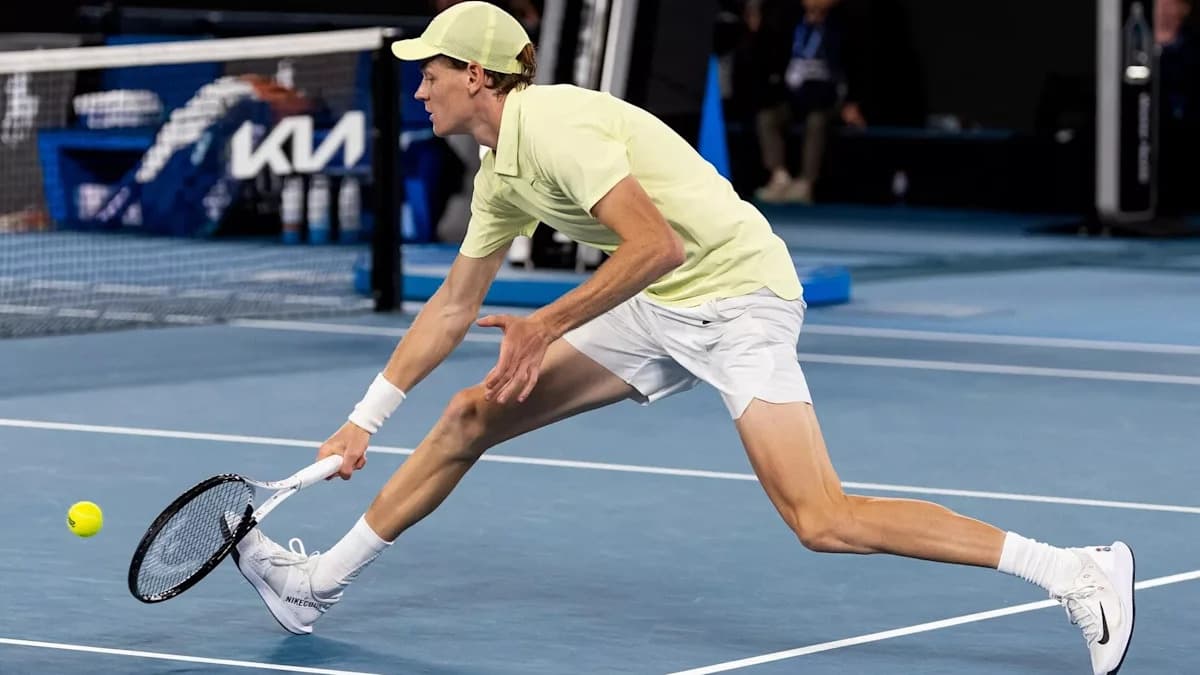
Jannik Sinner hasn’t competed since his Wimbledon victory in July. Recently, he announced that inflammation in his right knee will keep him out for the rest of the 2026 season. This means missing big events like the Paris Masters, ATP Finals, and the chance to defend his Turin title.
What Could Be Causing His Knee Trouble?
His former trainer, Marco Panichi, who also worked with Novak Djokovic, suggests Sinner might be dealing with iliotibial band syndrome (ITBS). ITBS happens when repeated strain irritates a thick connective tissue along the thigh, affecting stability around the hip and knee.
This injury often shows up in runners but affects tennis players too, given the constant side-to-side moves, sudden stops, and quick starts needed on court. Sinner’s style relies heavily on fast lateral movement and balance during intense rallies, putting extra pressure on his knees.
Understanding ITBS and Recovery
ITBS causes pain where the iliotibial band crosses over the lower femur. It’s rarely treated with surgery. Instead, recovery usually involves cutting back activity, strengthening exercises, and gradual rehab. The American Academy of Orthopaedic Surgeons notes many return to running in about six weeks, but this depends on how bad the injury is.
The Cleveland Clinic estimates 50% to 90% of people improve within four to eight weeks, but these numbers don’t fully apply to a top-level tennis player facing long, explosive matches. Sinner’s symptoms reportedly started after Wimbledon and returned when he increased training before Shanghai. Medical checks reportedly confirmed ITBS, though his team described it as general knee inflammation publicly.
Outlook for 2027
There’s hope since ITBS can heal without surgery using careful rehab. The goal isn’t just pain relief but rebuilding the knee’s ability to handle high-intensity stress repeatedly. Treatment plans suggest 12 weeks, but that includes active rehab, not complete rest. Sinner’s team plans an initial 4-8 week treatment phase before increasing training intensity.
The Australian Open in January is the earliest target for his return. But practicing, playing one match, and enduring a full Grand Slam with seven best-of-five matches are very different challenges. Even if he reaches Melbourne, regaining his peak level quickly won’t be guaranteed.
His absence already cost him ranking points, with Alexander Zverev set to finish 2026 as world No. 1. Health must come first though; rushing back risks worsening the injury and more time out, so skipping the rest of 2026 seems sensible.
Final Thoughts
Panichi’s warning is serious but not a sign that Sinner’s career is at risk. ITBS is treatable, especially since surgery isn’t needed. Still, the length of time Sinner has been sidelined and recurring symptoms mean patience is key. At 25, protecting his long-term health should outweigh pushing to regain ranking points immediately.
The Australian Open remains a realistic goal, but being fully ready is uncertain. For now, the main question is when Sinner can play without knee pain holding him back.
Main Photo Credit: Mike Frey-Imagn Images