Lewis Hamilton's Frustration with Ferrari's Lack of Rules
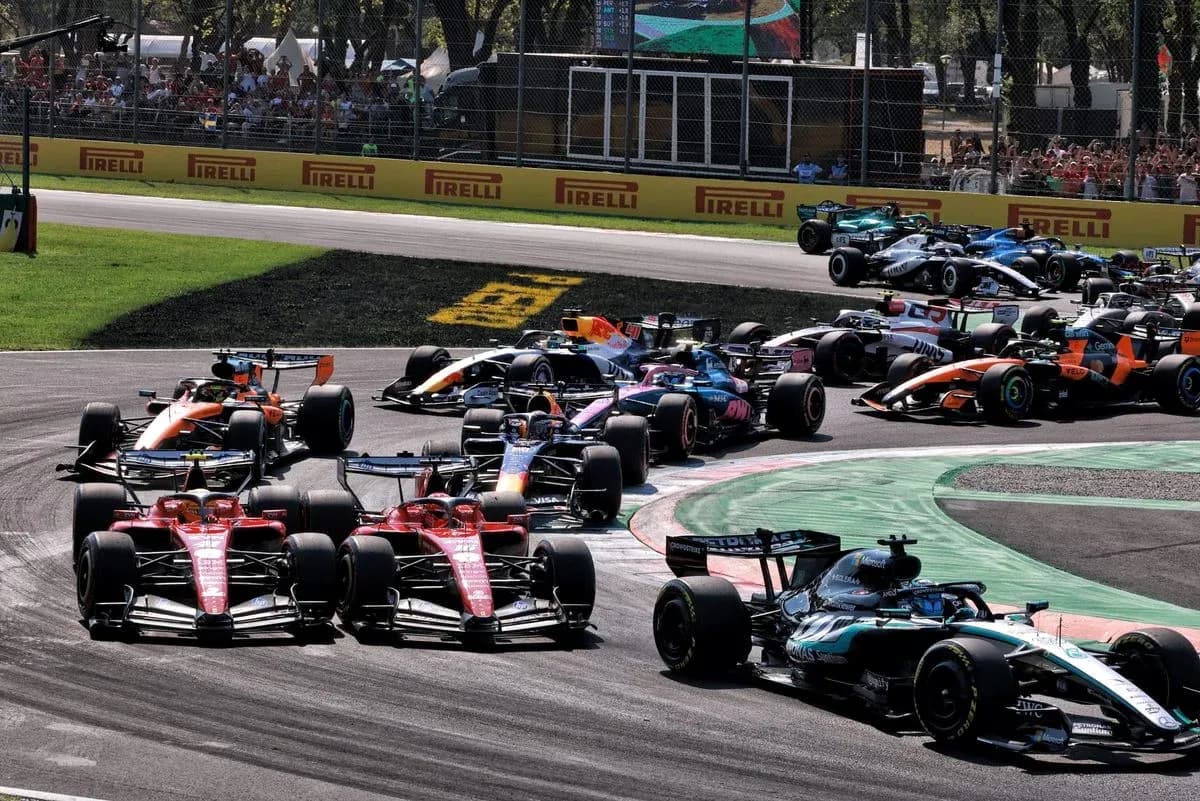
Lewis Hamilton left Monza with points, but not peace.
The Ferrari driver was still bristling long after the chequered flag, angered by a first‑chicane clash with Charles Leclerc and what he sees as a vacuum of leadership over how the Scuderia’s drivers are allowed to race each other.
Turn 1 flashpoint ignites Ferrari tension
The race had barely begun when it boiled over.
Hamilton launched a bold lunge into Variante del Rettifilo, diving down the inside of Leclerc into Turn 1. As they swept into the second part of the chicane, Leclerc tried to hang on, squeezed Hamilton on exit, and the #44 Ferrari was bumped out into the gravel. Hamilton tumbled down the order. Leclerc would crash out on lap two, triggering the red flag that later reshaped the race.
For Hamilton, the opening‑lap incident never left his mind. He salvaged sixth place in a race interrupted by that early stoppage and framed by strategy frustration, limping home on used medium tyres after Ferrari chose not to pit him under a virtual safety car that Kimi Antonelli and Max Verstappen exploited.
It was tight on timing: the VSC ended just seconds after Antonelli and Verstappen exited the pits. But Hamilton knew it was at least an option – and that Ferrari had already passed on a free reset under the red flag, when it could have bolted on the hard tyre.
So when Leclerc later spoke of “joint responsibility” for the Turn 1 clash and hinted Hamilton bore the greater share of blame, the response was icy.
“I was ahead in Turn 2. By the apex, I was ahead. So there was no ‘we’ in it,” Hamilton snapped, making it clear he saw the episode as one‑sided.
“Here there are no rules”
The seven-time champion didn’t stop at apportioning blame for a single corner. He went after something deeper: the way Ferrari polices – or fails to police – its own drivers.
Asked if the tifosi should fear a full‑blown team‑mate feud, Hamilton drew a sharp line around his own conduct.
“Look, you know, I don’t race dirty,” he said. “I’ve always raced clean and fairly and always left space. So I don’t think they should be worried about me.
“I’ve come into the team and tried to be respectful of space – and definitely not put the team in jeopardy. I stand by that and that’s all I can talk about, on my side. You have to speak to Fred [Vasseur] about the other side.”
The words hung there. Respect. Jeopardy. The “other side”.
Hamilton then pulled out a comparison that cut right to Ferrari’s structure.
“I think it comes down to rules of engagement. When I was at Mercedes, we had a written rule of engagement. We never really, really had too bad. There was a moment maybe with me and Nico [Rosberg] a couple of times. But more often than not it was good, I mean, [especially with] Valtteri [Bottas]…
“Here there are no rules.”
For a driver who has built titles on discipline and clarity, that absence clearly grates.
Frustration beyond Turn 1
Hamilton’s anger wasn’t limited to the clash with Leclerc. Monza was laced with operational irritations on his side of the garage, and even on the other.
He had already been unhappy on Saturday with how Leclerc’s Q2 run plan compromised his own qualifying effort. After the race, speaking to the written media for far longer than usual, he circled back to a broader theme: Ferrari’s processes.
Asked about points lost through operational errors, Hamilton pointed firmly upwards.
“Ultimately it comes from the top. It trickles down decisions – and so, it starts with Fred,” he said.
“There’s only so much you can say, so much you can push and shout from the mountaintop. Yesterday I said we’ve got to look at just how we communicate because if we continue to travel the same path, we get the same result.
“It’s like, we keep getting the same result. We’ve got to change things because this is not helping us move forwards. I think they’re receptive to it and we’ll take it offline over the next… probably not for next week, but particularly after next race to try and look how we can procedurally do things different so the same thing can’t keep happening.”
The theme returned when he was asked about support for his title campaign. He didn’t call for Leclerc to move aside. He called for structure – and for it to have arrived much earlier in the season.
“It’s far too late for that, for those decisions to come. It’s many, many weeks too late. So, all I can do is just try and turn up,” he said.
Vasseur under the spotlight
If Hamilton’s words were pointed, Fred Vasseur tried to keep his own answers blunt but measured.
The Ferrari team principal admitted he had barely spoken to his drivers about the start clash – “two seconds” with Hamilton and not yet with Leclerc – and refused to dissect it in public.
“I prefer to discuss with them first than with you first,” he said.
On the contentious VSC call, Vasseur defended the decision not to pit Hamilton.
“We had the same gap with Max before and after the VSC,” he argued, noting that Hamilton ran around six to seven seconds behind Verstappen when Lance Stroll’s hydraulic failure triggered the VSC and finished 10 seconds adrift.
Vasseur maintained that stopping would have dropped Hamilton behind Yuki Tsunoda and Pierre Gasly, and doubted Hamilton could clear them on track. On raw numbers, Hamilton almost certainly would have rejoined ahead of the Racing Bulls and stood a strong chance of repassing Gasly, but Vasseur’s line underlined Ferrari’s caution.
When the conversation turned to the championship picture and whether Ferrari had discussed team orders or a clear hierarchy before Monza, Vasseur reached for a recent example.
“To see if we have a team order or whatever, I think that the good comparison that I made was that last year, [Oscar] Piastri was leading [for] McLaren at this stage of the season. And if McLaren put everything on Piastri, Max Verstappen would have been champion.
“But for sure, at one stage, you have to take a decision. But I think it was too early to take a decision before Monza. Now we have time to discuss with the guys.”
Time – but not much margin.
Hamilton trails championship leader Kimi Antonelli by 76 points. Leclerc is 112 adrift. There are 258 points left on the table.
A title bid in need of order
Hamilton refused to label Ferrari’s situation a “cultural” problem. He pushed back hard when that word surfaced, defending the effort and commitment of the staff around him.
“I know what you guys are trying to do! I don’t want to get into arguing and fighting about my team,” he said. “At the end of the day, I’m trying my hardest to make this team and help this team get to where it needs to be.
“We didn’t do so well today. It’s painful enough as it is, to be badgering my guys. They go home to their families. They’re working really, really hard. Yes, we didn’t get it right today. It isn’t good enough. But we’ll go back to the drawing table.”
The message was clear: he will not publicly torch the team. But he will demand change.
Monza exposed Ferrari’s fault lines – in wheel‑to‑wheel etiquette, in strategy nerve, in communication between two elite drivers chasing a title that is slipping away.
Hamilton knows what a championship machine looks like. He has lived inside one. At Mercedes, he had written rules of engagement, a clear chain of command, and a framework that turned internal battles into controlled competition rather than chaos.
At Ferrari, after a bruising Italian Grand Prix, he sees something else.
Here, as he put it, there are no rules.
If that doesn’t change quickly, the question won’t be whether Ferrari can back Hamilton’s title charge. It will be whether there’s still a title charge left to back.