Formula 1: Mercedes on the Brink as Rivals Close In
The titles may be wrapped up, but Formula 1 doesn’t do cruise control.
Kimi Antonelli has already banked his first world championship. Mercedes can all but seal the constructors’ crown in Sao Paulo with three more points than Ferrari. On paper, that should make this weekend a lap of honour.
It feels nothing like that.
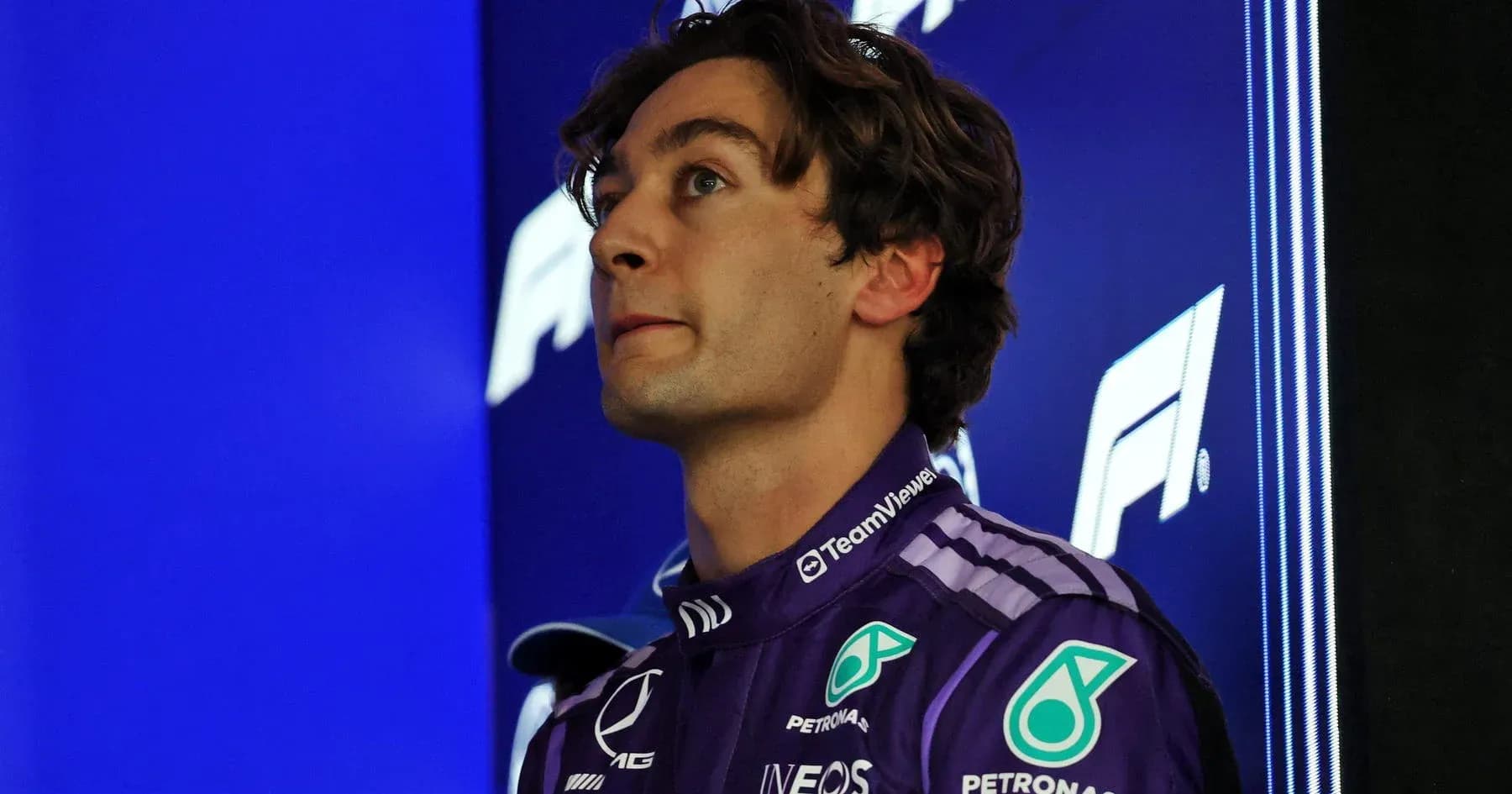
At Interlagos, the paddock is already living in 2027. Antonelli talks about these final races as rehearsal for a title defence that hasn’t even started. George Russell, beaten and bruised by the intra-team battle, is combing through the wreckage of his season, determined not to repeat it.
For Mercedes, the job is simple and ruthless: finish this off, prove the old empire is truly back. Seven wins in the first eight races set the tone; six more in the last 12 have kept them on top, but the grip has loosened. Ferrari, McLaren and Red Bull have all taken turns knocking chunks out of that early advantage. What began as a gulf has become a knife fight among four teams.
Sao Paulo is the next chapter of that story, not an epilogue.
Mercedes on the brink, rivals closing fast
The year split cleanly in two. Early on, Mercedes looked like the old machine again, rolling over the field with the kind of authority that defined the 2010s. Then the others caught up.
Across the last dozen races, the numbers tell the tale: Mercedes six wins, Red Bull three, McLaren two, Ferrari one. No one is running away with anything now.
Friday in Brazil hinted at more of the same. Antonelli looked sharp. So did Lando Norris in an upgraded McLaren. But the lap times only tell part of the story. The real noise came from Ferrari.
Ferrari fire: Hamilton vs Leclerc
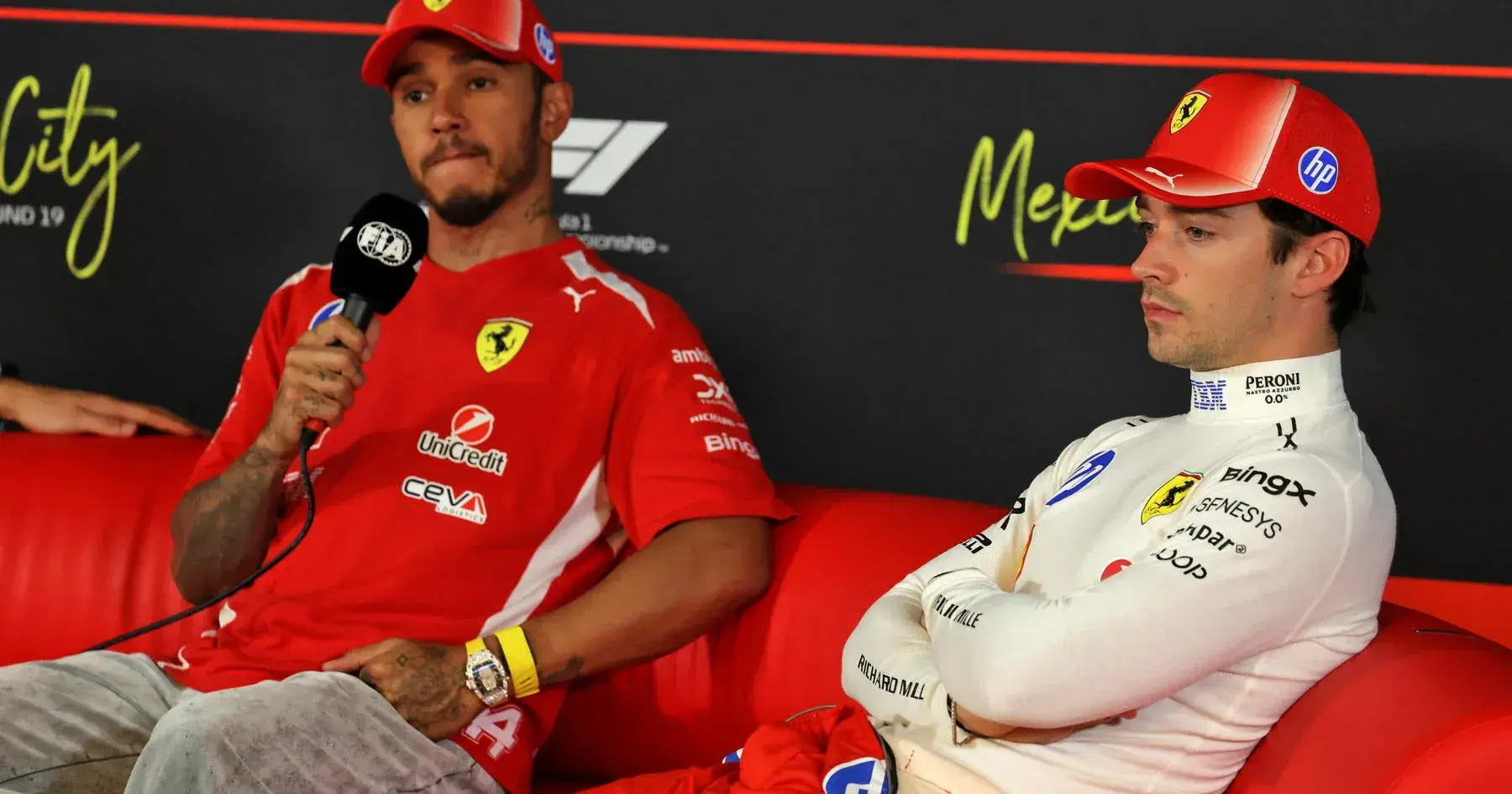
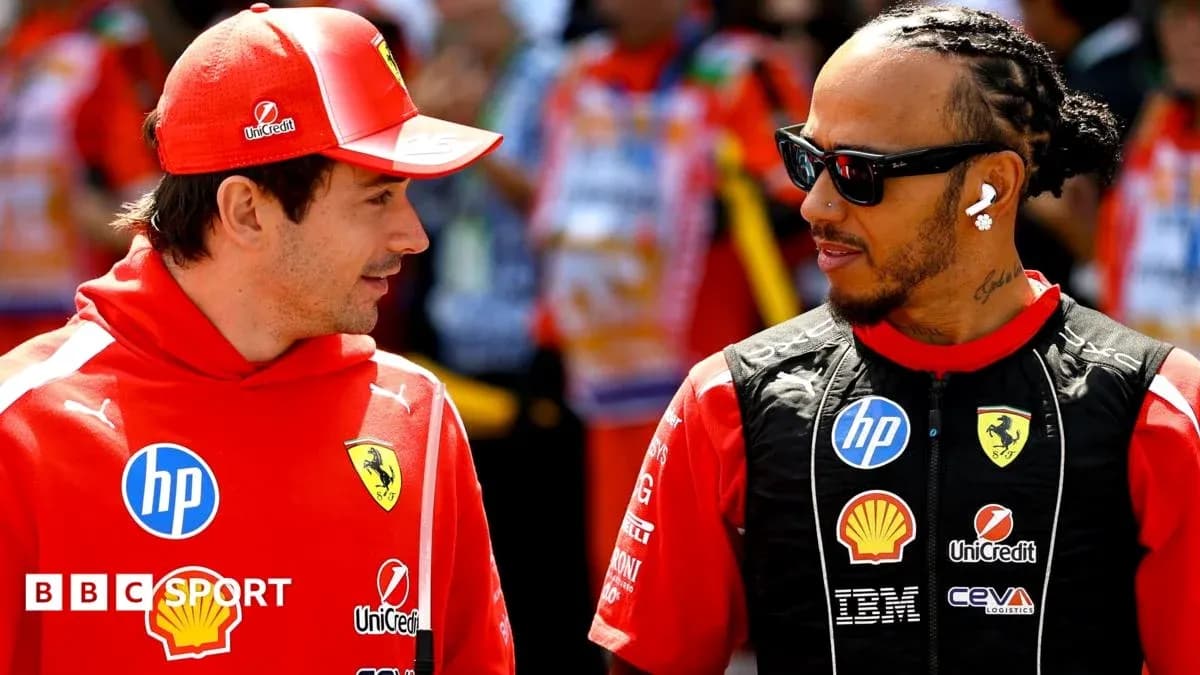
Ferrari should have walked away from Mexico City with a one-two. Instead, their drivers tripped over each other on lap one. Lewis Hamilton and Charles Leclerc turned a dominant grid position into a public inquest.
Hamilton didn’t bother to sugar-coat it. He talked about “big problems” and the need for “serious talks”. Those talks arrived on Thursday evening in Brazil, when Leclerc and team principal Frederic Vasseur flew back from Europe and sat down to clear the air.
On Friday, Vasseur tried to draw a line.
“It went well. It was good to discuss. It was good to clarify our positions and now we turn the page,” he said. The rules, he stressed, have not changed: race hard, respect each other, respect Ferrari.
“They are competitive with fighting spirit but they need to respect the other one and the brand and the people working back home and on track.
“The message was clear and will stay clear. Overall it is true that they are working for the team and the team has to come first. It's clear we failed and we have to react but the meeting was a clear reminder that Ferrari comes first.”
The stakes are obvious. Ferrari believe that if they can keep the chassis strength of this year and lift the engine to Mercedes and Red Bull levels, they have a title shot next season. Two drivers at war would burn that chance fast.
Hamilton, as ever, has not been shy.
He has drawn a stark contrast between how Leclerc races him and how the Monegasque handles others. The example he keeps coming back to: Singapore, where Leclerc backed out against Max Verstappen into Turn 1, versus Mexico, where he held firm and tangled with Hamilton.
“We could have easily had a one-two and so we definitely have to work towards making sure that doesn't happen again,” Hamilton said. He went further, suggesting a pattern in Leclerc’s relationships with team-mates, name-checking Sebastian Vettel and Carlos Sainz as earlier examples.
He knows his words sting, but he is not backing off.
“Of course, there's some times you say things and maybe you might regret it afterwards, but I don't.
“I've never apologised for being authentic and real. And I'm not going to be silenced. I have not been asked to not say anything. And that's just the way it is.
“I wear my heart on my sleeve and I say how I feel in the moment.”
Vasseur needs this to calm down. Hamilton is prepared to turn the volume up.
Hamilton’s Ferrari revolution
Hamilton did not come to Ferrari to blend in. He has made that clear already.
“Naturally, it's not so easy having someone like me come into a team because I'm very outspoken and I push and push and push, push for so many changes and I'm going to be pushing for more,” he said.
“As long as I'm here, that's how it's going to be. I'm here to win. And to be able to win, you have to work with everyone around you.
“I truly believe that this team can be fighting for the championship next year.
“I'm in the process of working with the head of aero, the head of aerodynamics to make sure that we hold on to the goodness of the car we have this year and fix some of the small, subtle things that could be better.
“And obviously, the power-unit, they're doing their thing and I really hope that they're able to pull through.”
Ferrari have the platform. What they don’t yet have is harmony. Sao Paulo will show whether the Mexico collision was a one-off flashpoint or the opening scene of a longer feud.
Red Bull’s late surge
While Ferrari wrestle with their own politics, Red Bull have quietly turned chaos into momentum.
Early in the year, the RB package was nowhere near the front. At times they were close to a second off the pace. Max Verstappen spent the opening third of the season scrapping in the midfield, salvaging what he could.
Now he is second in the championship.
His victory in Mexico, profiting from Ferrari’s self-destruction, was his third in four races. The climb has been steep and relentless.
“It's a big surprise to be second in the championship, but we take it,” Verstappen said.
“We had a lot of difficulties as a team in the beginning. The car was not where we wanted it to be. Probably also we still had to learn quite a bit from the power units, and I think we really learned a lot throughout the season.
“From my side, it's just you never really give up or, in terms of, like, you just never really settle for P6 or P7, right?
“Even when I was in that position or fighting the midfield, I was still trying to do the best that I could get out of the situation.
“Sometimes that is a P6 when the car is not able to perform better. But then once the car is in a better window, then you can fight further up front and eventually, of course, win races.
“And, of course, when you win, you take points out of everyone else. So that's been the scene a bit the last races, and I'm, of course, very happy with that.
“But it also shows that the team never gave up and they were really pushing to find these improvements and understand the difficulties. I'm just happy that within a season we had such a big turnaround.”
The fight for second is now a tight knot: Verstappen two points ahead of Hamilton, Hamilton nine ahead of Russell, Russell five in front of Leclerc.
None of them will pretend second place is a childhood dream. Winning matters; everything else is bookkeeping. There’s even a darkly comic twist: finish in the top three and you earn a mandatory trip to the FIA prize-giving in Shanghai a week after Abu Dhabi. Fourth place comes with a free pass home.
For the teams, though, the numbers bite harder. Third in the constructors’ championship carries serious prize money. Red Bull and McLaren are split by just 17 points, with around $10m on the line. That sharpens every strategy call.
McLaren chasing the front again
McLaren’s year has echoed Red Bull’s in shape, if not in scale. They started on the back foot, trimmed the gap to Mercedes, then surged in the summer.
When Norris won in Hungary and the Netherlands, McLaren briefly looked like the class of the field. Since then, the orange cars have slipped back into the chasing pack.
They arrive in Brazil with upgrades and a quiet belief that they’re not far away.
“I certainly feel like the last few weekends, the pace has not been too bad on Sundays,” Norris said.
“I feel like if things were just a little, little bit better, talking small amounts, we certainly could have had better results. And I'm hoping that the upgrades and some of the things we have this weekend can maybe just shift us a little bit more in this direction.
“I certainly don't expect to go out and win races all of a sudden. But the last few weekends, we've certainly not been miles away. We certainly have some weaknesses in the car and just the drivability, the difficulty of driving it is certainly one of the biggest factors at the minute.
“But the potential has been there. So I hope if it just puts us a little bit more forward in qualifying, we just have a little bit better chance in the race. And of course, I would like to be back on the podium as soon as possible.”
McLaren went into this season knowing they had sacrificed some of their 2026 prospects to get last year’s title over the line. Only once the new car hit the track did the full list of compromises become clear: gear ratios too short, drag too high, wheelbase shorter than ideal.
All of that can be reset for next year. The steep learning curve on the new power units, which hurt them badly at the start of these rules, will flatten. Sao Paulo, Las Vegas and whatever races follow will be laboratories as much as they are showpieces.
A calendar under a cloud
On paper, three races follow Brazil: Las Vegas, Qatar, Abu Dhabi. In reality, the final stretch is not entirely certain.
The war in the Middle East has cast a shadow over events in the Gulf. MotoGP, run by the same US ownership group as F1, is in Qatar this weekend, effectively stress-testing the security and logistics before F1’s planned visit later in the month.
Personnel there have received stark guidance on what to do in the event of a missile strike. The language alone underlines the seriousness of the situation.
A decision on the remaining Gulf races cannot be kicked down the road for long. F1 has been in talks with governments and security experts and believes it has done everything possible to secure the right assurances. Beyond that, the sport is in the same position as its teams on track: prepare meticulously, then accept that some variables sit beyond your control.
So Sao Paulo goes ahead in its usual way: heat, noise, a circuit that punishes mistakes and rewards bravery. The championships might be all but decided, but the story of who really owns the future of this era is still being written.
And on this bumpy strip of asphalt outside Brazil’s biggest city, reputations, relationships and next year’s pecking order are all very much still in play.