Ferrari’s New Engine Shines at Monza
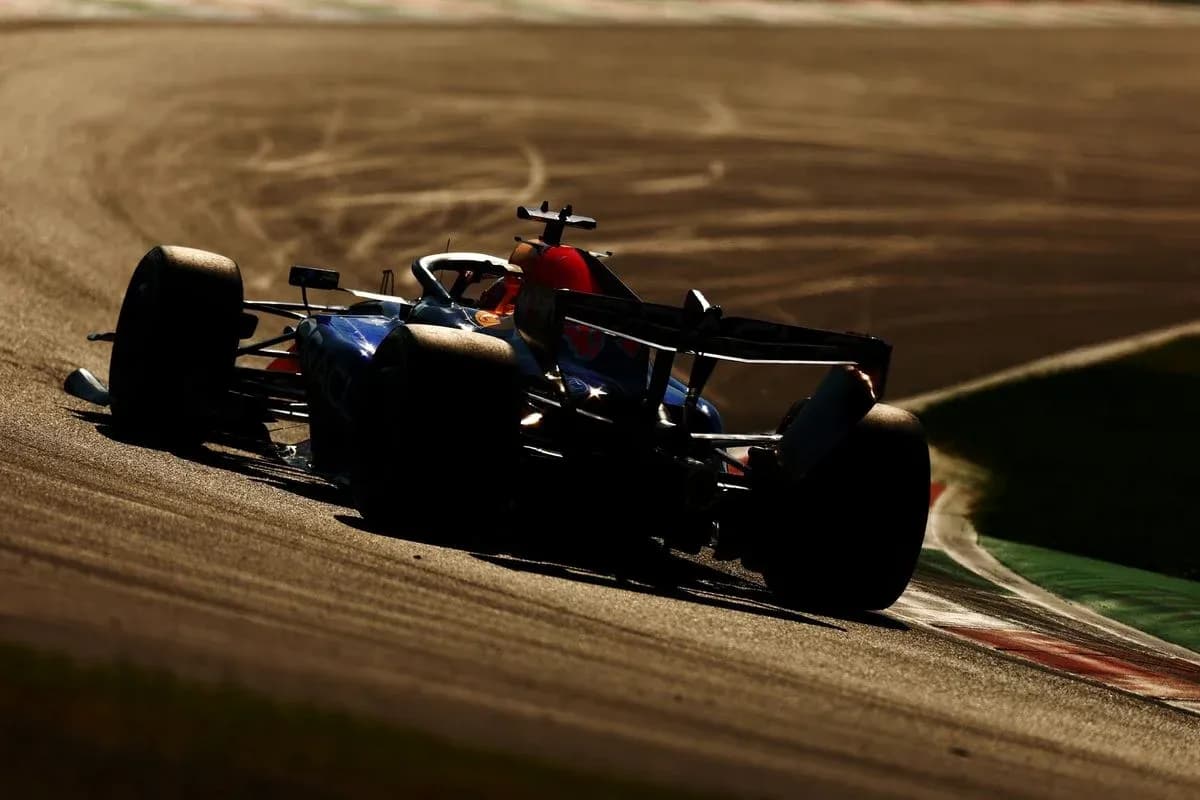
The old place still knows how to turn up the volume.
Monza, with its crumbling concrete and endless straight lines, has been waiting a long time for an Italian championship leader to arrive in silver, not red. Kimi Antonelli carries that weight for Mercedes this weekend, even with a grid penalty hanging over him. George Russell, on the other side of the garage, smells opportunity. And Ferrari, armed with a new engine and the usual tidal wave of expectation, is trying to turn outside title hopes into something more substantial.
Friday didn’t settle anything. It rarely does. But it did draw some sharp early lines.
Ferrari’s new heart finds its voice
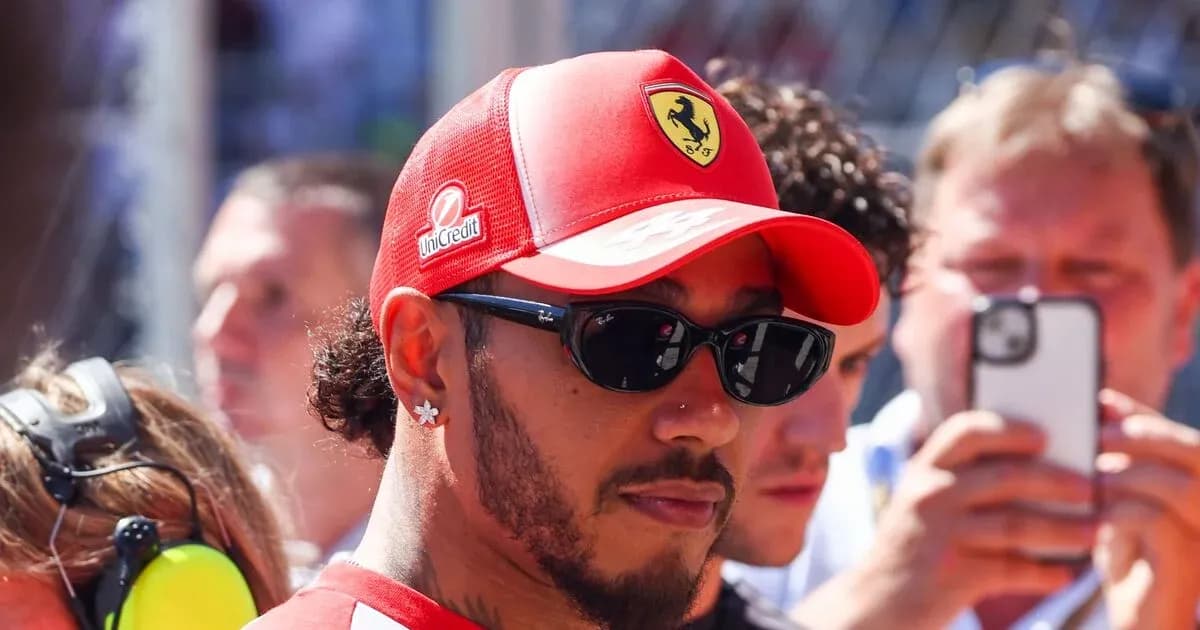
Ferrari’s second ADUO engine upgrade was the big story rolling into the Temple of Speed. The stopwatch didn’t kill the hype.
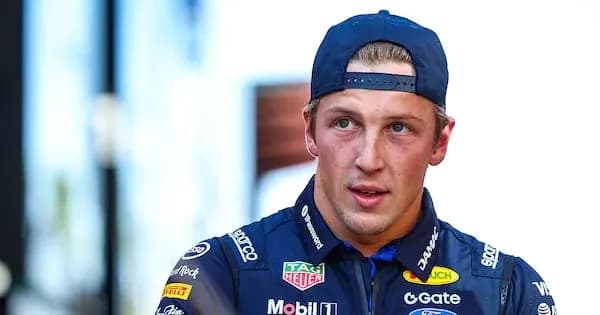
Charles Leclerc finished FP2 in second, just 0.120s off Russell’s benchmark, and crucially, he did it on soft tyres while the Mercedes pair and Liam Lawson’s Red Bull ran the hards. Over a single lap, the Ferrari looked alive. Over the long runs, it looked competitive.
Monza is brutal on power units. It exposes every weakness on the straights and offers nowhere to hide. Ferrari never promised this upgrade would erase its power deficit, only trim it. On early evidence, that’s exactly what it has done.
Both Leclerc and his team-mate are running the new spec. For a team that has often watched its engines fade in the slipstream of Mercedes and Honda on this circuit, to be within a tenth of the top time on a different compound is a genuine step. Friday is not the day for declarations, but it is the day you find out if your numbers were fantasy. For Ferrari, they weren’t.
The Tifosi will have seen the timing screens. They’ll come back louder on Saturday.
Honda’s upgrade hits a wall
Fernando Alonso warned that Zandvoort wouldn’t reveal the true state of Honda’s new engine. Monza, he said, would be the real test.
On this evidence, the verdict is harsh.
On a track where power is everything, Aston Martin and Honda sank to the bottom of the order in FP2: Alonso and Lance Stroll languishing in 19th and 22nd, wrapped around the Cadillacs and more than a second off the next-slowest car once Esteban Ocon’s compromised Haas lap is discounted.
Honda’s trackside general manager and chief engineer Shintaro Orihara had already called for realism, admitting Monza would be “challenging for [the] power unit side.” He was right to be cautious. The stopwatch was unforgiving.
This is exactly the type of circuit where a new engine is supposed to show its teeth. Instead, Honda’s latest step looked blunt, leaving Aston Martin stranded at the wrong end of the field on a day when others were stretching their legs.
Russell strikes first
On Thursday, George Russell played it down. No talk of being favourites, just a nod to the opportunity.
"It's so close right now, that last tenth in qualifying can be the difference of a couple of positions, which can change the podium. Right now, I don't know who is going to be the team to beat," he said.
Twenty-four hours later, he looked like that man.
After trailing Ferrari by three-tenths in FP1, Russell flipped the script in FP2, topping the session and edging Leclerc by that 0.120s margin. On a low-energy circuit that suits Mercedes’ strengths, he looked sharp, confident, and in control.
The context matters. His team-mate and title rival Antonelli will carry a grid penalty into Sunday, but the Italian can still play a key role in qualifying, offering Russell a tow when it counts in Q3. At Monza, that can be worth everything.
There is a caveat: Russell’s Mercedes engine is nearing the end of its life, and Ferrari’s ADUO 2 still has more to reveal across the weekend. But on Friday, with the crowd already restless and the pressure heavy on both big teams, Russell landed the first blow.
Red Bull’s slide continues
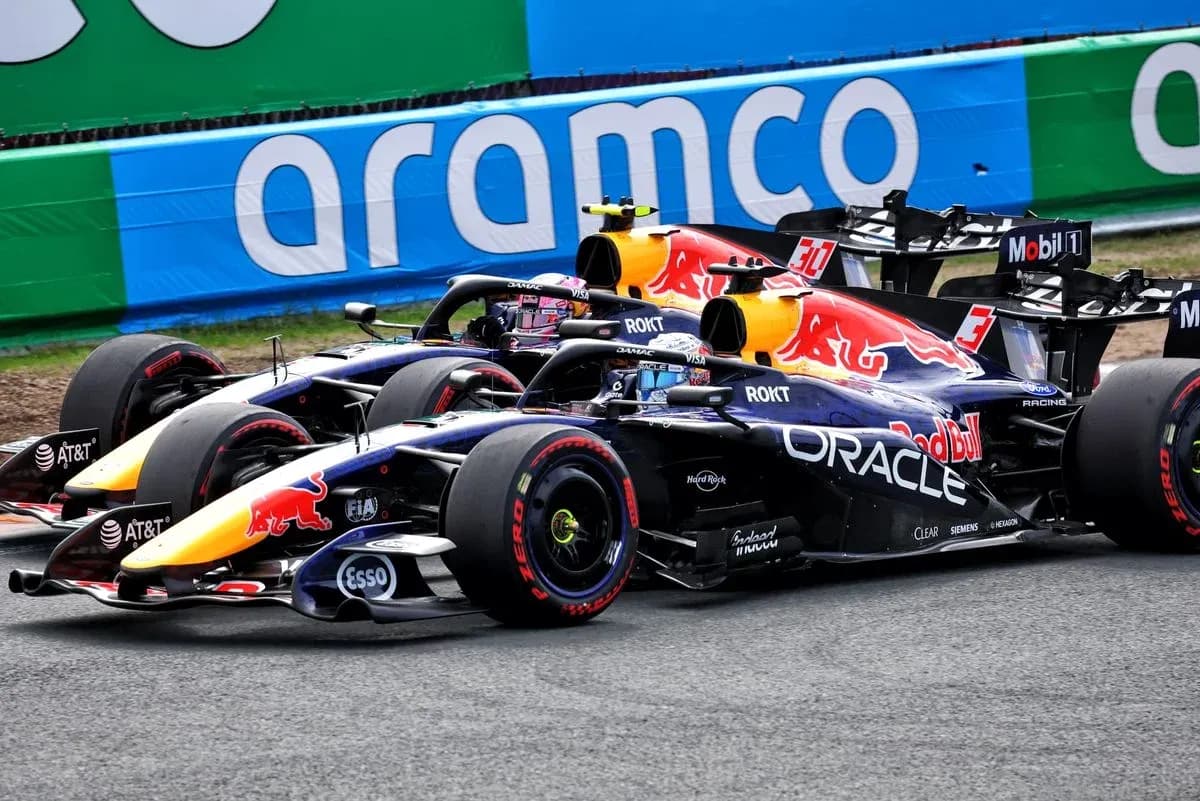
Red Bull and Max Verstappen came into the post-Zandvoort stretch talking about long-term optimism. Short term, the picture is grim.
Ninth and 12th in FP2 told its own story. The detail made it worse.
Since Verstappen’s new deal was confirmed before Zandvoort, the results have stuttered: sixth in the Dutch sprint, a crash in the grand prix, and now a messy, uncomfortable Friday at Monza. In FP2, Verstappen’s complaints piled up – no downforce, a wing change, no grip in the slow corners, braking issues, and a car “jumping” on the front axle.
On a day when Mercedes and Ferrari showed clear direction, Red Bull looked lost in the grey area between set-up and limitation. Verstappen has dragged this car to results it probably didn’t deserve at times this season. This weekend, he may need something even more extreme just to drag it clear of the midfield.
For a four-time world champion and a team used to dictating the pace, that’s a jarring reality.
Bearman lights up Haas
Haas arrived with its biggest upgrade of 2026 bolted almost entirely to one car. Ollie Bearman made it count.
Armed with the full new bodywork package and the latest Ferrari engine – a combination his team-mate Ocon doesn’t yet enjoy – Bearman put his Haas eighth in FP2. Just 0.8s off Russell’s top time, and only 0.02s shy of Racing Bulls rookie Arvid Lindblad.
He called it “our best Friday since probably March or that time of year” and it felt like it. Haas has been trudging through a six-race run without points, stuck in the no-man’s land between the lower midfield and the fight for the top 10. On Friday, the new package finally gave them something to lean on: more downforce, more confidence, more reason to believe.
There is a catch. Bearman knows Saturday at Monza is a game of slipstreams and positioning. He also admitted the car is a bit draggier than its rivals. But the raw gain is clear.
Hoagy Nidd, Haas’s head of car engineering, didn’t downplay it: “It's a huge upgrade. We've updated all of the chassis. It's all of the bodywork rearwards of the cockpit pretty much.” That’s not a tweak. That’s a reset.
For a team starved of momentum, eighth on a Friday at Monza is not just a number. It’s a signal that the season might not be drifting away after all.
Ocon left watching
Esteban Ocon did not share in the optimism.
Because of F1’s engine homologation rules, he has the new Haas bodywork but not the new Ferrari engine. On a power circuit like Monza, that split specification hurts. The timesheet confirmed it: Ocon ended FP2 more than a second behind Bearman.
Nidd stressed that the engine alone doesn’t explain the gap, pointing to the way Ocon’s session unfolded and the opportunities he didn’t quite get. Traffic on his push laps – an all-too-familiar Monza theme – wrecked any chance of a clean comparison.
Even so, it’s a brutal contrast inside the same garage. One car flying, the other mired in the pack, both staring at the same crucial Sunday in a season that’s been drifting.
Friday at Monza didn’t crown a favourite. It rarely does. But it did sharpen the edges of the story: Mercedes punching hard, Ferrari’s new engine humming, Honda exposed, Red Bull wobbling, Haas gambling big on development.
Now the question is simple: when it really matters, who turns this noise into something that lasts beyond the weekend?