Ferrari's Disastrous Weekend at Monza Raises Leadership Concerns
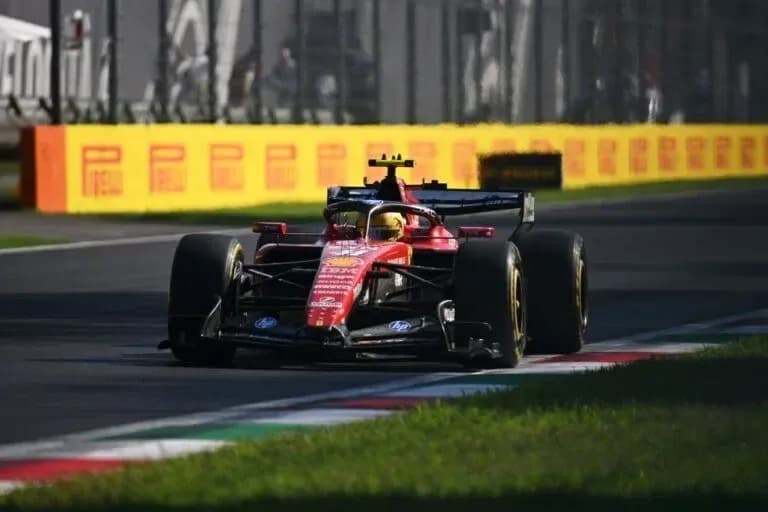
Ferrari left Monza with more than a bruised points tally. It left with a question hanging over the man running the team.
On paper, a sixth place for Lewis Hamilton and a retirement for Charles Leclerc after less than two laps already made for a bleak home Grand Prix. Then Kimi Antonelli came storming through from 19th on the grid to win for Mercedes. On Ferrari’s own circuit. In front of Ferrari’s own people.
That’s the kind of result that doesn’t just sting. It destabilises.
A Home Race That Fell Apart in Two Laps
Ferrari’s weekend disintegrated almost as soon as the lights went out.
Hamilton and Leclerc lined up third and fourth, a front-row launchpad to attack Mercedes on a power-hungry track that should have suited the scarlet cars. Instead, they tripped over each other at the very first chicane.
Running side by side into Turn 1, Hamilton emerged over the gravel as they fought for the same strip of asphalt. He lost momentum and positions. Moments later, Leclerc’s race ended in the barriers at Curva Alboreto on lap two.
Two laps. One Ferrari in the wall, the other tumbling down the order.
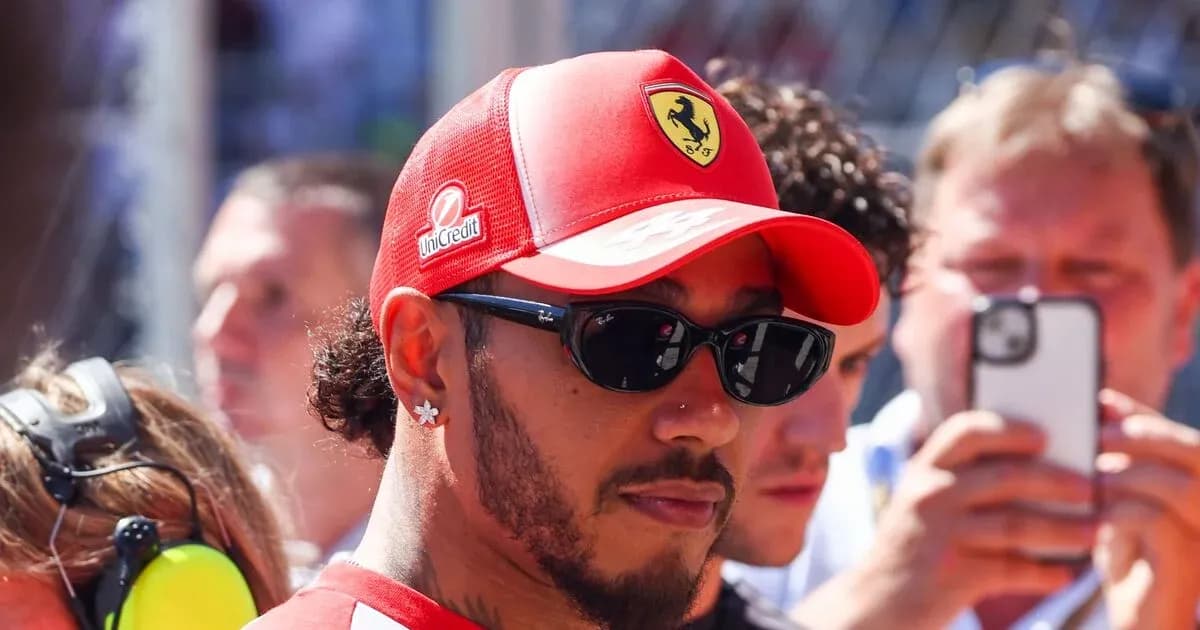
Hamilton gathered it up and dragged the car back to sixth over 53 laps, but it felt like damage limitation in a race that was supposed to be a statement. His frustration was clear as he picked through the wreckage of the afternoon, pointing to the first-lap clash, strategy calls, and tyre choice as key missteps. He spoke of lost ground, lost points, and decisions arriving “many, many weeks too late,” before turning the focus to the Tifosi and the factory staff “giving it everything.”
It sounded less like a debrief and more like a warning.
Leadership Questions Back on the Table
Inside Ferrari, the mood matched the result. According to reporting from The Race, senior figures at Maranello were unimpressed by how the weekend was handled. Not just the crash. The whole operation.
This is not yet a verdict on Fred Vasseur’s job security, but it explains why a team principal who only last year signed a renewed multi-year deal suddenly finds himself at the centre of the storm.
Monza did not come out of nowhere. The Dutch Grand Prix before it has been cited as another example of muddled internal decision-making and a lack of clear hierarchy between the drivers. Two races, two public reminders that Ferrari still struggles to impose a firm, consistent structure when split-second calls are needed.
At a team where order and authority once defined eras, that is a dangerous perception to allow to grow.
Power Unit and Procedure Under Scrutiny
The questions do not stop at the pit wall.
Ferrari arrived at Monza with its second ADUO power unit upgrade, hoping to close the gap to Mercedes on the straights. Instead, the new spec failed to bring the step the team had promised itself. On a circuit that exposes every weakness in horsepower and efficiency, the silver cars were simply quicker.
That gap stings more when a Mercedes starts 19th and still wins.
There is also irritation over how Ferrari reacted to the revised start procedure. Or rather, how it didn’t. The Race has highlighted the team’s lack of response as another sign of a structure that reacts too slowly, or not at all, when the parameters change. At this level, that is the difference between a podium and a post-mortem.
Vasseur in the Crosshairs
So what happens if the pressure at Maranello boils over?
The names being floated as possible successors are hardly new. Antonello Coletta, the respected head of Ferrari’s World Endurance Championship programme, has long been linked with a future Formula 1 role. His success with Ferrari’s return to top-level sportscar racing has only strengthened that talk.
Christian Horner’s name also refuses to disappear from the conversation. The Race notes he remains a theoretical option, even after he previously turned down Ferrari’s top job following an approach from chairman John Elkann. The idea of prising him away from his current empire feels remote, but in times of uncertainty, big names tend to resurface.
In Italy, the tone has sharpened. Corriere della Sera captured the mood bluntly: “In Maranello, and especially in Turin, they’re thinking about it. We can’t go on like this.” The paper reports that Vasseur himself understands that, despite his renewed contract, his future is no longer guaranteed.
The pressures, it says, “come from on high” and could trigger a change — not immediately, but with Monza acting as a potential catalyst. The publication has gone as far as calling it “a major turning point at Ferrari,” stressing that “Vasseur’s Ferrari is under scrutiny. By Elkann’s Ferrari, which can no longer pretend nothing is wrong.”
That line cuts to the heart of it. There is, the paper insists, “no Plan B” beyond the Frenchman. Yet the very act of saying so underlines the paradox: when you publicly insist there is no alternative, it usually means you’ve already started looking for one.
Monza has often marked the start of great Ferrari eras. This time, it might be remembered as the weekend that forced the Scuderia to decide what — and who — it really wants to be.