Ferrari's Discipline Issues Exposed in Hamilton–Leclerc Clash at Monza
Ferrari arrived at Monza with two superstar drivers on the second row, soft tyres bolted on, and a golden chance to attack. Within a few hundred metres, they were instead busy tripping over each other.
Lewis Hamilton and Charles Leclerc lined up side by side behind George Russell and Pierre Gasly, both Ferraris gambling on the grippier soft compound against the medium-shod cars ahead. The script wrote itself: launch cleanly, work together, and swarm the leaders into Turn 1.
They never got that far.
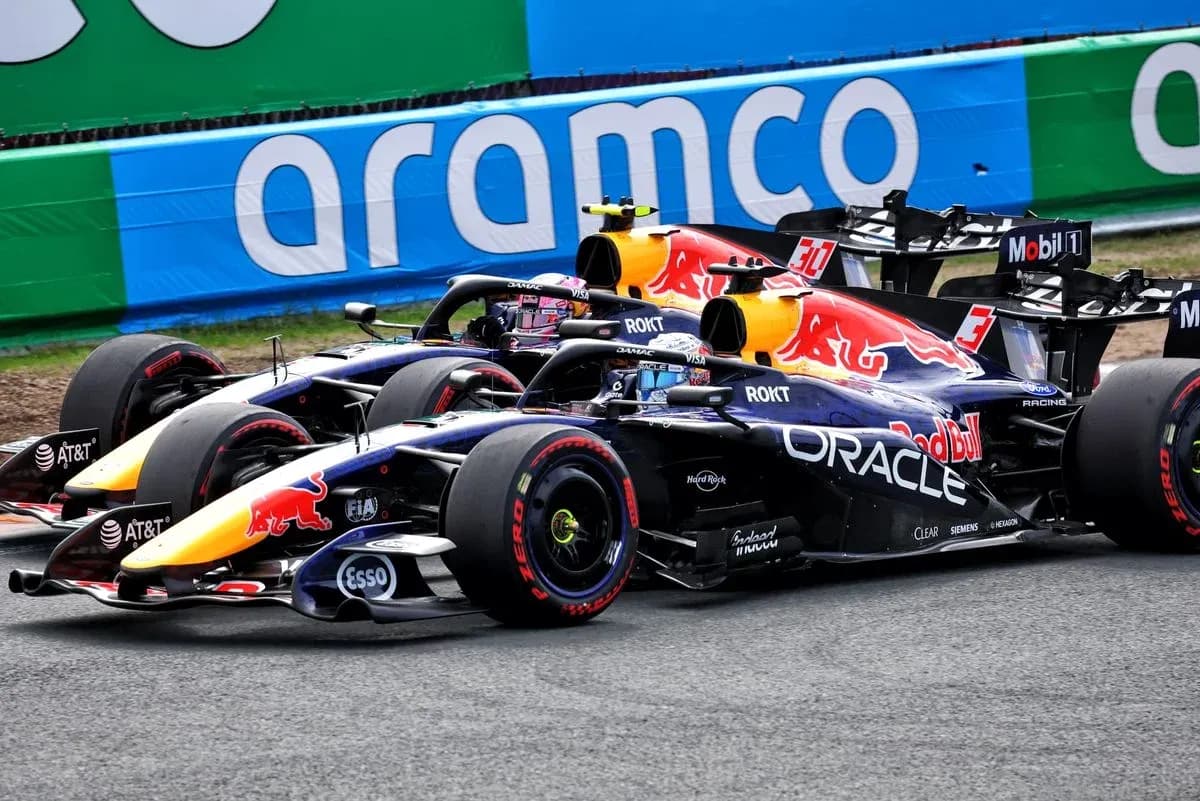
Hamilton dived to the inside of Leclerc into the opening chicane, the pair locked in a private battle while Russell and Gasly disappeared up the road. As the red cars converged, they touched. Hamilton was bumped onto the dirt, forced wide, and bled positions in a cloud of dust and fury.
By the time he gathered it up, the seven-time world champion had lost three or four places. On team radio and in the paddock, he made his feelings clear and called for defined rules of engagement with his teammate, drawing a pointed comparison with the stricter framework he knew at Mercedes.
For Peter Windsor, watching on and dissecting the chaos afterwards, the problem ran deeper than one misjudged corner.
“It’s all a result of Ferrari not having the discipline that they should have, that we’ve talked about endlessly,” he said in his post-race analysis, arguing that the team’s leadership had lost its grip on its star pairing.
Ever since Hamilton’s arrival alongside Leclerc, Windsor believes the pit wall has shrunk from the responsibility of laying down firm instructions.
“That’s arisen ever since you’ve got these two superstars in the cars and everybody on the pit wall at Ferrari is afraid to say to Lewis or to Charles, ‘This is what is going to happen at the first corner.’ They just won’t do it. What we saw was a classic example of no discipline in the team. I think Charles felt bad about it. I think Lewis felt very upset about it.”
On the incident itself, Windsor broke it down in the cool light of replay. Into the chicane, Leclerc held the slight advantage.
By the apex of the first right-hander, the Ferrari with the Monégasque flag on its halo could still claim the racing line. “You’d have to say in classic motor racing parlance that it was Charles’ line,” Windsor noted.
Hamilton, though, refused to back out. He stayed alongside on the inside, committed and uncompromising. As the corner tightened, Leclerc edged wider, using more of the road. The space vanished. Hamilton was squeezed onto the dirt, contact made, positions gone.
“Lewis, of course, was livid and felt he had been pushed off,” Windsor said. “He technically had been pushed off, and there’s no doubt about it.”
Leclerc initially seemed to escape the worst of the opening-lap drama. He climbed to second, regrouped, and briefly looked capable of salvaging something from the mess they had created. The respite did not last.
Gasly and Max Verstappen both found a way past, Leclerc slipping backwards just as quickly as he had surged forwards. Under pressure again at the Parabolica while defending from Oscar Piastri, his race ended violently in the barriers after a heavy crash.
Hamilton’s afternoon turned into a damage-limitation exercise. From the dust of Lap 1 to the chequered flag, he clawed back what he could but could do no better than sixth. On a day that began with Ferrari dreaming of a home-race charge, he left Monza 76 points adrift of Kimi Antonelli in the standings.
The tifosi came to see a united red assault on the front. They got a civil war into Turn 1 instead. The question now is not whether Ferrari have the speed, but whether anyone on that pit wall is willing to tell Hamilton and Leclerc how to use it.