The Mystery of F1's $300,000 Diamond That Disappeared in Monaco
Where were you between 1pm and 3pm on 23 May 2004? If the answer is “Monaco”, you’re part of Formula 1’s strangest cold case.
Somewhere between Sainte Devote and the Loews hairpin, between a crane, a crash and the chaos of a first lap, a $300,000 diamond disappeared. A real one, 1.4 carats, fixed to the nose of a Jaguar Racing car and last seen heading towards a barrier. Twenty-two years on, it has never been found.
No insurance payout. No recovery. No culprit. Just a legend.
A Team In Trouble, A Movie In Town
Jaguar Racing did not arrive in Monaco in 2004 as contenders. They arrived as a problem Ford wanted to solve.
Since Ford had rebranded Stewart Grand Prix as Jaguar in 2000, the famous badge had delivered more marketing gloss than meaningful results. By 2004, the parent company had decided it wanted out. The team’s principal, Tony Purnell, suddenly had a very different job.
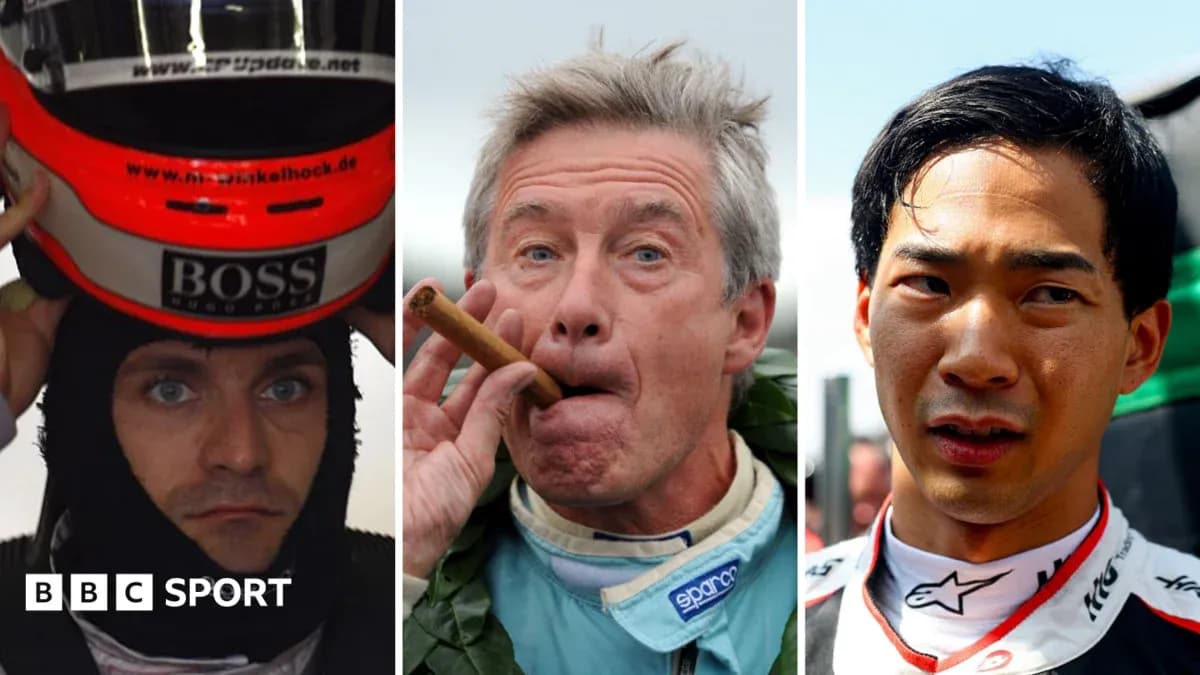
“My job flipped from primarily running the team to primarily selling the team and finding a new owner or they would shut it down,” he tells BBC Sport. “It was probably the worst year of my life. Particularly because for the first few months I was sworn to secrecy.”
The racing wasn’t going to sell Jaguar. The story would have to.
The previous season, the team had leaned into Hollywood, partnering with Terminator 3 at Silverstone. It worked. So communications director Nav Sidhu went looking for another blockbuster.
He heard the whispers first. Ocean’s Twelve was being filmed in Monte Carlo. George Clooney, Brad Pitt, Matt Damon – the kind of names that make even a struggling midfield F1 team feel glamorous.
“One thing led to another and before you knew it, we had agreed [a deal] with George Clooney, Brad Pitt and Matt Damon,” Sidhu recalls.
Jerry Weintraub, the legendary Hollywood producer, signed off on a Monaco takeover. Branding, stars, cameras, the full Ocean’s treatment. The film’s plot revolved around a daring theft of a diamond-encrusted Fabergé egg. Sidhu wanted that theme on the cars.
So he found diamonds.
The Sparkle On The Nose
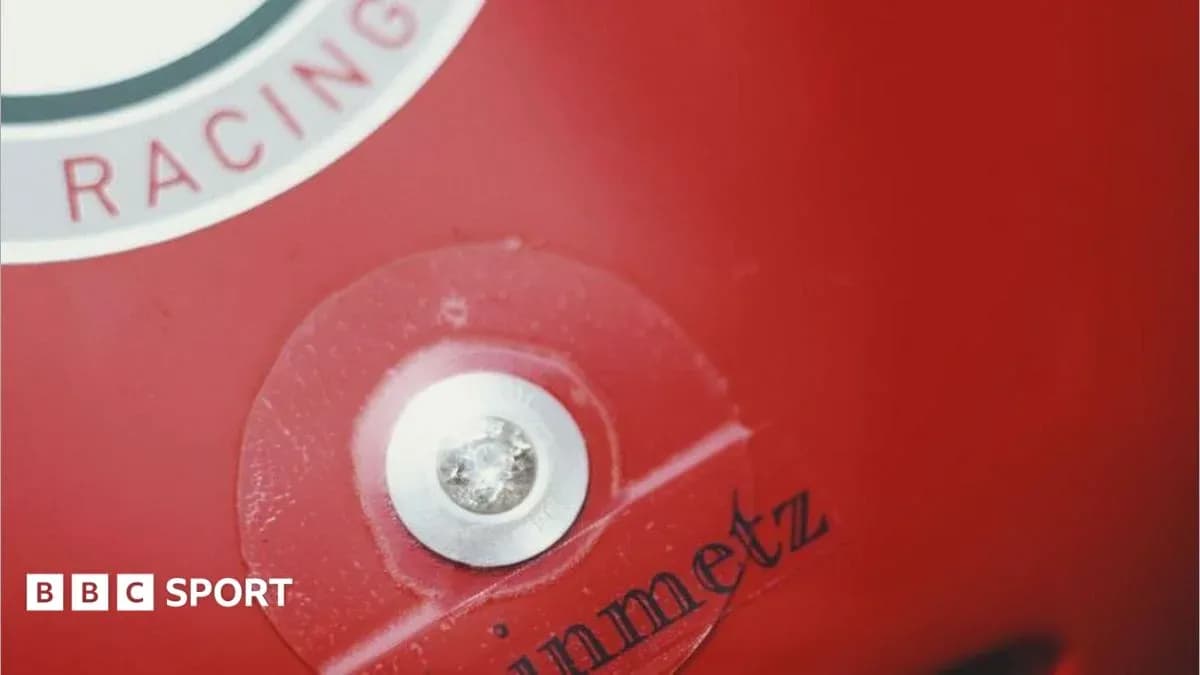
Sidhu struck a deal with Steinmetz, a diamond company willing to lend serious stones for serious exposure. Each Jaguar would carry a diamond on its nose, worth around $300,000 apiece. In today’s money, the pair would be close to $1m.
Publicity, pure and simple. The most fragile part of a car that would be hurtling at 200mph through concrete canyons, now carrying a small fortune on its tip.
The stage could not have been better set. Monaco, the sport’s most glamorous weekend. Hollywood in the paddock. Diamonds on the grid.
One Lap, One Mistake, One Missing Stone
Monaco’s streets are merciless. Narrow, bumpy, lined with barriers, crowned by that tunnel and the tight Loews hairpin. Overtaking is rare. Accidents are not.
On lap one, Christian Klien found out the hard way.
In the midfield scramble, the Austrian tangled with a Jordan as he exited Mirabeau. The contact damaged the front of his Jaguar – the very area carrying the diamond – and sent him skating into the barriers at Loews.
The car crumpled. Klien climbed out unhurt. The marshals swung into action, the crane lifted the broken Jaguar away and tucked it behind the barriers. The race went on.
Back in the garage, Sidhu’s phone rang. Steinmetz wanted to know one thing: would they be getting their diamond back?
“I can't remember what I answered, but it certainly wasn't 'yes',” he says.
He couldn’t even go and look. There were still 76 laps to run. The car, and whatever was left on its nose, would not return to the pits until the chequered flag had fallen.
“I was consumed with getting to that spot as quickly as I possibly could,” Sidhu says. “That hour and a half waiting for the race to finish felt like a day and a half, every single lap was just like pulling teeth.”
When he finally got his chance, the scene was brutally simple.
Car? There.
Damage? Everywhere.
Diamond? Gone.
Was It Ever Real?
Theories began before the tyre smoke had cleared. The most basic one: was the diamond even real?
Sidhu has heard that rumour for two decades. He rejects it outright.
“I've learned that any diamond company is not going to go out there, particularly in the public domain, and use fake diamonds because clearly there's a high risk of being caught,” he says.
“Had we used a fake diamond in that car and what took place took place, then clearly the embarrassment and the disrepute it would bring Jaguar, and Formula 1 for that matter, was too high risk.”
The idea that the stone was a prop is neat, but it doesn’t survive contact with the people who handled it. Purnell remembers what managing director David Pitchforth told him.
“David said, 'Tony, it was definitely real because when they came to the office with it, I picked the diamond up, went to the window and scratched the window' because that's how to tell.
“Hearing that from Dave, I'm in no doubt it was the real thing that was put on the car. I don't know if one of our mechanics was switched on enough to make a fake, but I don't think so.”
So the diamond was real. It was on the car. Then it wasn’t.
Pocketed, Shattered… Or Swept Away?
Once you accept the stone existed, the story forks.
Purnell leans towards the simplest explanation.
“I think somebody probably just picked it up, put it in their pocket and... they're probably smiling and thinking, 'it's in my drawer',” he says.
But the violence of a crash at around 100mph complicates that picture.
“I do think also that a fairly large diamond zooming through at 100 miles an hour probably shattered. Somebody's got a little bit, somebody else has got another [little bit].
“Maybe, sadly, just some guy was sweeping up the road or one of those trucks with the brushes and it all went down the sewer.”
Monaco’s streets don’t stay as a racetrack for long. Within an hour or so of the race, the circuit reverts to public roads. Barriers move back, fences come down, and thousands of people pour through the same corners the cars have just attacked.
Sidhu is convinced of one thing: the diamond did not vanish into thin air.
“Someone's picked it up,” he says.
“What people tend to do is, believe it or not, pick up bits of tyre rubber, you know, claim that as Michael Schumacher's front tyre rubber or whatever they can find.
“Somebody may have picked it up not having any idea it came off a car.
“There's a lot of diamonds in Monte Carlo. There's a lot of people walking around Monte Carlo with a lot of jewellery and a lot of stones.
“Somebody dropped a diamond in Monte Carlo. Well, they're not going to miss that, are they? Probably not.”
Purnell even allowed himself a Hollywood flourish in his imagination.
“It did occur to me that the ultimate thing would be if Clooney, Pitt and Damon had contrived to steal it because it was so in line with Ocean's Eleven. But that was a fantasy too far.”
Fantasy, yes. But the story keeps inviting that kind of thinking.
Did Klien Crash On Purpose?
Where there’s a high-profile crash and a missing gem, conspiracy is never far behind. One of the most persistent theories is that Klien crashed deliberately.
The logic? A dramatic shunt, a “stolen” diamond, a perfect Ocean’s-style stunt.
Inside Jaguar, the idea is treated with the same respect as a movie pitch.
Sidhu points out the hard numbers. The cost of the damage to the Jaguar far exceeded the value of the diamond. The stone, reports at the time said, wasn’t even insured. The real money was in points, results, and the hope of convincing sponsors and a buyer that the team had a future.
“For us, bringing two cars home, ideally in the points, had far bigger commercial benefits to us in terms of constructors' points, broadcast money, and more importantly, trying to retain our sponsors and trying to protect the integrity of the team,” he explains.
The manner of the accident also undermines the theory. Klien went straight into the barriers in front of marshals. There was no chance to clamber around the front wing, no time to discreetly pocket a gem.
“Christian didn't try and say all the brakes failed or anything like that, he's just said 'I made a rookie mistake',” says Purnell.
“He was a young guy, first time, made a mistake, it happens. Doesn't usually happen with a $300,000 diamond flying into the crowd or wherever it went, but I'm sure Christian wasn't really aware of the diamond.
No amount of money would have got Christian to do that [crash on purpose]. He wanted to make a success of what he was doing.”
The crash, in sporting terms, was just another painful moment in a season full of them.
The diamond turned it into something else.
A PR Disaster That Became A Masterstroke
While the world fixated on the missing stone, Purnell’s immediate concern was more prosaic: both Jaguars failed to finish. Klien crashed. Mark Webber retired. On a weekend loaded with sponsors and potential buyers, the timing could hardly have been worse.
“When Christian went into the wall and then later Mark retired, my entire thinking was 'Oh God. What am I going to say?'” Purnell recalls.
“The chairman of HSBC [Jaguar's then sponsors] was there, Sir John Bond. Jackie [Stewart] was there.
“It was all about 'how am I going to explain another bad performance? How am I going to say 'just stick with the plan? We know what we're doing, it will take time' because sponsors don't have time. They want success.”
Then something unexpected happened.
The diamond swallowed the narrative.
“No-one mentioned Jarno Trulli winning the Grand Prix, no-one asked how the Jaguars did. No-one was interested that Mark Webber's car broke as well. It was, 'where's the diamond?'” says Purnell.
Back in Detroit, the reaction stunned him.
“I remember talking to somebody in Detroit saying, 'fantastic publicity over here, you know we never hear anything about Formula 1 but it's on the newscasts, it's in the papers - fantastic'.”
For a team on the market, that kind of global attention mattered. Asked whether the mystery helped the eventual sale of Jaguar to Red Bull six months later, Purnell doesn’t hesitate.
“I think that helped quite a lot because it buzzed the Jaguar team and showed that huge publicity was possible even if you weren't doing so well.”
Red Bull bought the team, turned it into Red Bull Racing, and rewrote modern F1 history: eight drivers’ titles, six constructors’ crowns, a dominant force born from a struggling green car that once wore a diamond on its nose.
“You couldn't design a better PR weekend,” Purnell says.
Not like this, anyway. Not with a $300,000 stone still missing somewhere between the barriers, the drains and the dresser drawer of someone who, one Sunday in Monaco, bent down, picked up a sparkling little rock and walked quietly away.