F1 Confirms Middle East Season Finale, Imola Stands Down
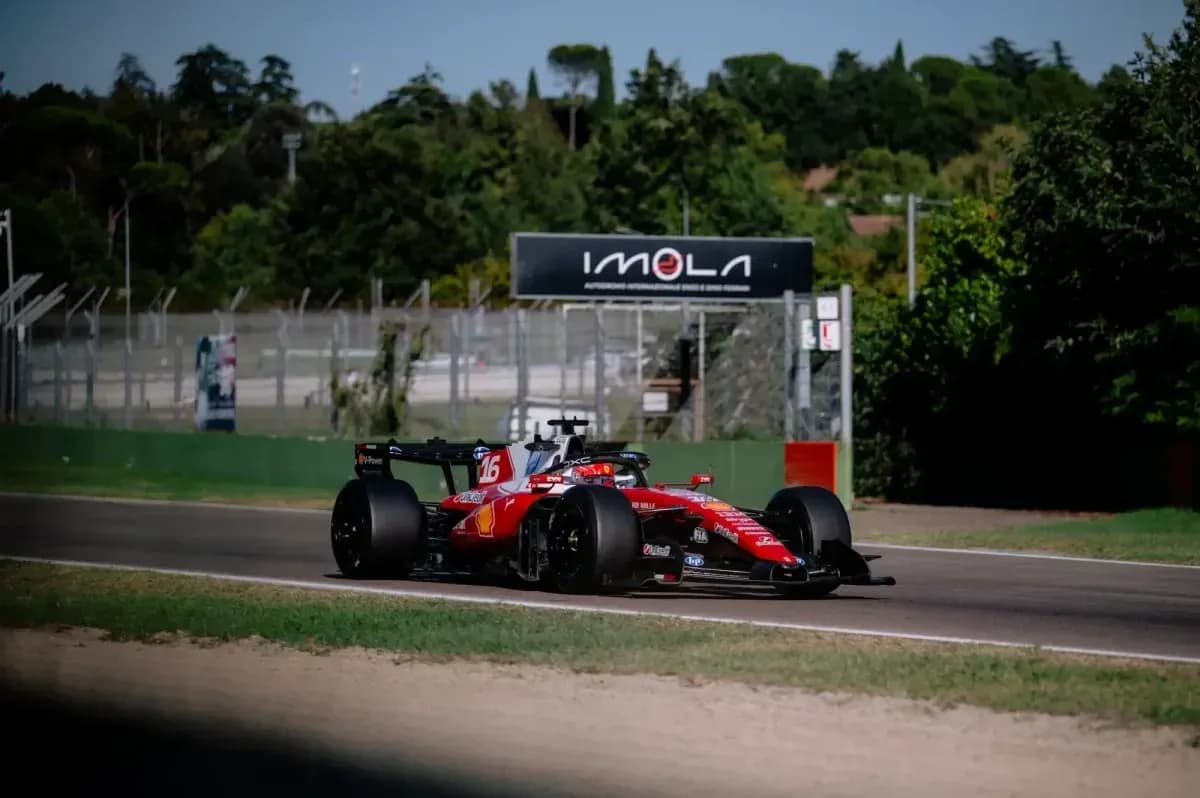
Formula 1 has quietly closed the escape hatch. Imola, long prepared in the background as an emergency season finale, has been told to stand down. The 2026 world championship will end where it was always meant to: under the floodlights of Qatar on November 29 and Abu Dhabi on December 6.
That decision lands against a fraught geopolitical backdrop. The US/Israel–Iran conflict has already ripped up the early-season calendar, forcing April’s races in Bahrain and Saudi Arabia to be cancelled on safety grounds. What followed was a scheduling puzzle unlike anything the championship has faced in the modern era.
Bahrain eventually survived, but not in Bahrain. In September, the kingdom struck an unprecedented deal with Sepang to stage its grand prix in Malaysia, salvaging the race but underlining just how fluid the situation has become.
Qatar and Abu Dhabi, though, have hung over the paddock for months. Two high-profile, high-investment season finales in a region under intense scrutiny, with risk assessments changing by the hour. That uncertainty is what first dragged Imola into the frame.
Imola’s Plan B that never was
F1’s preference never shifted: finish in the Middle East, as scheduled, if it could be done safely. The problem was time.
The championship needed a safety net in case late intelligence forced Qatar and Abu Dhabi off the calendar. Ending the season early was never a serious option, not with commercial contracts, broadcasters, and a title narrative all built around a December 6 finish.
So a contingency took shape. If the Middle East double-header fell, Imola would step in on that same December 6 date and host the finale. F1 was prepared to underwrite the cost of that insurance policy – around $10–15 million – to keep the season structure intact.
That commitment came with a hard reality: grand prix venues cannot be switched on at the last minute. Imola needed to start preparing long before anyone in London or Geneva could say with certainty whether the Middle East was safe enough.
F1 agreed to pay for those early preparations – the groundwork, staffing, and initial infrastructure planning – knowing full well it might never use them. The real crunch came this week.
The sport had reached the point where it either had to authorise major infrastructure spending at Imola or pull the plug and back the original plan. On Tuesday, the call finally came. Imola was informed it would not host the finale. Qatar and Abu Dhabi remain on the board.
This is not a blanket guarantee that the Middle East races go ahead whatever happens. The stance is more nuanced, and more ruthless: the events stay on until they are judged unsafe. If that judgement changes, F1 insists it will walk away.
A moving target in the Middle East
With Imola out of the picture, F1 has bought itself another two weeks of breathing space. Nothing needs to be shipped from Las Vegas towards the Gulf until after that race, giving decision-makers a small but valuable window to keep tracking the situation.
Inside the paddock, the message has been blunt. If any of the rolling threat assessments from F1 and the FIA point to an unacceptable risk, the races will be cancelled. No hesitation, no half measures.
Stefano Domenicali’s track record backs that up. In 2023, the Emilia Romagna Grand Prix disappeared from the calendar on the Wednesday of race week as flooding ravaged the region. A year earlier, the Russian Grand Prix was not only scrapped but stripped of its future contract after the invasion of Ukraine.
The same hard-edged approach now applies to Qatar and Abu Dhabi. F1 is satisfied, as of today, that they can proceed. The work behind that confidence is extensive.
Since the latest flare-up in the Middle East began in February, F1 and the FIA have run a multi-layered monitoring operation. Staff in both organisations, along with Domenicali and FIA president Mohammed Ben Sulayem, have been in constant dialogue with local authorities – police, military, and security services – in the host countries.
FIA member clubs have fed into the process. So have governments. F1 has been leaning on the Foreign Office in the United Kingdom, the US State Department, European foreign ministries and intelligence services in the region. Travel advice from individual governments has become a key barometer.
One line is clear: if outright travel bans come into force, the events cannot happen. Insurance collapses, logistics become impossible, and the sport is left with no room to manoeuvre. For now, while governments warn of escalation risks and potential disruption, there are no blanket “do not travel” orders for Qatar or Abu Dhabi.
Geopolitics remains a wild card. F1 has kept a close eye on the fallout from the Israeli election and the US Midterms, watching for signs of automatic escalation. So far, nothing has suggested that an inevitable surge in conflict is locked in.
The Qatar MotoGP round last weekend offered another data point. It passed without incident. Liberty Media CEO Derek Chang attended in person, using the motorcycle event as a live case study of how major international sport currently operates in the country. F1 also has staff on the ground in both Doha and Abu Dhabi, feeding back a real-time picture.
Teams and drivers have been kept in the loop throughout. Some in the paddock remain uneasy about travelling to the region, and F1 knows it cannot eliminate every concern. But it argues that it has addressed the major risk factors as far as possible.
2027: a new season, the same questions
Even if Qatar and Abu Dhabi unfold without a hitch, nothing about the Middle East’s long-term place on the calendar is guaranteed.
The 2027 season is scheduled to begin in Bahrain and Saudi Arabia. The same level of monitoring that has dominated this year will continue into that campaign, and contingency plans will sit in the drawer in case the opening flyaway races collapse.
Right now, Bahrain looks stable enough to proceed. Saudi Arabia is a different story.
Escalating fighting with Yemen’s Iran‑backed Houthi movement has pushed Saudi Arabia onto the list of countries many governments advise against travelling to. Under those conditions, staging an F1 race there is effectively impossible.
Unless there is a dramatic improvement before the start of next year, the March Saudi Arabian Grand Prix will not happen.
That throws the entire season opener into doubt. F1, though, has already sketched out its alternatives.
If Saudi Arabia drops off the schedule but Bahrain remains viable, the sport is likely to pivot to a Bahrain‑led start: pre‑season testing at Sakhir in February, the opening round on March 14, then on to the Australian Grand Prix on April 4.
If Bahrain also becomes untenable, the Malaysia solution comes back into focus. The success of Bahrain’s 2026 race being staged at Sepang has opened the door to a repeat. In that scenario, Malaysia would not just host the season opener; it would probably stage pre‑season testing as well.
Logistically, it fits. Freight can flow from Sepang to Australia, then on to China and Japan as one coherent Asian‑Pacific swing. It also avoids the domino effect that would follow if China and Japan had to be dragged forward to start the year, an option that had been on the table.
The advantage for F1 is time. No immediate decision is needed on how 2027 begins. Any call can wait until the start of next year, when the political and security picture may look very different – and when the consequences for the rest of the calendar can be judged more clearly.
For now, the championship leans into a familiar stance: keep every option alive, move only when the information is strong enough, and accept that flexibility has become as vital to modern F1 as horsepower and downforce.
Imola returns to the sidelines, the grand old circuit ready but unused. The real story now lies in the Gulf, where two night races will not just decide a title, but also shape how – and where – Formula 1 dares to start the next era.