Brazilian Grand Prix 2026: Chaos, Champions, and Controversies
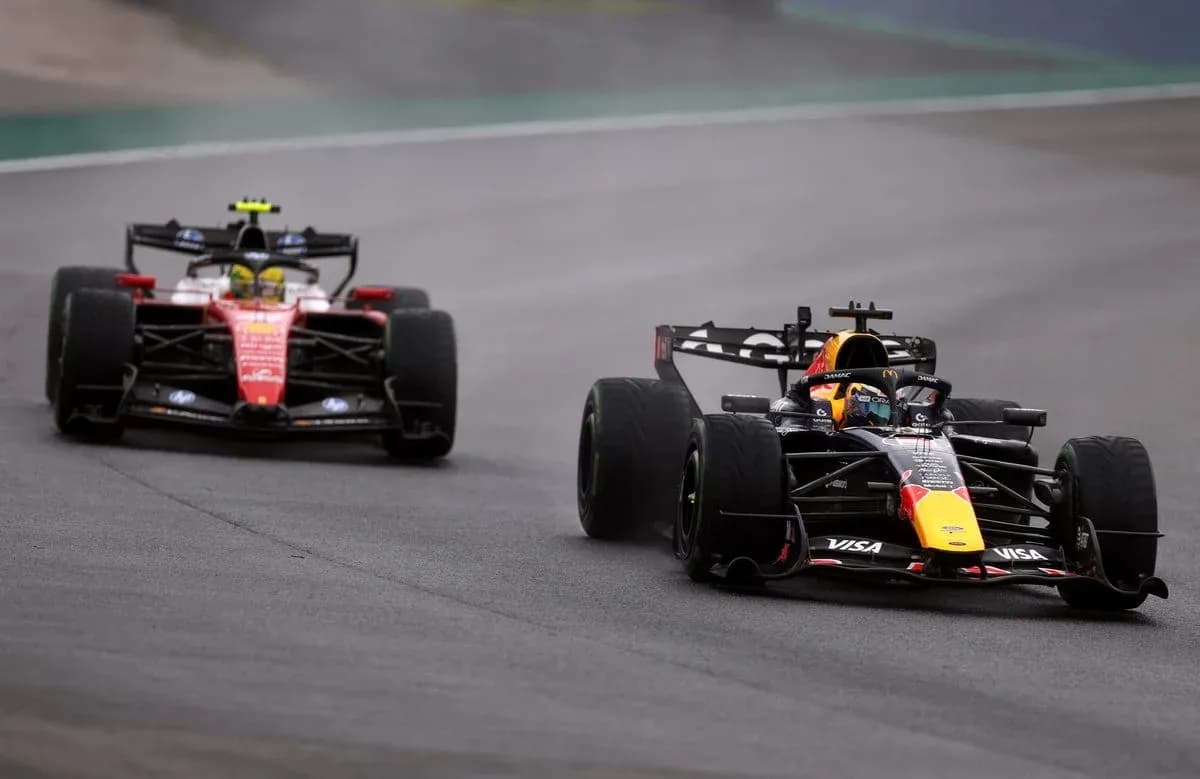
Was the Brazilian Grand Prix the best race of the 2026 Formula 1 season? If it wasn’t, it came close. It was one of those Interlagos afternoons that strips teams bare and leaves drivers exposed – to the weather, to strategy calls, to their own limits.
By the end of it, Lando Norris had another win, Mercedes had another title, and almost everyone else had something awkward to explain on the flight home.
Verstappen’s storm from the back – and the mystery that slowed it
Max Verstappen started 21st and finished second, 14.6s behind Norris. On paper, that’s already outrageous. He walked away convinced it could – and should – have been more.
The Dutchman felt something go wrong with the car as the race evolved. The turning point, in his mind, came when he swapped intermediates for slicks. Suddenly the Red Bull snapped into wild high-speed oversteer, nothing like the balance he’d had at the start.
When the rain returned and he bolted inters back on for the final stint, the car transformed again. Night and day, he said. Same car, same driver, totally different behaviour. For Verstappen, that was all the confirmation he needed that the RB had lost some aero performance mid-race.
Even with that, he sliced through the field and ended up in Norris’s mirrors in terms of lap time, if not on the road. Whether he could have beaten the McLaren outright is unknowable, but the numbers hint at what might have been.
On the other side of the Red Bull garage, Isack Hadjar quietly laid down some of the most convincing laps of his short F1 career. On 22 of the 38 laps where their pace can be compared directly, Hadjar was faster than Verstappen on the same tyre, same strategy, often on the softs where Verstappen expected to shine.
That doesn’t diminish Hadjar’s performance – if anything, it underlines it. This was his third podium for Red Bull and, as team boss Laurent Mekies put it, “the best race he has done with us”. Hadjar raised his own bar.
But it also sharpens the question: if Verstappen normally has the edge, what exactly was missing? Red Bull will pore over the data to find out how much time was lost and whether it cost him a shot at one of the great comeback wins.
Mercedes crowned – but the coronation stumbles
Mercedes left Brazil with the constructors’ championship wrapped up for the first time in five years. The route there looked nothing like the ruthless, controlled season that delivered it.
Kimi Antonelli, fresh world champion at 20, did everything right early on. He led the first 19 laps and looked in complete command as the field tiptoed around on a drying track. Then caution crept in.
Mercedes kept him on inters longer than most. With a title already in his pocket and the teams’ crown in sight, the logic was clear: don’t risk it. But Norris and McLaren judged the crossover to slicks perfectly. Norris stopped a lap earlier, wiped out Antonelli’s lead and immediately put him under pressure.
The pressure told. Errors crept in, Antonelli tumbled away from the podium fight, and a race that had been his to lose slipped through his fingers. He admitted he was angry with how the victory had gone. It felt less like a mechanical issue and more like a repeat of old scars – Montreal, when he got rattled in battle with George Russell, or Silverstone, when he didn’t adjust quickly enough to car damage.
He’s a world champion at 20, but still a work in progress. Mercedes will know exactly which part of his game needs sharpening.
By the time Antonelli spun out of the lead, the other silver car had already taken itself out of victory contention in bizarre fashion. Russell looped it in the pitlane.
You almost never see that. But if it’s going to happen anywhere, a wet Interlagos pit exit on slicks – with the limiter off and the road snaking away – is as likely as it gets. Russell admitted he went “quite high-risk” because he sensed an opportunity. He paid for it with a spin that looked ugly but had a simple explanation.
His pace, though, was right up there with Antonelli and Norris on the softs. He dragged himself back into the race and ultimately beat Antonelli to the flag. Yet the final stint on inters exposed another weakness: both Mercedes drivers were half a second or more per lap slower than Norris. Russell’s theory was that his tyres overheated on the outlap when the track was at its driest, then slid into what he called a “negative spiral”.
Double world champions on paper. On track in Brazil, oddly fragile.
Camara’s brutal debut – and the flashes that matter
Rafael Camara could hardly have been handed a harsher introduction to F1.
He got the Haas call at the start of the week. No prior mileage in the car. No experience of the 2026 machinery. A forecast that screamed chaos from the outset. Interlagos delivered on that promise.
The result – 20th, two laps down – looks grim. The detail doesn’t.
Camara was sharp in qualifying, especially given the rain that turned the session into a lottery. On pure pace, a Q3 appearance on debut in those conditions wouldn’t have been outrageous. That alone says something.
In the race, his slick-tyre pace stacked up reasonably well against Ollie Bearman. Across two soft-tyre stints, he was about a tenth slower on average. Bearman’s race was messier and he spent more time in traffic, so the caveats are obvious. But Camara was nowhere near lost.
His weakness was clear: intermediates. At the start and again at the end, when the rain returned, the gap to Bearman ballooned. The confidence that had flickered in qualifying had already taken a knock.
He’d gone off twice on Saturday. The first moment came on the Reta Oposta, a mix of aquaplaning and wheelspin that sent the car fishtailing down the straight. The second was a lock-up at Juncao, Turn 12, where many came unstuck, followed by a solid hit with the barriers.
No surprise, then, that neither he nor Haas wanted heroics in the early laps of the race. He eased himself in, kept it tidy, then once he finally settled, the speed reappeared. Very, very quick at times – just not when it counted most.
By the final inter stint, there was nothing on the table. The priority was simply to finish. He did. The box is ticked, the nerves are out of the system, and the next one should be easier.
From 20th and two laps down, the only way his F1 career goes is up. The important thing is that, in between the mistakes and the caution, the raw pace was visible.
Lawson turns pressure into leverage
Liam Lawson is doing something unusual: dominating the midfield and still having to wait for a contract.
Five consecutive weekends he’s come out on top in the midfield scrap. In Brazil he even ran as high as second. Yet with three rounds left, he doesn’t officially have a seat for 2027.
Red Bull must pick two of Lawson, Arvid Lindblad and Nikola Tsolov for Racing Bulls next year. The Race understands Lawson is closing in on keeping his place. His recent form makes him almost impossible to drop.
The sport has seen strong midfield drivers cast aside before – Sergio Perez losing his Racing Point seat for 2021 remains the prime example, before Red Bull rescued him. But to cut a driver performing at Lawson’s current level would be almost unprecedented.
Earlier in the year, this conversation would have sounded very different. Lindblad, the rookie, was holding his own. Since then, Lawson has pulled away. Lindblad himself admitted in Brazil that he “lost [his] rhythm a little bit after sort of Madrid and Baku”.
The pressure sat squarely on Lawson’s shoulders heading into the Austin–Mexico–Brazil triple-header. Underperform there, and his future might already be gone. Instead, he has turned that stretch into his strongest argument yet.
If Red Bull did drop him now, the optics would be brutal. Which is why an extension, likely before Las Vegas, feels less like a favour and more like a necessity.
Ferrari’s truce in the midfield shadows
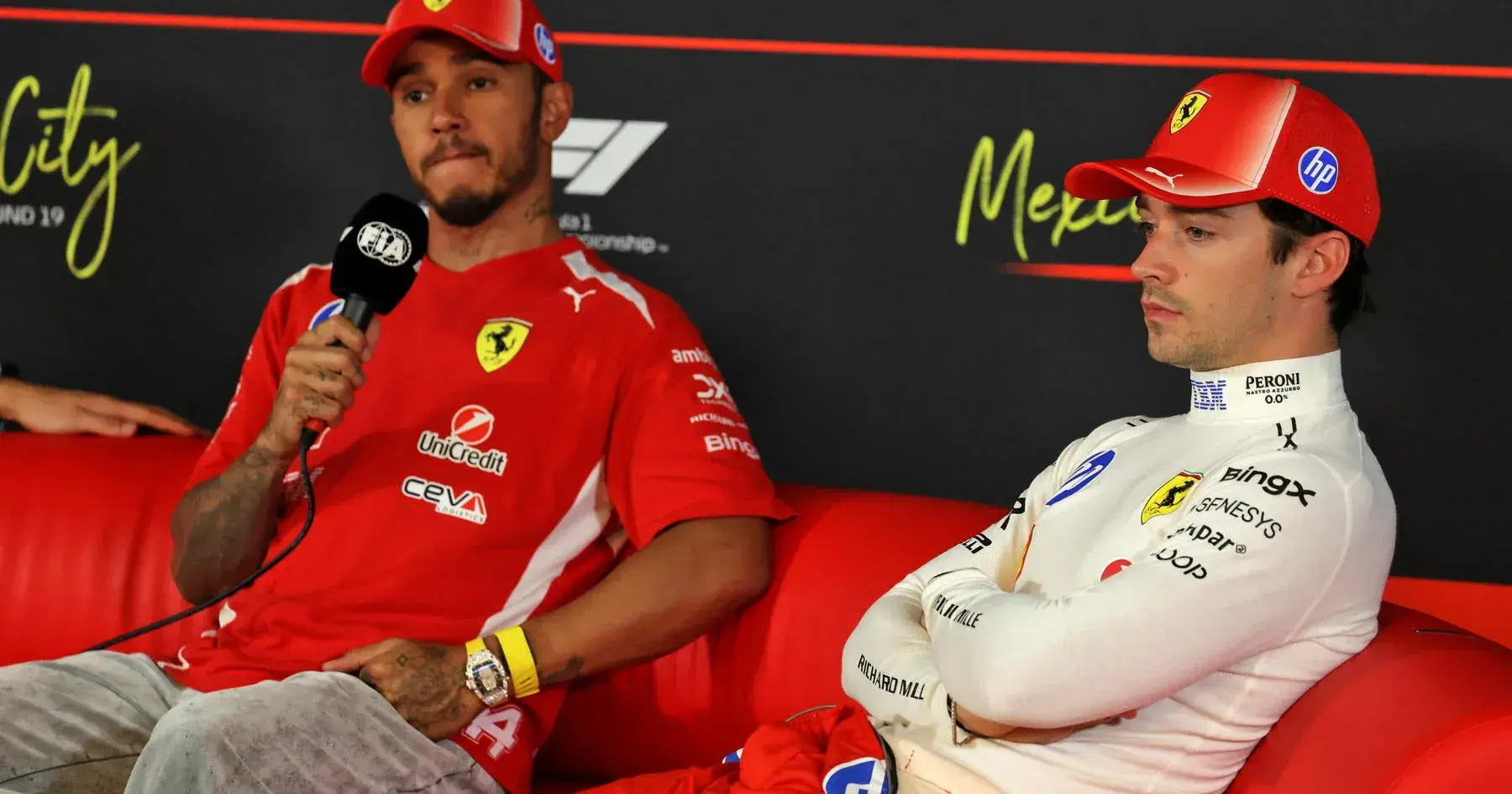
A week after Mexico, Ferrari arrived in Brazil with questions swirling around Charles Leclerc, Lewis Hamilton and whether Fred Vasseur could really keep a lid on them.
Their collision in Mexico had cost the team a 1–2 and triggered days of scrutiny over team orders, driver trust and internal discipline. Interlagos, with its treacherous conditions and constant risk of error, could easily have turned into another flashpoint.
Instead, it passed without drama. Leclerc and Hamilton raced each other hard but sensibly over positions that meant very little. No contact, no headlines, no fresh fire for Vasseur to put out.
Vasseur, usually quick with a joke before turning serious, wasn’t interested in comparisons. Mexico, he pointed out, was a fight for the win. Brazil was a skirmish over nowhere.
Leclerc cut to the heart of it: “Lewis was much faster than me, so at that time there was no point for me to fight.” Pragmatic, and probably a relief to everyone in red.
The bigger issue was pace. Or, more accurately, inconsistency. Grid penalties had always meant Ferrari’s ceiling was limited here, but Verstappen and Red Bull showed that starting far back was no barrier to a huge result if the car was good enough. Ferrari’s wasn’t.
Leclerc climbed from 14th to seventh. Hamilton rose from 20th to ninth. On a day when the team had recently been one of the strongest in the dry, this felt flat. No disaster, no drama – just a sobering reminder that the car still isn’t a guaranteed threat in all conditions.
Alpine exposed when the rain falls
Pierre Gasly didn’t sugarcoat it. In the wet, he said, Alpine’s car feels “broken”.
The numbers back him up. Both cars went out in Q1 – 17th and 18th – and at no point across the weekend did the team look likely to turn the conditions into an opportunity. On Sunday, Franco Colapinto and Gasly finished 13th and 14th, a lap down.
Other midfield outfits managed to cash in. Alpine never got close. This wasn’t a repeat of that famous wet-weather double podium that once transformed its season. This time, whatever reward the conditions offered, Alpine simply wasn’t in the fight.
Managing director Steve Nielsen had already spoken on Friday about how wasteful the team has been this year. Brazil provided an immediate, painful example.
Gasly’s description was telling: in the wet, the car did “very odd stuff” aerodynamically. It just didn’t behave like a stable platform. Confidence evaporated.
Once the track dried, the picture changed. Colapinto, on fresh tyres just before the rain returned, was flying. The car clearly had decent midfield pace in the dry on softs. But it needed that very specific window: dry track, right compound, right phase of the race.
The heavy wet running on Saturday and Sunday exposed a particular weakness – either in the car’s design or the way Alpine set it up for this weekend. Whichever it is, this felt like a low point, especially when measured against how strongly the season had begun.
The 2026 wets work – but not well enough
Brazil was the first real examination of F1’s 2026 cars and tyres in sustained wet conditions. The series passed a key test: the field ran in properly heavy rain without the now-familiar retreat to the garages.
Qualifying on Saturday showed a more assertive approach from the FIA, happy to let the new-generation cars run in stronger downpours. The race itself unfolded without major chaos on intermediates, despite the constant changes in grip.
Still, the drivers weren’t happy. Carlos Sainz summed it up: the wet tyres are “not good enough” yet.
The main complaint is grip – or the lack of it – and the difficulty in getting the intermediates into their working window. Compared to last year, they simply don’t bite as hard.
The root cause lies in the regulations. Pirelli has been forced to stiffen the inter construction to cope with the extra forces generated by the 2026 cars’ straight mode. That’s the opposite of what a rain tyre wants, and the trade-off shows.
The upside is that Pirelli has already been working on a fix. A new intermediate design is planned for 2027, aimed at easing the warm-up issues. For now, though, the drivers are stuck with a tyre that keeps them on track, but rarely lets them attack.
Aston Martin shines in the corners, Honda stumbles on the straights
Fernando Alonso’s weekend summed up Aston Martin’s season in one race: flashes of a brilliant chassis, dragged back by Honda’s limitations.
Any hope of a heroic points charge vanished almost immediately. On lap one, Alonso followed Ollie Bearman into the Turn 3 runoff, aquaplaning and understeering off. He dropped from eighth on the grid to 12th and never truly recovered.
He fought anyway. That’s what he does. He wrestled with quicker cars, judged the conditions well and clung to the edge of the top 10 for as long as he could. He still finished only 12th.
“Obviously I’m still missing a lot of straightline speed and that’s difficult to compensate,” he said. Yet he’d been dicing with Ferraris early on and even the Mercedes late in the race. “So, taking into account that we lose a lot on straights, that means that the car was phenomenal.”
The wet masked some of Honda’s power deficit, letting Aston Martin’s chassis breathe a little. But Alonso’s remarks carried a familiar frustration: when the car underneath him is this good, the engine keeps putting a ceiling on what’s possible.
Worse, Honda’s reliability problems resurfaced. Lance Stroll suffered battery issues on both Saturday and Sunday, and Honda still doesn’t know why.
Interlagos showed Aston Martin what it could be with a power unit to match its car. The question now is how many more weekends like this it will have to endure before that gap finally closes.