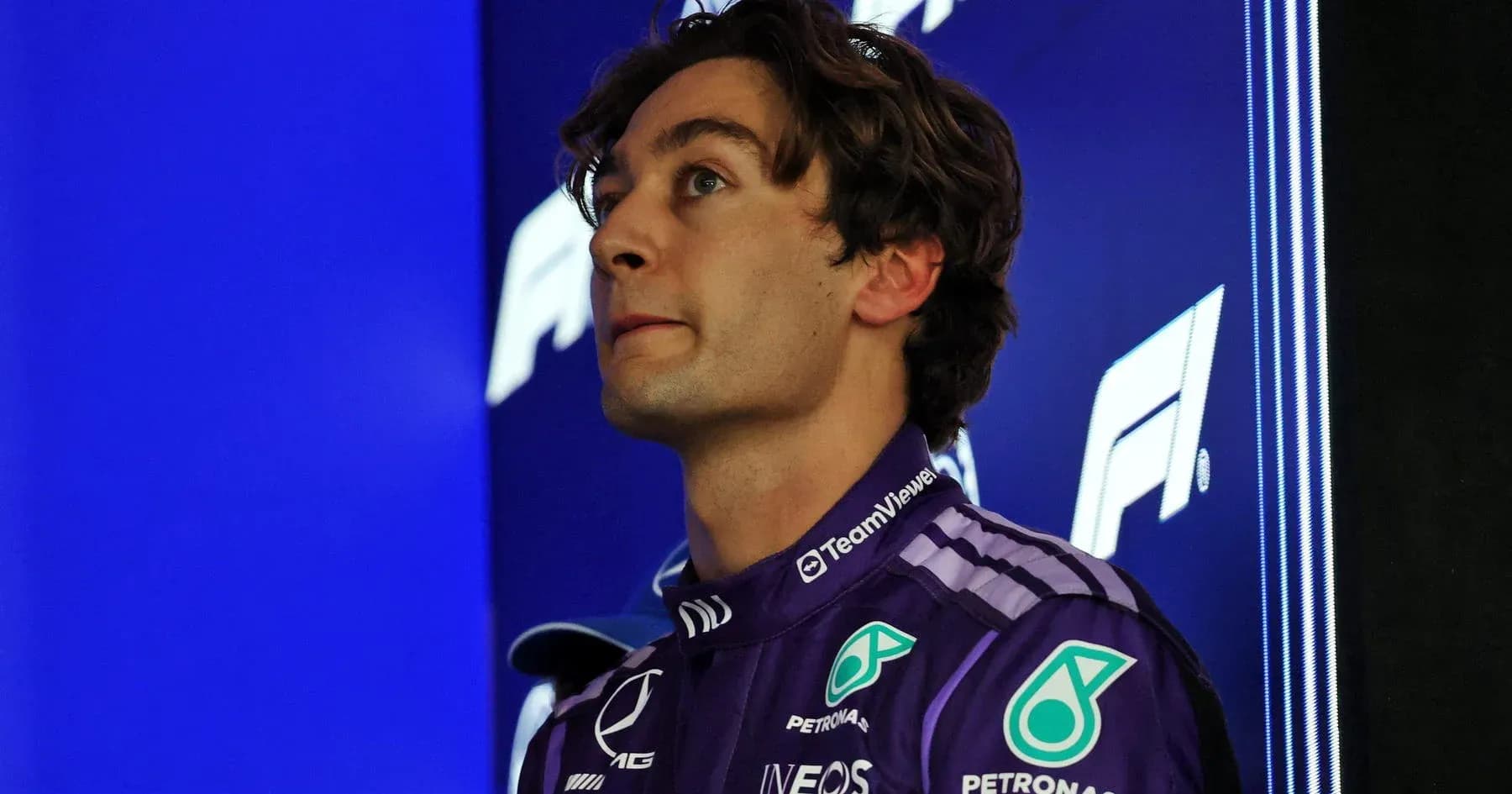
Andrea Kimi Antonelli: The Prankster Champion at Mercedes
Mercedes mechanics have learned to glance over their shoulders in the garage. Not for loose wheels or rogue cars, but for Andrea Kimi Antonelli – and his fingers.
The new world champion has a ritual. He sweeps into the W17 bay, hugs, slaps backs, says hello…and then, when the crew least expect it, delivers a sharp nipple pinch. Nobody is safe. Senior mechanics, power unit guys, front-end specialists – all fair game.
It sounds childish. It is. And yet, beneath the chaos, there is the core of why this 20-year-old Italian has already become more than just another name on the list of champions at Mercedes. The jokes are a language. A way of saying: we’re in this together.
The prankster at the heart of a title bid
“When he comes into the garage, it's quite a show,” says Nathan Tupper, the man on the power unit. Antonelli doesn’t stroll in, he invades. Grabs shoulders. Pinches. Slaps. Turns a high-pressure F1 garage into something closer to a student common room.
Ash Jones, the second senior mechanic on his car, has long since given up trying to catalogue the pranks. “There are so many practical jokes that it would be difficult to list them all,” he admits. The pattern is always the same: a warm greeting, a quick word, then the inevitable pinch. Laughter follows, even when the stopwatch is about to start judging all of them.
Tom Mason, Antonelli’s number one mechanic, sees it at the moments when most drivers shut the world out. Minutes before qualifying, when the grid is on the line, Antonelli is still tickling crew members, grabbing them, cracking jokes. The pressure is suffocating; he’s grinning his way through it.
The contrast is stark. On track, he’s ruthless, clinical, already a champion. In the garage, he’s a 20-year-old kid who thinks birthdays should come with a face full of whipped cream. Literally.
Antonelli has turned that into a Mercedes tradition. Mechanics now approach their grand prix weekend birthdays with a mix of dread and anticipation. Somewhere in the paddock lurks a can of cream and a world champion with suspiciously quick hands.
“When you work in Formula 1, you spend so much time away from home that sometimes you end up celebrating your birthday during a grand prix weekend,” says front-end mechanic Callum Wooldridge. Those are the days when homesickness bites. So the cream ambushes matter. They turn hotel-room birthdays into something else entirely. “I don't think there are many other garages in the paddock where something like that happens,” Wooldridge adds. He knows; he wore the cream in September.
The result is a bond that feels unusual even by the tight-knit standards of a race team. “It's one of the best atmospheres I've ever experienced working with a driver,” Jones says. With Antonelli, nobody walks on eggshells. No strained small talk, no hierarchy in the way they speak to him. Just another guy in team kit – who happens to be faster than almost anyone on earth.
Race engineer Peter Bonnington, “Bono” to the world, leans into it. He wants the laughter, the informality. Mason says Bonnington actively encourages the mechanics to joke with Antonelli, to keep the environment loose. The title was built in that space: serious work done by people who don’t feel crushed by the seriousness of it.
The kid in the blue cap and the broken chassis
To understand how far Antonelli has travelled in such a short time, you have to rewind to 2024 and a very different picture of him.
Back then he was 17, still raw, turning up to Mercedes’ private tests in a blue cap with hair exploding out from underneath. “He really looked like a little kid,” recalls mechanic Franck Bougeard. A teenager, slightly scruffy, about to climb into a car that had carried world champions.
The speed came quickly. So did the crashes.
At Abu Dhabi he hit the wall hard enough to damage the chassis. Teams rarely bother bringing a spare chassis to those sorts of tests. This time Mercedes had. “I don't even know why we'd brought it, but thank goodness we had,” Bougeard says. They needed it.
Then came Monza. Another accident. Another wrecked chassis. Bougeard remembers the creeping thought: every time this kid leaves the garage, are we going to be changing a tub?
He wasn’t reckless, just searching for the edge. Pushing too hard, too soon. Those tests existed for exactly that reason – to let him learn the limits, with carbon fibre taking the punishment.
After the Monza crash, Antonelli came back to the garage shattered in a different way. Not physically, but emotionally. He apologised over and over, weighed down by the sight of mechanics stripping and rebuilding yet another car because of him.
“He kept apologising,” Bougeard says. The mechanic tried to cut through the guilt. The car could be fixed. The important thing was that the driver was fine. Then came the question that revealed another layer to the story: “What did your dad say?”
The answer has stuck with him. “He gave me a telling-off for half an hour!” Antonelli admitted. His mother? Terrified, in tears.
It was a reminder: beneath the helmet and overalls, this was still a teenager dealing with the same family dynamics as any kid who has scared his parents. A furious father. A frightened mother. A son trying to make it right with the people who had to pick up the pieces.
Marco Antonelli’s protectiveness went even further at another test in Abu Dhabi. When he heard his son had gone into the barriers, he sprinted across the circuit to get to him. Bougeard had to take him aside later and spell it out: there are doctors, ambulances, trained people here. The last thing anyone needs is a father getting hit while crossing a live track. Marco knew he’d overstepped. The instinct was pure, if dangerous.
Those early crashes didn’t just test carbon fibre. They shaped the way Kimi walked into the race team in 2025. When he joined the Mercedes grand prix operation, one of his biggest fears wasn’t being off the pace. It was creating too much work for the guys in the garage.
“Whenever he made a mistake, he felt incredibly bad about it,” Mason says. The apologies came again, this time in the heat of a race weekend. Every broken front wing, every damaged floor, every late-night repair session – he carried it.
Eventually, Mason drew a line. He told him: stop apologising. This is our job. You give everything in the car, we’ll give everything in the garage. That’s the deal.
Filling Hamilton’s seat, carrying the weight
There was tension at Brackley before Antonelli’s arrival, and it had nothing to do with pranks. Mercedes were closing the book on the Lewis Hamilton era and handing his car to an 18-year-old rookie. No one knew how that would look.
“We didn't really know what to expect,” Mason admits. With Hamilton, the team knew every habit, every nuance. With Antonelli, everything was guesswork. How many crashes? How steep a learning curve? How many sleepless nights for the crew?
The answers weren’t always comfortable. The 2025 season had some dark weekends. Spa stands out for Mason as particularly bruising. The mistakes hurt. The pressure on a teenager filling Hamilton’s shoes was immense, and everyone could see it.
The mechanics never turned on him. They felt something closer to sympathy. They saw a young man trying to carry a legacy and a factory’s expectations on shoulders that were still growing.
One trait helped him and them. He doesn’t stew.
“He can have a terrible weekend,” Mason says. He can climb out of the car furious, frustration written all over him. Then you see him the next time in the garage and it’s as if someone has hit reset. The anger is gone. He’s back with the jokes, the energy, the willingness to start again from zero.
That matters more than any set-up tweak. A driver who drags his misery around contaminates a team. A driver who shakes it off lifts them. With Antonelli, the positivity is infectious. For a number one mechanic trying to keep a crew sharp and united, that’s gold.
Two days to learn a family
Ask the mechanics what really impressed them, and you’ll hear the same detail repeated: he knows everyone.
Not just faces. Names. Stories. Details.
Ash Jones still sounds faintly amazed. “He knows everyone in the garage,” he says. Tell Antonelli something about your life and he’ll remember it. Not because someone has printed him a cheat sheet, but because he cares enough to listen.
Before he officially joined the race team, Mason spoke to Rosa, Antonelli’s press officer, about arranging a get-together so the crew could meet their new driver. Antonelli was keen, but with one condition: first, he wanted to see the guys who had been with him during those early tests. The people who had rebuilt the cars he’d crashed. He wasn’t going to walk past them into the limelight.
Only then, once he’d closed that loop, would he move on to the race team proper.
When he did arrive in the grand prix garage, the introductions didn’t drag on. Within a couple of days he had names for every face. That was while he was also learning a new car, new procedures, new engineers, the entire operating rhythm of a top F1 outfit. Yet he still found time to look up from the data and see the humans around him.
It’s not just Kimi. The Antonelli family seem wired that way. Tupper tells a story of working away on the car, feeling arms suddenly wrap around him from behind. He turned, expecting a mechanic. It was Marco, beaming. No agenda. Just warmth. The message from father and son is the same: you’re not just staff, you’re part of us.
Wooldridge remembers the early 2025 version of Antonelli as shy, almost reserved. As the year wore on, the walls came down. Today, he says, there’s nothing shy about him. He teases everyone, dives into every joke. Yet, crucially, the core hasn’t shifted. “Really, he's still the same person,” Wooldridge says. The results don’t change him. Win or lose, he walks into the garage as the same kid.
Melbourne: when the clock was the enemy
Not every story is about whipped cream and laughter. Melbourne 2026 stripped everything back to the basics of what a race team is.
Antonelli crashed heavily in FP3. The car came back to the garage wounded. The clock for qualifying was already ticking. It turned into a full-blown race against time.
The mechanics went to work. No theatrics. No speeches. Just hours of high-speed, high-precision labour, turning a wreck into a weapon again.
After qualifying, when the adrenaline had finally dipped, Jones went to see him. Antonelli stared at the rebuilt W17 and shook his head. “I've no idea how you managed to get my car back on track,” he told him. He wasn’t being polite. He genuinely couldn’t understand how they’d pulled it off.
He stuck it on the front row. Second on the grid, hours after he’d nearly written the car off. The result mattered, but the gratitude mattered more. He kept thanking them, over and over. That day welded the title run to the people who had kept it alive.
“When Kimi has a bad day, we feel bad too,” Wooldridge says. Whether the issue is driver error or mechanical failure doesn’t really come into it. The connection is too strong. They ride the same emotional rollercoaster now.
Ask them when they truly started to believe this kid could go all the way to the world championship, and you get different answers, all of them vivid.
For Jones, it was Monza. Nineteenth on the grid, home soil, a mountain to climb. Antonelli didn’t just climb it, he stormed it, carving through the field to win in front of the Tifosi. That was no ordinary victory; it felt like a coronation.
For Wooldridge, the moment came at Austin. An unexpected pole, a race driven with a maturity that belied his age, and a win that looked like it belonged to a seasoned campaigner, not a kid barely out of his teens.
Tupper goes back a little further, to China – the race after that Melbourne repair job. Antonelli’s first grand prix win. The raw emotion in the garage told him this wasn’t a one-off. Something had clicked.
Bougeard, who met him as the messy-haired teenager in the blue cap, doesn’t pick a single race. He looks at the arc. From crashing test chassis to lifting the biggest prize in the sport in what feels like the blink of an eye. “We knew he had talent,” he says. “But I never imagined he'd come this far, this quickly.”
A champion who still behaves like a kid
Bougeard also offers the line that probably captures Antonelli better than any statistic. “It's difficult not to like him,” he says. Even on the days when you wake up thinking you’ve had enough of his teasing, the moment he walks into the garage, something softens. The humour, the mischief, the obvious joy he takes in his job – it disarms you.
That’s the contradiction at the heart of Mercedes’ new champion. He is the youngest world champion in history, the man who has taken over Hamilton’s old seat and turned it into his own. Yet he still wanders around the garage trying to ambush mechanics with cream and nipple pinches.
He has grown up. The way he handles pressure, the authority he carries in briefings, the way he resets after setbacks – all of that speaks of a driver far beyond his years. But he hasn’t shed the spontaneity that defined him when he first appeared in that blue cap.
The mechanics have seen every stage. They rebuilt the cars he destroyed as a teenager. They watched him apologise, watched him suffer, watched him learn. They shared the long nights, the bruising weekends, the first wins, the improbable title fight that seemed a fantasy only months earlier.
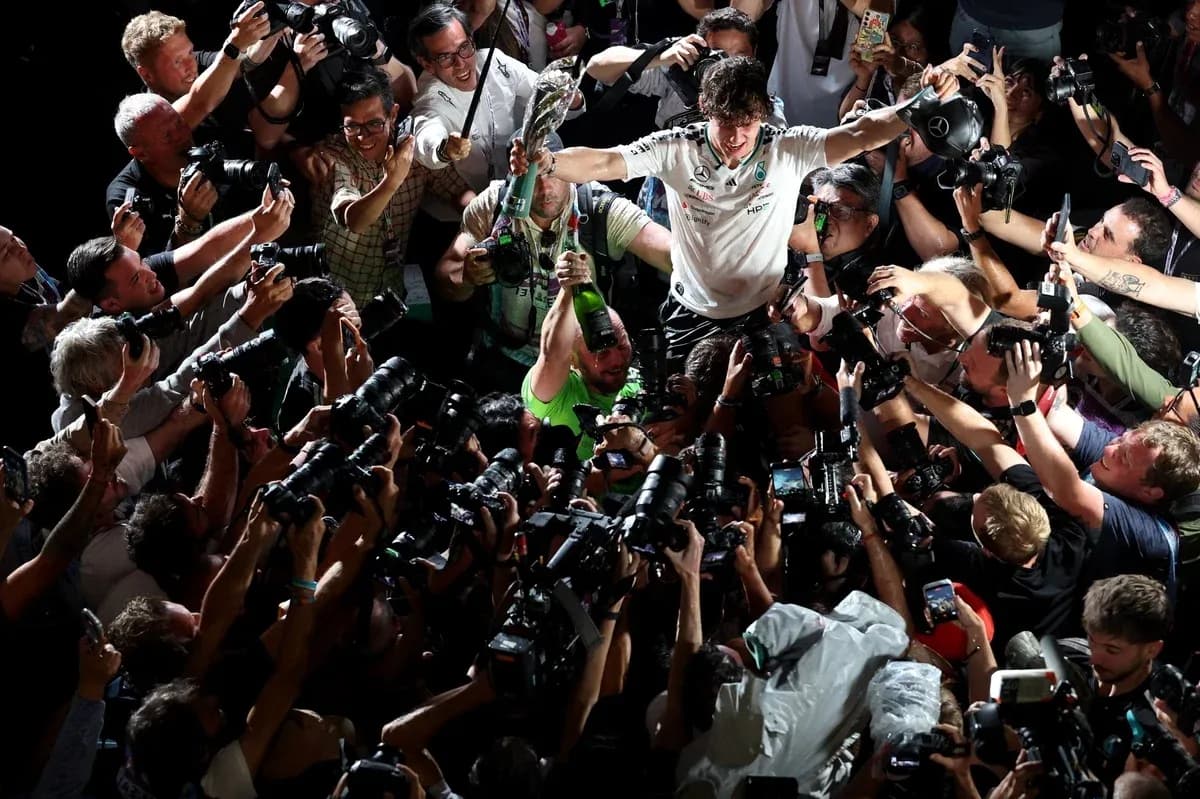
Then came Mexico City. Sunday evening. The championship sealed. In the Mercedes garage, the celebrations were not just about points and trophies. There were hugs that went on a little longer than usual. Tears from people who don’t cry easily.
They weren’t just saluting a world champion. They were embracing the kid they’d helped raise in this unforgiving sport – the one who turned up with messy hair and a habit of crashing, and somehow ended up on top of the world without ever losing the urge to make the people around him laugh.
For Antonelli and the crew who now call him family, the title isn’t the destination. It’s simply the latest chapter in a story that, remarkably, still feels like it’s only just begun.