Adam Silver Addresses Clippers’ Five-Pick Penalty: Precedent Over Emotion
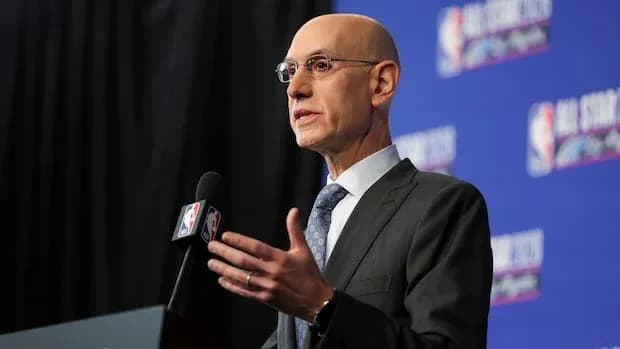
Adam Silver knew exactly how this would land in Los Angeles. Five first-round picks gone, a $30 million fine, a one-year ban for one of the league’s most visible owners, and the lingering sting of Kawhi Leonard’s messy exit. That’s not a routine press release. That’s a fracture line through a franchise.
Yet when the NBA commissioner addressed the decision on Tuesday, at the close of a two-day Board of Governors meeting, he anchored it in one word: precedent.
Timberwolves as the template
Silver referenced a case that still lives in league folklore: the Minnesota Timberwolves’ punishment for salary cap circumvention in the early 2000s. Back then, the league stripped Minnesota of five first-round picks over an illegal agreement with Joe Smith. It was the harshest draft penalty in NBA history.
That, Silver said, is where the Clippers’ case inevitably led.
The league determined that the Clippers had circumvented salary cap rules on Leonard’s behalf, a charge the organization strongly denied throughout a yearlong investigation. The probe ended with a sweeping ruling earlier this month: owner Steve Ballmer suspended for one year, a $30 million fine levied against the team, five first-round picks forfeited, and additional sanctions layered on top.
Silver didn’t downplay the scale of it.
“I think that's, in some ways, the most difficult part of adjudicating these disputes,” he said. “While there have to be competitive consequences, in our view, if these rules are violated, we still want to be a 30-team league and we recognize that in some ways we're unfortunately punishing the fans of that team as well.”
That line hung in the air. The league wants accountability. It also knows who ultimately feels the blow.
Heavy punishment, calculated risk
The commissioner insisted the league is not trying to cripple the Clippers.
He acknowledged the loss of five first-rounders is a “major setback,” but stopped short of painting it as a death sentence for the franchise, saying he doesn’t believe it will cause “permanent damage.”
That’s a careful balance: harsh enough to deter future violations, not so harsh that it writes a team out of the league’s competitive future. The Clippers now have to rebuild their long-term strategy without the most valuable currency in modern roster building.
The timing adds another twist. The trade sending Leonard back to the Toronto Raptors, the team he led to a championship in 2019, finally cleared on Monday with standard league approval. One of the biggest stars of his generation is gone, and the punishment attached to the investigation into his time in Los Angeles will shape the Clippers’ future long after his departure.
Ballmer, who has been one of the NBA’s most aggressive and ambitious owners, has already signaled he won’t drag this into a prolonged public fight. Earlier this week, he said he would accept the penalties. The fine, he confirmed, has already been paid.
A franchise in limbo
On Tuesday, the Clippers were notable by their absence.
Silver confirmed the organization had no representation at the Board of Governors meeting because it is still searching for an interim governor in the wake of Ballmer’s suspension. For a franchise that has spent the past decade trying to shed its old reputation and plant itself among the league’s heavyweights, the optics are stark: no voice in the room, no owner at the table, no first-round picks in five future drafts.
This is what enforcement looks like when the league decides a line has been crossed.
Silver framed it as an uncomfortable but necessary step for a 30-team ecosystem that depends on trust in the salary cap and its rules. The message is clear enough: talent can be chased, deals can be bold, but the boundaries are real, and the price for crossing them can reshape a franchise.
The Clippers now have to live with that price—and prove they can still build something lasting without the draft capital that usually underpins a contender.