2026 Spanish Grand Prix Review: Madrid's Bold Step Falls Flat
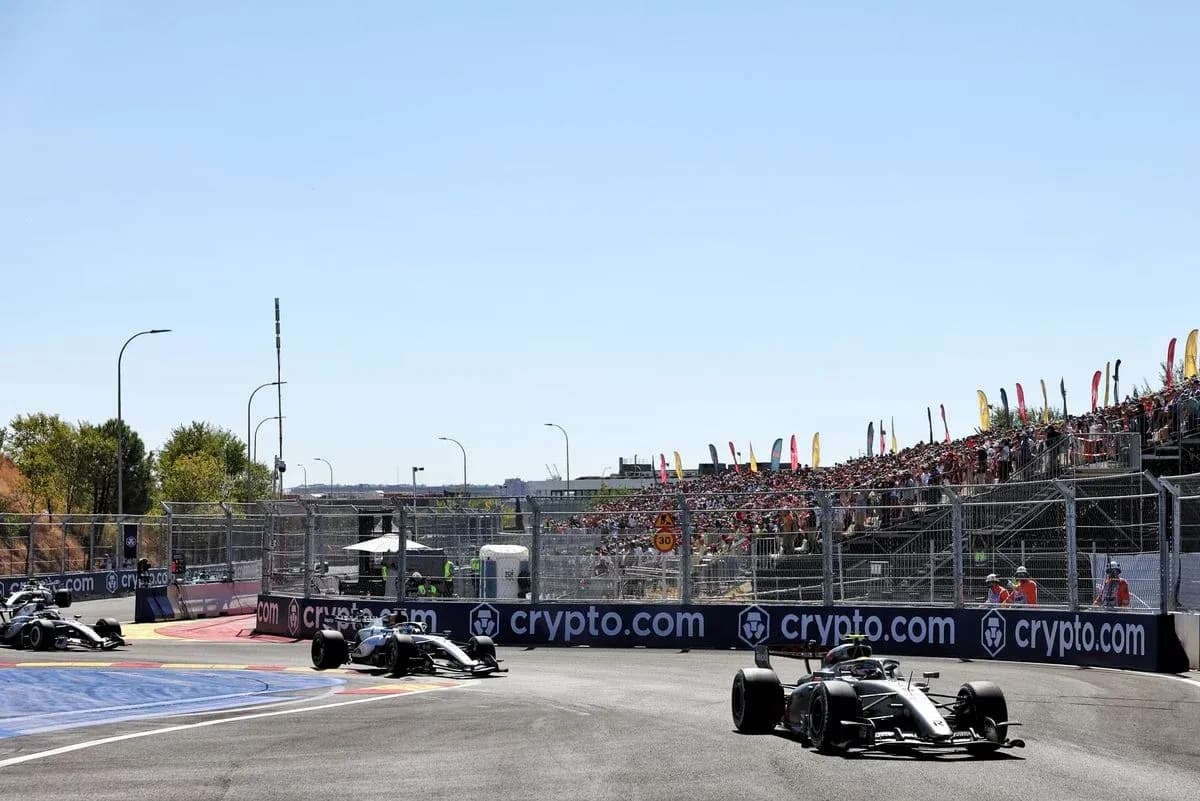
The 2026 Spanish Grand Prix was billed as Formula 1’s bold new step into Madrid. It ended up as a slow march in formation.
The Madring, a half-permanent circuit and half-street hybrid wrapped around the IFEMA conference centre, promised a fresh answer to the age-old problem of dull city racing. On paper, it had everything: a partial blank slate, a star designer, and the backing of a city desperate to make an impression.
On Sunday, it delivered an atmosphere. It did not deliver a race.
A city loves it, the drivers don’t
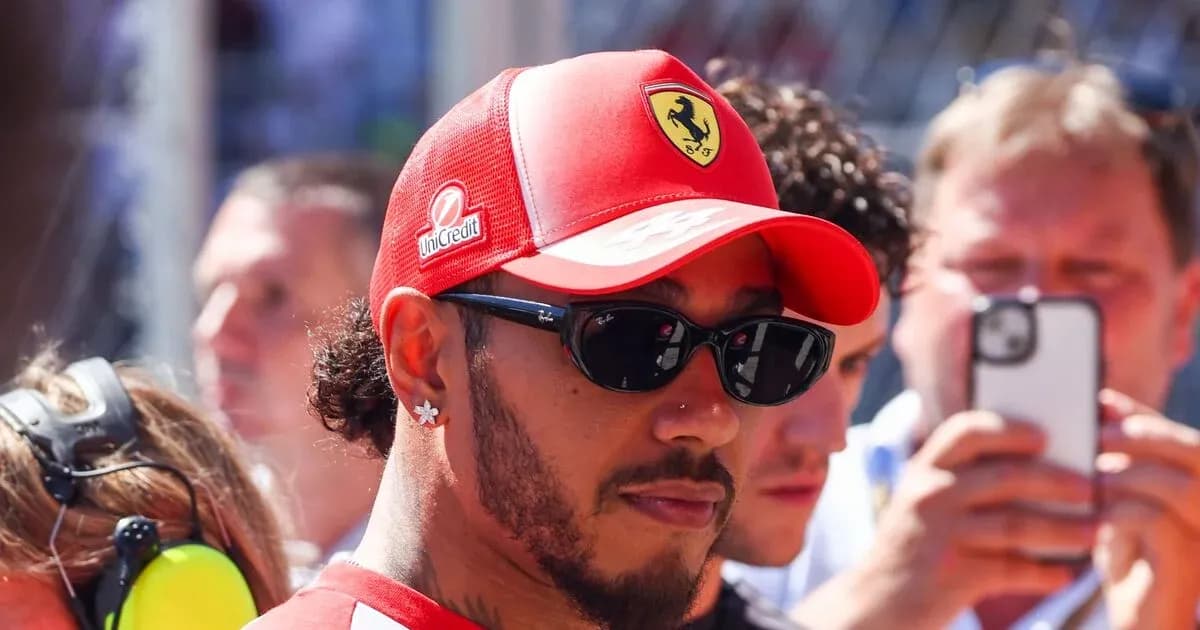
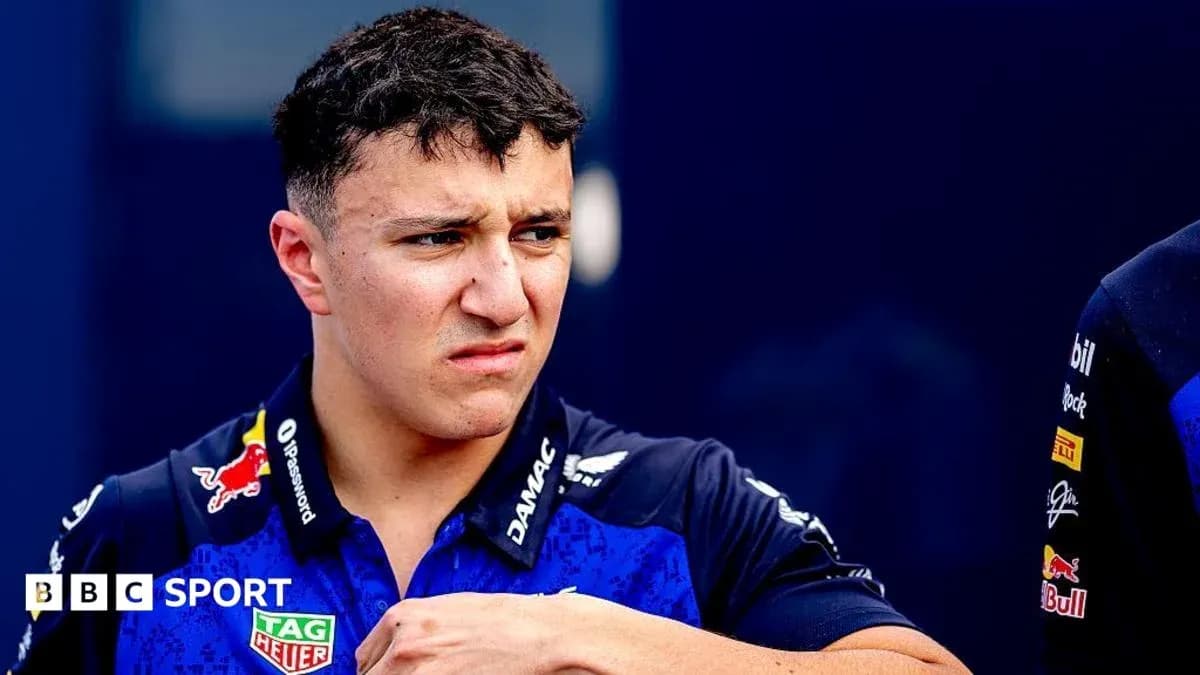
In the paddock, nobody complained about the setting. Fernando Alonso, Carlos Sainz, Lewis Hamilton, Arvid Lindblad – across the grid, there was praise for the location, the buzz, the off-track show. Madrid turned up.
The on-track product? Not so much.
Lindblad admitted it “wasn't the most exciting race.” Gabriel Bortoleto went further when asked if it was as dull to drive as it was to watch.
“Yeah, I almost fell asleep as well,” the Audi driver replied, deadpan.
Esteban Ocon pointed to the core of the problem: the tyres never really gave up.
“It was like 120% from as soon as you pitted to the end,” the Haas driver said. With no meaningful degradation or graining on Sunday, strategy froze. Nobody faded. Nobody flew. The race simply ran.
“If we had a race on Friday, it would have been much better,” Ocon added, underlining how different conditions earlier in the weekend had teased a more volatile, more interesting Madring.
Layout under fire
Once the chequered flag fell, attention turned quickly to the track itself. The criticisms were sharper.
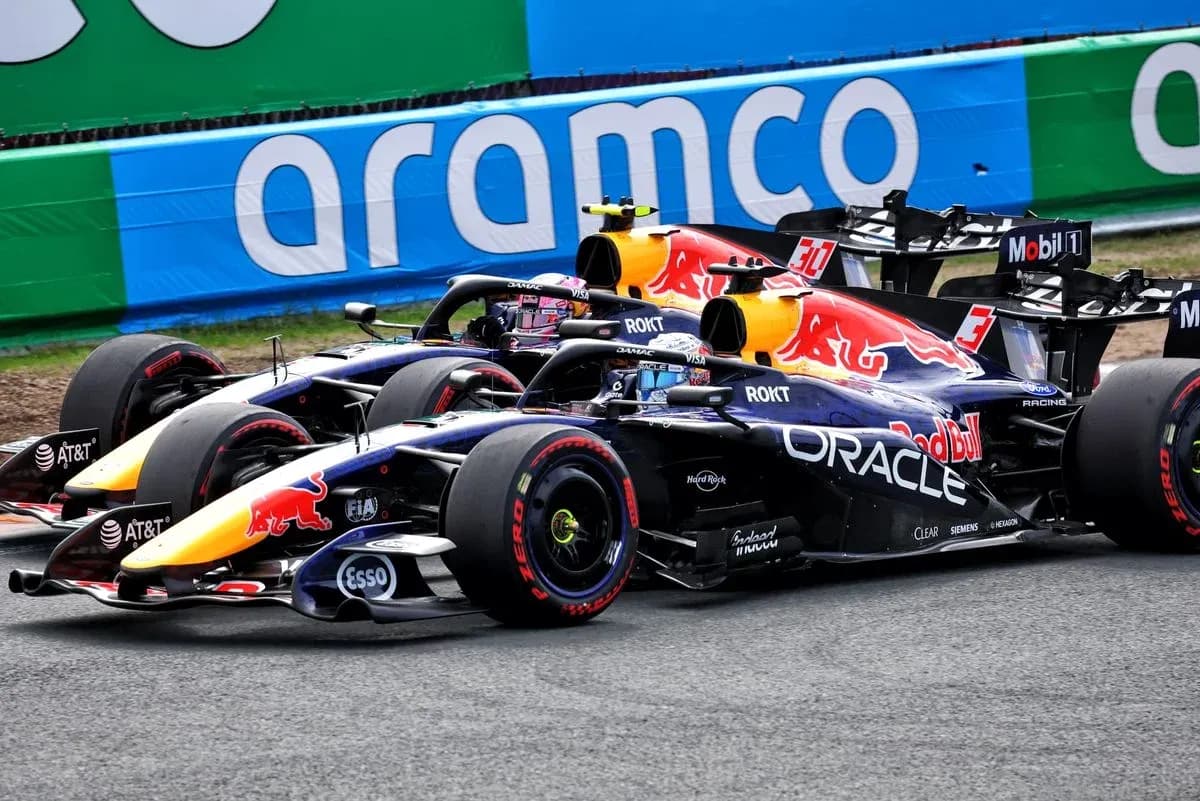
Max Verstappen’s trip across the run-off at the opening chicane on lap one captured the problem in a single moment: tight, fiddly, and with almost no room to pass. The Turn 5-6 chicane came in for heavy fire, branded too narrow, too awkward, and too unforgiving for the size of modern F1 machinery. The flowing left-handers after the banked La Monumental section left drivers boxed in, with little chance to attack.
Lando Norris summed up the mood with a blunt assessment in the press conference.
“I don't know how someone looks at this design and goes, mint!”
Visibility became another flashpoint. A string of blind, fast corners drew safety concerns from several drivers, Sainz among the most vocal.
“Same as in Jeddah and Baku, it's poor,” he said. He warned about heading into high-speed esses at 260–270km/h without being able to see through them, calling it “eye-opening” and enough to “make you question how safe everything is.”
The much-hyped La Monumental banking, sold as the circuit’s signature corner, also took a hit. Alonso cut through the noise with typically dry humour, suggesting even his Aston Martin press officer could have taken it flat.
“It is sad, you know, in a way, with this generation of cars to come to a very nice circuit like this one, with challenges here and there, like Monumental corner, Turn 12, and the driver input is just nothing,” he said. “Michael [Clayton, press officer] can drive in Turn 12 because you go flat with no deployment.”
The message was clear: the corner might look spectacular from the grandstands, but from the cockpit, it was a non-event.
Where can Madring be fixed?
George Russell went straight to the heart of the design flaw.
“I guess the one small frustration in the design is just the lack of clear overtaking opportunities,” he said. “On every track, at the end of a long straight, you need a clear opportunity to overtake, and the longest straight here goes into that tight roundabout section. So that's probably the only thing we wish was different.”
That single decision – to funnel the main straight into a tight, awkward complex rather than a big braking zone – strangled the race. DRS opened, cars closed, and then the track simply pinched shut.
Norris didn’t bother softening his verdict on the final sector.
“They should get rid of [Turns] 18-19 – useless.”
He laid out a simple alternative: cut a straight line from Turn 17 to Turn 20, then open up a wide, aggressive braking zone “like Austin Turn 1 or Turn 10 in Austin.”
“A big hairpin, you create much better opportunities for everyone and you'll be able to enjoy the race,” he said, before suggesting that Turn 5, 6 and 7 would also need more extensive surgery.
Valtteri Bottas, now in Cadillac colours, echoed Russell’s frustration about the main straight.
It was “quite easy” to defend after it, he said, because the track design simply didn’t give the attacking car a realistic shot. He also zeroed in on the blind nature of sectors two and three.
“Sometimes it's a bit sketchy, unnecessarily blind in places,” Bottas said, likening it to the early days in Saudi Arabia before walls were moved and sightlines improved. The implication was obvious: Madring could go the same route, if the will is there.
Turn 5, though, became the lightning rod. On paper, it should have been a prime overtaking zone: heavy braking, a chicane to tempt a lunge. In practice, the bumps, high kerbs and narrow entry killed any serious move.
Williams driver Alex Albon didn’t hide his frustration.
“I think we need to revisit this track a little bit…” he said, pointing to F3 and F2 as warnings. Those junior races saw drivers trying to go side by side into the chicane, only to argue afterwards about who should have given the place back. The corner, Albon argued, “needs the most work.”
Bortoleto went even further, questioning why the Turn 5-6 chicane existed at all.
“I just don't see how… Like even if they slow down the corner, what are they going to do, you know… especially with the big cars we have nowadays; if it was 1990s cars, maybe you could put something, but it's not like this anymore.”
Verstappen, meanwhile, turned his attention back to La Monumental. He liked the idea, but not the execution.
“Yeah, I mean, it's cool, the banking, but I think they should have done it the other way around, though. Initially more banking and then just flatten it out.”
The theme kept repeating: the Madring has ingredients. They’re just not mixed in a way that lets drivers race.
Street circuits vs modern F1
Beneath all the detail about Turns 5, 6, 18 and 19 lies a bigger question: are modern F1 cars simply too big, too heavy and too fast for tight street-style layouts to produce good racing?
Verstappen didn’t hide his stance.
“I'm not a fan of street circuits, so that will never change. I will always prefer to drive on a track like Spa,” he said. He praised the effort and infrastructure in Madrid – “they have done a really good job” – but his fundamental view of street tracks remained unchanged.
Alonso, racing on home soil, struck a similar note.
“I still prefer normal circuits,” he admitted. On a permanent track, he argued, you can truly push the car to its limits. On a street circuit, “you are always 95% because the track is always surprising you.”
That 5% gap is where the spectacle should live. In Madrid, it never really appeared.
Changes already on the table
The criticism hasn’t gone into a void. Discussions over changes to the Madring layout are already under way for the next Spanish Grand Prix. The drivers have been explicit, detailed and, at times, brutally honest about what needs to change: a real overtaking zone at the end of the main straight, a reworked Turn 5-6 complex, fewer blind corners, and a final sector that invites attack rather than shutting it down.
Madrid has the crowd, the setting and the ambition. Now it has something else: a blunt technical debrief from the very people meant to make the place come alive.
The question is whether the next version of the Madring will finally let them race.