Zinedine Zidane Redefines French National Team
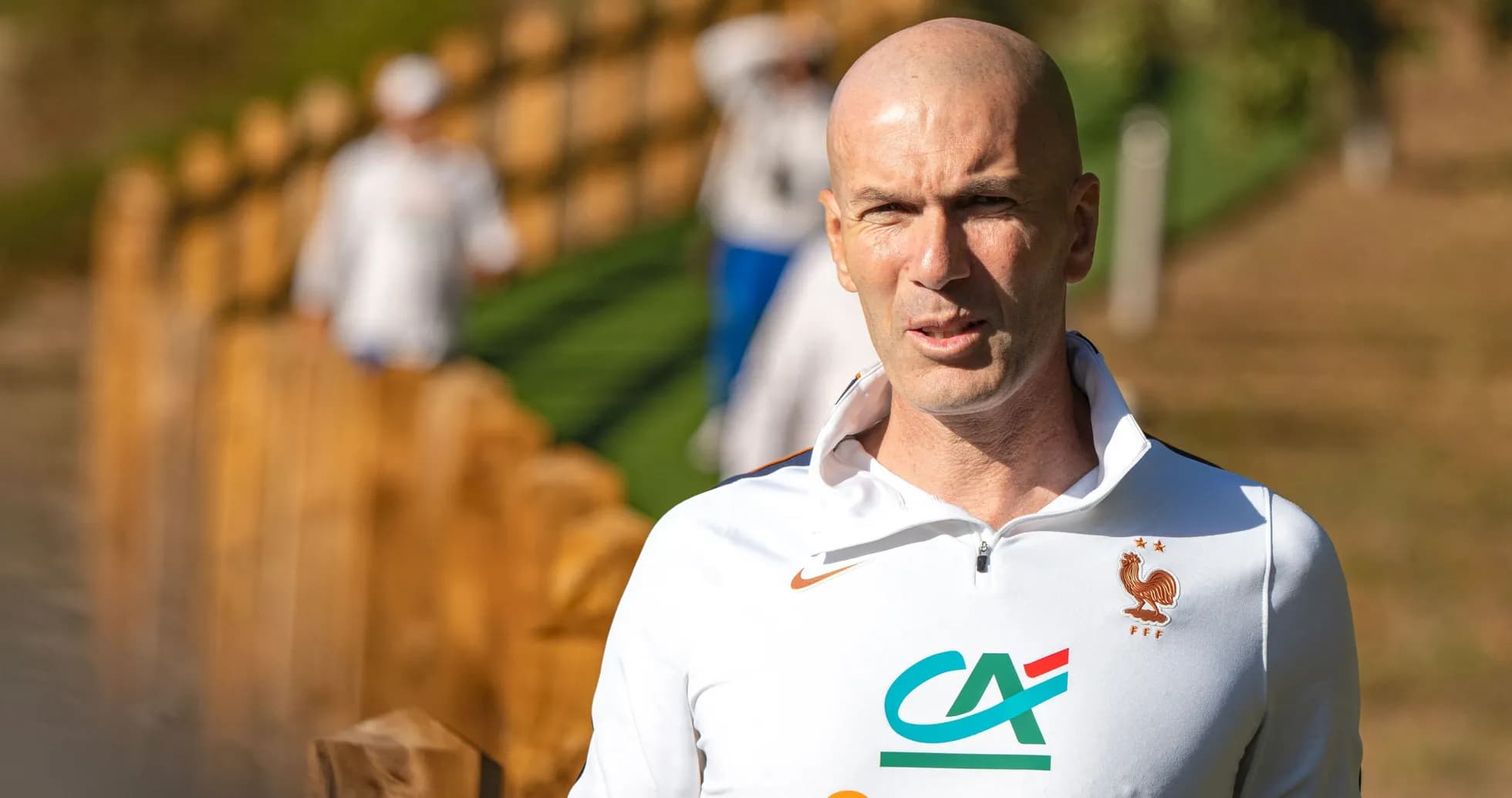
Zinedine Zidane hasn’t just walked into Clairefontaine. He’s walked in and started moving the furniture.
Barely weeks after officially succeeding Didier Deschamps on July 28, the former Real Madrid coach has begun to redraw the contours of the French national team. The handover many expected to be gradual already feels like a rupture.
A clean break from the Deschamps era
The symbolism hit as soon as Zidane arrived at Clairefontaine on Monday. Same base, same colours, same badge – but a very different way of thinking. Fourteen years of Deschamps have hard-wired certain habits into Les Bleus. Zidane is wasting no time in challenging them.
Speaking to La Provence, FFF president Philippe Diallo didn’t bother to downplay the shift.
"I think he has very clear ideas in what he wants to do, in the way he wants to manage this French team. You have seen it, he is breaking with the past. It’s a real new page," Diallo said.
That “new page” isn’t just a slogan. It’s already visible in the way Zidane is assembling his first squad.
A smaller squad, a sharper edge
The first concrete sign came with his list for the Nations League games against Turkey, Belgium and Italy. On the surface, it was just a squad announcement. In reality, it was a statement of intent.
Deschamps had his rhythm: announcements on Thursdays, expanded 26-man groups, a broad safety net of options. Zidane ripped up that script. He chose a Friday to reveal his list, disrupting the usual calendar and the quiet routine that surrounded it.
Then came the real jolt. Twenty-three players. Not 26.
Diallo seized on that detail.
"He took 23 players instead of 26. That is a first sign. He is going to make them play. He took names, perhaps, that we didn't expect. He didn't take some that we might have expected. So, I think he is in his process, in a desire to break away. A break in the management of his squad," the FFF president noted.
A tighter group means fewer passengers, fewer consolation call-ups, more responsibility per man. It hints at a coach who wants a competitive core, not a comfort zone.
Names in, names out, surprises both ways – all of it feeds the same message: nobody is safe on reputation alone, and nobody is excluded by it either.
Same target, different route
Strip away the tactical tweaks, the scheduling changes, the symbolic gestures, and one truth remains: France are expected to win. That hasn’t changed. What is changing is the way Zidane plans to get there.
Diallo underlined that this is not revolution for revolution’s sake, but the expression of a fierce competitor reconnecting with the shirt that defined his life.
"In everything he is going to do, I think he wants to change things. Change things with a clear objective, which is to win. I think his deepest desire is to give back to the French team, as a coach, what it brought to him in his life, in his life as a player and in his life as a man, to win to give pleasure and pride to everyone," he said.
Deschamps built a machine that almost always reached the business end of tournaments. Finals, semi-finals, the “final four” became the baseline. Consistency was the hallmark of the era.
Zidane is being asked for something more ruthless.
From golden age to something greater?
France are already living through what Diallo calls a "golden age": a World Cup title, another final, deep runs as standard. The bar is not low. Yet the federation believes Zidane is the man to raise it.
The idea is simple: keep the solidity, add a sharper killer instinct. Zidane did exactly that at Real Madrid, turning a talented squad into a trophy machine. The FFF is betting he can transpose that formula onto the national team.
Diallo did not hide the scale of that ambition.
"I think Zinedine is the one best suited to extend this golden age for us. And not only to allow the French team to reach, as always, I hope, the final four... but perhaps to go a little beyond that to go and win titles. And I think he, in any case, came for that."
The message is clear. Reaching the latter stages is no longer enough. Zidane has not come to curate an era; he has come to define it by the number of trophies on the table.
The first squad list, the trimmed group, the break with old habits – these are only the opening lines. The real question now is whether Zidane can turn this bold new page into the chapter that finally makes French dominance feel inevitable, not occasional.