
Zidane's Squad Announcement Pauses for Grief Over Jesús de Miguel
The list of names was ready. The talking points were obvious. Kylian Mbappé back. A fresh face in Pablo Pagis. France top of their UEFA Nations League group and closing in on the knockouts.
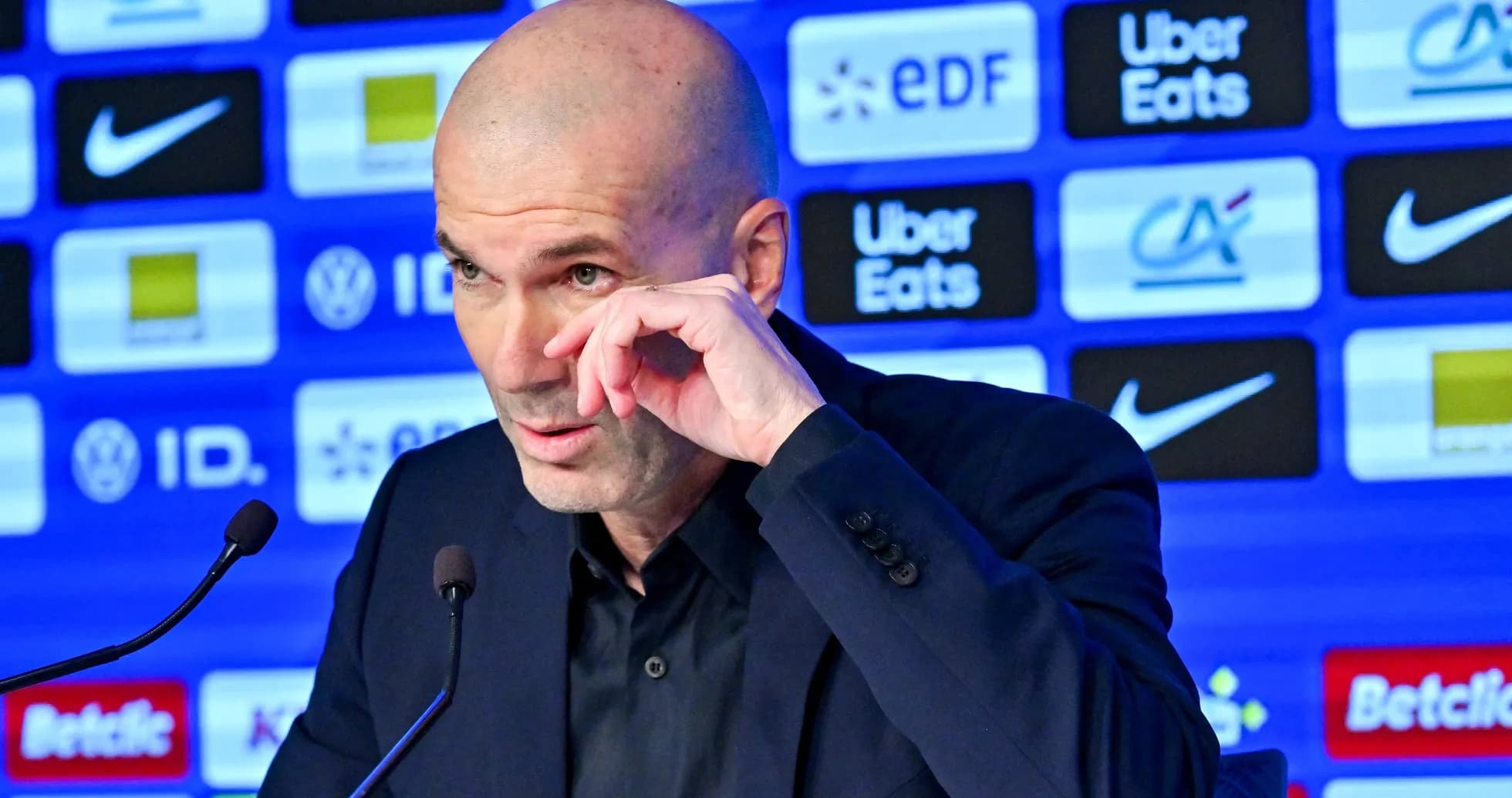
Yet when Zinedine Zidane sat down in front of the cameras on Friday, football paused.
Before tactics, before selection debates, the France head coach spoke about Jesús de Miguel, the CD Tenerife forward who died on November 3 after a horrific on‑field collision. Zidane’s voice, usually measured and distant from emotion, carried something heavier.
A tragedy that shook the game
De Miguel, 30, suffered a fatal chest injury during Tenerife’s Segunda División match against FC Andorra on November 2. Late in the game he collided with goalkeeper Jesús Owono, sustaining a blunt cardiac injury that led to cardiac arrest.
Medical staff fought to save him on the pitch. He was resuscitated and rushed to the University Hospital of Nuestra Señora de Candelaria in Santa Cruz de Tenerife. For a few hours there was hope. By the next morning, that hope had gone.
A preliminary autopsy confirmed accidental chest trauma as the cause of death. Spanish police and judicial authorities opened a routine investigation, examining a non-natural fatality, potential involuntary manslaughter and the pitchside medical response. It is standard procedure, but the context is anything but.
Football, once again, had been reminded of its fragility.
Zidane’s emotional tribute
Zidane had travelled to pay his respects, joining Spain head coach Luis de la Fuente and Real Madrid president Florentino Pérez in honouring De Miguel ahead of the player’s funeral in his hometown of Navahermosa.
Back in front of the media, the France coach did not hide how deeply it had affected him.
"I'm saddened by what happened, deeply affected. It even gives me goosebumps, because you never want to see something like that on a football pitch," he told reporters, choosing his words carefully but with clear emotion.
He then turned his thoughts to those left behind.
"Above all, I feel sad for the family. I hope I never see anything like that again on a football pitch for the rest of my life."
No grand gestures. No attempt to move on quickly. Just a coach, a former player, a man who has spent his life in stadiums, acknowledging a nightmare scenario that haunts everyone in the game.
Mbappé back as France target Nations League knockouts
Only after that did Zidane move to the business of the day: naming his 23-man squad for the November international window.
The headline was immediate. Captain Kylian Mbappé returns from injury to lead the group into their final two fixtures of the calendar year, a decisive double-header as France look to seal qualification for the knockout stages of the UEFA Nations League.
Zidane will lean heavily on his captain’s presence and cutting edge. The stakes are clear: France sit as group leaders, but the margin for error is shrinking as the competition tightens.
There was room for new blood too. Pablo Pagis, rewarded for his form at club level, received his first senior international call-up. For the attacker, it is a breakthrough moment; for Zidane, another attacking option at a time when freshness and versatility can tilt tight games.
The contrast was stark. One player’s life cut short in Spain’s second tier. Another’s just beginning on the international stage. At the centre of it all, Zidane, trying to steer a top-tier national side through a crucial window while still visibly shaken by a tragedy that unfolded far from the bright lights of a major final.
Football moves on. It always does. But as France chase a place in the Nations League knockouts with Mbappé restored and Pagis stepping up, Zidane’s words linger over this international break — a reminder that every name on a squad list represents a life, a family, and a risk every time the whistle blows.





