Younes Ibrahim: Brighton's Emerging Forward on the Rise
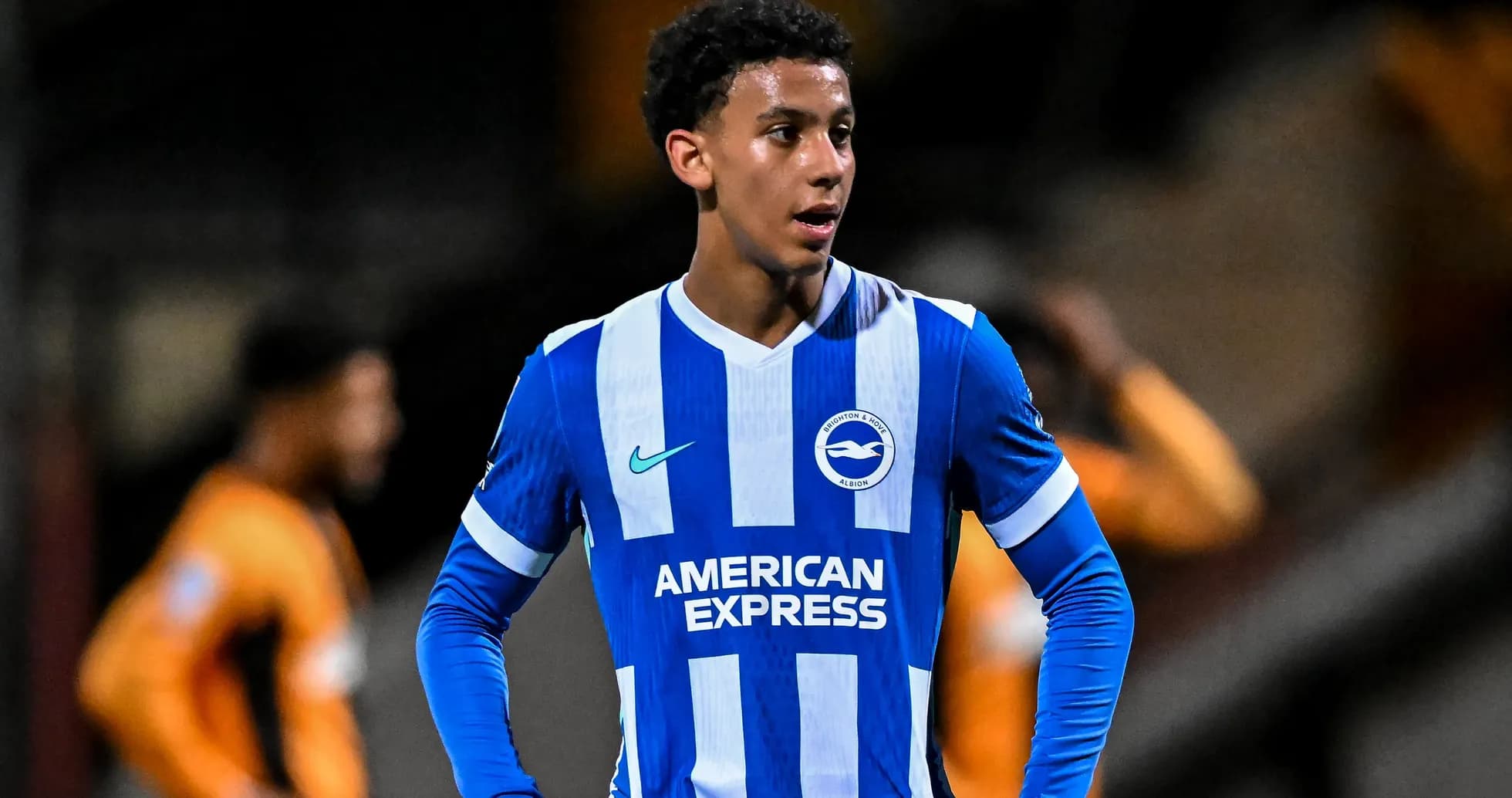
On Saturday night, Younes Ibrahim was still the academy forward lighting up clips on Brighton fan accounts. By Monday, he was sitting on the first-team bench, shirt folded neatly beside him, name up on the stadium screen. Two days. One goal. And a phone call that might end up defining a career.
This was no token gesture. Brighton do not do sentiment.
Fabian Hürzeler and his staff have built their reputation on timing these calls to perfection. This is the club that cashed in on Moisés Caicedo for £115 million, moved on Alexis Mac Allister and Marc Cucurella at precisely the right moment, and barely broke stride. They live off knowing when a player is ready to step through the next door. So when Ibrahim’s name appeared among the substitutes against Coventry, it carried weight. Even without a minute on the pitch, it felt like a message.
We see you. You’re close.
The numbers back that faith. Across three games for Brighton’s youth sides in this 2026–27 campaign, Ibrahim has already produced two goal contributions – one scored, one created. A neat, early-season return. But his real surge came last year. Nine goals. Five assists. More than the totals, it was the way he did it: drifting wide, dropping into pockets, popping up as a winger, a false nine, a classic striker when needed. Coaches in the academy stopped talking about him as just a finisher. They started talking about him as a problem for defenders all over the final third.
None of this happened overnight. Ibrahim’s story is the opposite of a viral wonderkid clip.
He began at Luton Town, in an academy that deals in hard yards rather than headlines. There he absorbed the basics of English football’s intensity: the running, the duels, the discipline. From there came the leap to Chelsea, one of Europe’s most demanding talent factories. The environment changed instantly – higher tempo, higher pressure, higher expectations. Different coaching philosophies, different accents in the dressing room, the same ruthless message: survive or step aside.
The real pivot, though, arrived when he chose Brighton and the under-15s.
On paper, some saw it as a step down from Chelsea’s global shine. In reality, it was a calculated move. Brighton offer something few English clubs can match: a visible, well-trodden path from academy to first team. Not just slogans on a wall, but minutes on a pitch.
Ibrahim walked that path without skipping a level. Under-15. Under-18. Under-21. At each stage he added something – muscle, maturity, game intelligence. The boy who arrived from London as a promising attacker started to look like a modern forward tailored to Brighton’s model: technically sharp, tactically flexible, brave enough to take the ball between the lines.
Last July, the club put that belief in writing. Ibrahim signed his first professional contract, a landmark moment for any teenager. Brighton academy director Ian Buckman framed it as both reward and challenge.
"It is an exciting moment for the players and their families alike," he said, underlining the significance of the step. Then came the reminder that nothing is guaranteed: "It is a recognition of the great efforts they have made during their time at the academy so far, and now they must seize the opportunities available to them to ensure that their development and learning continue, as they have proven their ability to do up to this moment."
That word – seize – now hangs over every training session he attends with the seniors.
Because Ibrahim’s story stretches far beyond the south coast. It stretches across four national-team offices, each one tracking his progress with growing interest.
He was born in Australia. That gives the Socceroos a clear claim. He has lived in England for eight years, long enough to qualify for the Three Lions. His heritage opens two more doors: Egypt, the Pharaohs, and Morocco, the Atlas Lions.
Four very different footballing cultures. One emerging forward.
Australia are hunting for their next long-term striker, someone who can bridge the gap between generations. England scour every Premier League academy for a potential edge. Egypt and Morocco have built structured, aggressive strategies for recruiting dual-nationality players based in Europe. Ibrahim sits in the middle of that tug of war, his rise at Brighton sharpening the focus.
For now, he is doing the smartest thing he can. He is waiting.
At 18, the international badge on the shirt can wait. The priority is clear: turn that first appearance on a Premier League bench into an actual debut. Turn a debut into a first goal. Turn a first goal into a place in the rotation. Only then will the real questions arrive, with phone calls and visits and presentations from four different federations.
By then, the choice will come from a position of strength. They will knock on his door. He will not have to knock on theirs.
That afternoon against Coventry, then, was about more than a name on a teamsheet. It marked the official unveiling of a project that has been quietly built over years: a forward born in Sydney, sharpened in London, and now emerging in Brighton’s colours.
From the stands, he might have looked like just another teenager wrapped in a substitutes’ bib, watching, waiting. Inside the club, they know better.
This is the moment the pathway stops being a promise and starts becoming a reality.