Wizards’ Gamble: Balancing Youth with Anthony Davis
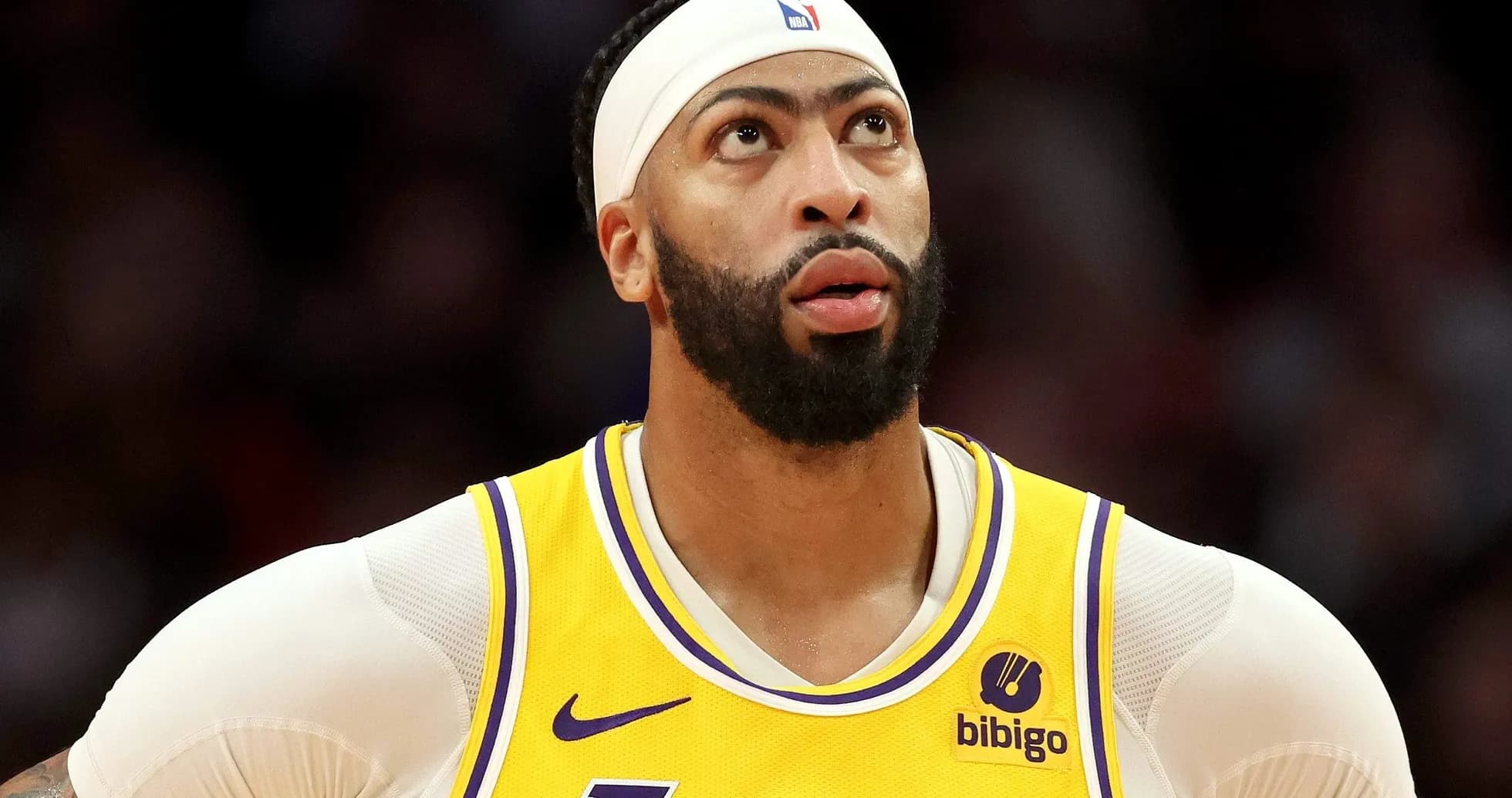
The Washington Wizards have become one of the league’s most intriguing experiments. A franchise leaning into youth, yet anchored—for now—by two established stars who have already lived several NBA lives.
This is not a slow, patient rebuild. It’s a high-wire act.
Washington stunned the league earlier this year by prying Trae Young away from the Atlanta Hawks. At 27, a four-time All-Star with a reputation as both offensive engine and lightning rod, Young doesn’t exactly fit the timeline of a team centered on a 19-year-old No. 1 pick, AJ Dybantsa. Then came the second jolt: Anthony Davis, via Dallas, landing in the nation’s capital.
Two headline names. One franchise still in its formative stage. Plenty of questions.
Davis At The Crossroads
Davis is 33 now, a 10-time All-Star with a résumé that still commands respect and a contract that demands attention—roughly $175 million over the next three years. He’s eligible for an extension, but Washington hasn’t put one on the table.
That silence is loud.
On one side, there’s the logic of keeping a dominant two-way big man to stabilize a young locker room and elevate the floor of a raw roster. On the other, there’s the cold arithmetic of age, salary, and a prospect like Dybantsa, who is expected to be the face of the franchise long after Davis is done patrolling the paint.
If the Wizards chose the latter path and opened the phone lines, they would not lack for suitors. One hypothetical framework already being floated sends Davis to a perennial contender: the Boston Celtics.
In that proposed deal, Washington receives Paul George, Baylor Scheierman, Jordan Walsh, and a 2031 first-round pick. Boston gets Anthony Davis.
For the Wizards, it’s a blend of now and next. Scheierman and Walsh slide neatly into the growing collection of young pieces around Dybantsa and Young. George, 36, would be more of a strategic asset than a foundational one—an accomplished veteran whose value could spike again by the February trade deadline if he strings together a strong first half.
He showed in last season’s playoffs he can still tilt a series. That matters to every win-now team staring at a narrow contention window.
For Boston, the calculus is simpler. Davis, if he stays on the floor, gives the Celtics an MVP-level interior presence and a defensive anchor they haven’t had in the Jayson Tatum era. Tatum has never shared the court with a big of Davis’ pedigree. The ceiling, at least on paper, would rise.
A Young Core, Veteran Stakes
The question hanging over Washington is blunt: why would a team preparing to build around a 19-year-old phenom cling to a 33-year-old star on a massive deal?
The lack of an extension for Davis hints at internal debate. Yet general manager Will Dawkins has been clear about one thing—he wants to see what this looks like on the floor.
He sees motivation everywhere he turns. In Davis, who has bounced from the Lakers to the Mavericks and now the Wizards in a short span. In Young, whose departure from Atlanta ended what once looked like a long-term marriage between player and franchise. In a coaching staff and a group of developmental players desperate to prove they belong on the league’s main stage.
Dawkins has framed it as a storm of ambition: veterans with something to reclaim, kids with everything to prove.
Those aren’t empty words. Young’s time in Washington has barely started—just five games last season before he was shut down—but his profile is clear. Ball-dominant, fearless, a deep-range threat who bends defenses and invites scrutiny. Davis, when healthy, remains one of the sport’s most complete big men, capable of anchoring a defense and punishing mismatches at will.
Put them together, and you have a potentially devastating pick-and-roll tandem. Around them, you have Dybantsa and a wave of emerging talent. The fit is not clean in theory, but it’s tantalizing on the court.
Trade Chip Or Franchise Pillar?
The league will watch closely as training camp approaches. If Davis reports in peak condition, starts the season strong, and forms a functional partnership with Young, Washington could talk itself into riding this out—at least for another year. Let the kids grow under the shadow of proven stars. Let the fan base feel competitive basketball again.
But the other path is always there.
If the Wizards decide the long-term arc belongs solely to Dybantsa and his peers, Davis becomes one of the most powerful trade chips in the league. A contender like Boston, fresh off a reset after moving on from Jaylen Brown, would have every incentive to push hard. A frontcourt of Tatum and Davis would send shockwaves through the Eastern Conference.
For now, Washington is choosing patience. They want to see Davis in a Wizards jersey, Young orchestrating, Dybantsa learning the league alongside them. They want to find out whether this uneasy blend of timelines can actually work.
Soon enough, the standings—and the phone calls—will force a decision.
Is Anthony Davis the bridge to the Wizards’ future, or the blockbuster trade that finally defines it?