The Part-Time Team That Claimed Three Consecutive Wembley Victories
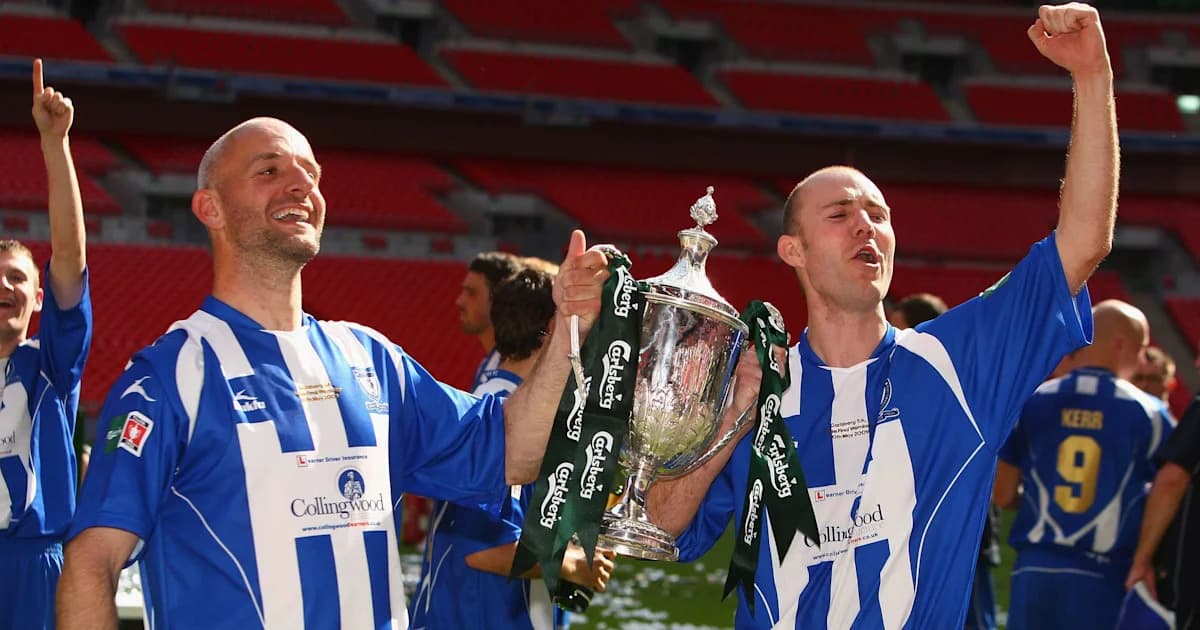
Whitley Bay's Historic Wembley Triumphs
Most football fans know Pep Guardiola's Manchester City for winning four League Cups in a row between 2018 and 2021. Yet, before them, another team managed an impressive three successive finals victories at the new Wembley Stadium.
That team is Whitley Bay, a part-time club competing in the ninth-tier Northern Football League. Between 2009 and 2011, they secured three straight FA Vase titles, a feat never matched in non-league football. Established in 1974, the FA Vase is a national tournament for amateur sides, and Whitley Bay remains the only club to have won it four times overall, including those three back-to-back wins.
Guided by Ian Chandler
Ian Chandler, an unassuming IT manager from Sunderland, steered Whitley Bay through this golden era. Chandler, who had been a player for the club in three separate spells, took over as manager in 2004 and led the team for a decade. Balancing his day job with managerial duties meant spending work hours arranging scouting reports and hotel stays rather than attending meetings.
The disappointment of missing out on Wembley in 2007-08 after losing the FA Vase semi-finals fueled their determination. Chandler developed a superstition of avoiding pre-match interviews following that 4-0 first-leg defeat to Lowestoft Town. This focus seemed to galvanize the players to rewrite history.
"It's the hardest thing to keep a team together – as soon as players get noticed, they move on," Chandler told BBC Sport. "But after reaching the Vase semis, players wanted to stay and prove themselves. Then they wanted to do it again. And again."
Although a lifelong Sunderland supporter, Chandler modeled his team’s style on Kevin Keegan’s Newcastle, emphasizing entertaining football over simply winning. "There was always a joke about how many defenders to play," he said. "The Premier League can be dull; fans want entertainment, and that's what we promised."
Building a United Squad
Before becoming manager, Chandler was already a Whitley Bay hero, having scored the winning goal in the 2002 FA Vase final at Villa Park. His early days in management were challenging, but he eventually assembled a talented squad admired across non-league circles.
Paul McIlduff, Whitley Bay chairman since 2001, recalled: "We played good football. We had pace on the wings, brilliant midfielders, and deadly strikers. But more importantly, the players respected each other and worked as a team."
One standout figure was Paul Robinson, nicknamed the 'Whitley Bay Maradona.' A product of Newcastle United’s academy, Robinson played for several non-league clubs before joining Whitley Bay from 2007 to 2013. He also worked alongside Chandler at the software company Sage, which helped him balance football with his day job.
"He was my boss both at work and football, and I was fed up with him," Robinson said. "But it meant I could get time off for matches, and he understood if my mind drifted thinking about scoring goals."
Robinson’s defining moment came in the 2010 FA Vase semi-final second leg, when his last-minute diving header in a downpour clinched a 6-5 aggregate win over Barwell, sparking wild celebrations.
At home games, crowds of 2,000 to 3,000 turned up, creating an atmosphere reminiscent of 1990s FA Cup fixtures. Robinson compared those memories to dreams of professional football, something rarely expected at the amateur level.
Non-League Glory and Community Spirit
Whitley Bay’s rise made them a feared force among amateur clubs. Teams sometimes showed up in suits and ties for matches, treating the games like finals, but still fell to The Seahorses’ skill and confidence.
Robinson remembered a quarter-final against Biggleswade in 2009: "They arrived looking like it was their big day out. We won 5-2 and they left defeated."
The club’s success lifted the spirits of Whitley Bay town itself, a working-class coastal community near Newcastle that once thrived as a Victorian holiday spot. Local pride grew with every victory.
Dedicated volunteers went door to door seeking support, while local shops displayed blue and white stripes proudly. Ticket vans parked outside shops on the high street, and sponsorships poured in.
Jenn Robinson, a volunteer, shared: "Everyone wanted to watch the team. I still prepare buffets for players and longtime fans. There’s such excitement around the town."
Support from Newcastle United helped with ticket sales for Wembley finals, and North Tyneside Council provided security for huge crowds at Hillheads Park, Whitley Bay’s home ground.
Though plans occasionally faltered—such as a train supposed to take fans directly to Wembley instead stopping at King’s Cross—the fans remained determined. Some even experienced special moments, like Jenn Robinson sitting in the royal box during the club's first Wembley final, in seats reserved for Prince William himself.
Three Finals, Three Victories
The first Wembley final in 2009 saw Whitley Bay beat Glossop North End 2-0 with 12,200 supporters watching. They returned in 2010 to demolish Wroxham 6-1, with striker Paul Chow scoring after just 21 seconds—the quickest goal in a Wembley final at that time. This record stood until Ilkay Gundogan broke it 13 years later with a 13-second strike.
The hat-trick was completed in 2011 with a thrilling 3-2 win over Coalville Town. After two equalizers from Coalville, Chow sealed the match with an 86th-minute winner. Across the three finals, nearly 30,000 fans packed the stands.
Celebrations after each final took place at The Green Man pub, a short walk from Wembley. The first year’s festivities felt anticlimactic, but the club improved the party atmosphere for the following two finals, renting a room and inviting families, friends, and fans.
Robinson described the 2010 celebrations: "We spent 10 days together preparing, then went to Marbella for five nights. Best 10 days of my life!"
That year held special meaning as former teammate Mark Taylor, diagnosed with motor neurone disease and forced into early retirement, joined the celebrations. Taylor remained a beloved figure, often accompanying the team on away trips despite his condition.
Life After Wembley Fame
Following their success, the club and its players attracted media attention. Reporters visited Sage to interview Chandler and his squad, and even his mother got a chance to speak with BBC Radio Newcastle legend Paul Dixon.
Chandler recalled rubbing shoulders with football legends: "I attended sports awards in Manchester where I met Sven Goran Eriksson and Sir Alex Ferguson. Sven even kissed my wife on the cheek—she didn’t realize who he was until later!"
Back at work, Robinson found returning to his IT job a stark contrast to Wembley glory. At first, he received a standing ovation, but soon colleagues tired of hearing about it.
"People would tease me, saying ‘Are you talking about Wembley again? Give it a rest, Robbo!'"
Whitley Bay’s golden period ended after Chandler stepped down in 2014 following a dip in results. The club has not added a major trophy since 2011 and still competes in the ninth tier. Yet, the memories of those Wembley triumphs remain vivid in the football-loving northeast.
"I was in a pub in Durham recently when a stranger asked if I was Ian Chandler," he laughed. "He started talking about that team. In the northeast, football means everything. It was wonderful."