
How Wales Stopped Haaland and Aims for Repeat Success
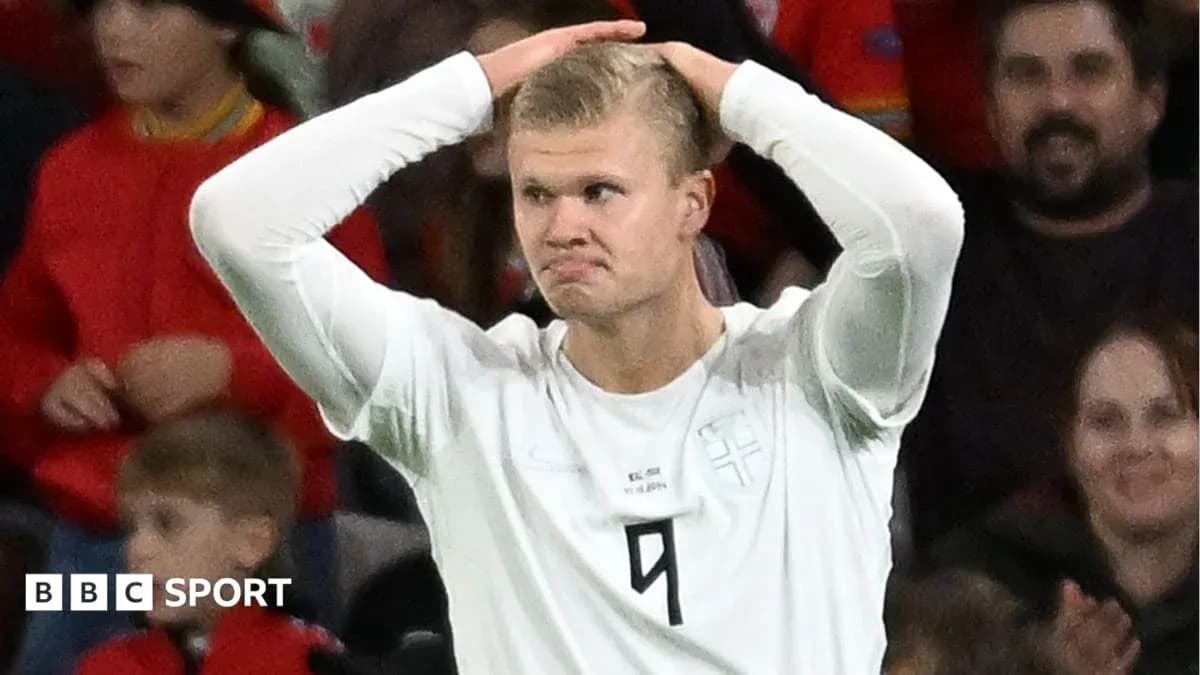
How do you stop Erling Haaland?
Managers across Europe have burned hours over that question, only to watch the Norwegian bulldoze through their plans and their back fours. Wales, somehow, walk into Oslo on Saturday as one of the very few who can say they’ve seen a plan work against him – and have the scoreline to prove it.
A month ago in Cardiff, Haaland left with a shirt swap and a defeat. Wales left with a 2-1 win and something even more valuable: a believable blueprint.
Craig Bellamy knows exactly what he is up against.
“You’re talking about trying to deal with one of the best players in his position in the world,” the Wales head coach says. “He’s different to what you would normally have to deal with. He has the profile of everything you want in a player, and that’s quite rare.
“It’s a collective responsibility, not just an individual one.”
That last line is the heart of it. Against Haaland, heroes in isolation don’t survive. Teams do.
Refusing to Retreat
Conventional wisdom says you drop off against a striker like Haaland. Sink deep, protect the space in behind, crowd the box and hope he spends more time wrestling centre-backs than sprinting away from them.
Bellamy looked at that option and walked the other way.
Some sides have tried to sit in and defend their 18-yard line against Norway’s No 9. They’ve discovered the problem quickly: if you give him space to think, he finds angles, positions, half-yards. If he doesn’t, his team-mates do it for him.
Others have gone for the physical route, trying to rough up a 6ft 5in forward built like a sprinter in a heavyweight’s frame. That rarely ends well either.
So Bellamy chose the most dangerous route of all: push up, squeeze, and dare Haaland to live off scraps.
“Drive up and don’t let him dictate,” he explains. “It’s easier said than done because then you could turn around and say to me, ‘Why are you playing a high line against Haaland?’ Trust me you don’t want to, but you can’t have him dictating the game.”
The risk is obvious. A high line against one of the quickest, most ruthless finishers on the planet sounds like tactical madness. One ball over the top, one mistimed step, and the game can be gone.
But that’s the trade-off Bellamy embraced: deny the service, suffocate the build-up, and live with the danger behind.
“A good player can look like a top player if you give him time. A top player can look world-class if you give him time. A world-class player might then have a chance of looking like an ordinary or good player, if you don’t allow him time.
“Putting pressure on the ball is always important for us, and I thought we did that really well that night.”
Starved of Service
The numbers from Cardiff tell the story. Haaland had just 24 touches. For a player who often ghosts through games before exploding in the box, that figure alone doesn’t shock. The real punchline is this: two shots, only one on target, a tame header straight at Danny Ward.
For a striker with 65 goals in 59 games for Norway, that borders on a shutdown.
Wales didn’t just mark the man. They cut off the oxygen around him.
That is no small achievement when the man feeding him is Martin Odegaard, Norway’s captain and the creative brain who drove Arsenal to the Premier League title last season. Odegaard loves those disguised passes, the angles between the lines, the passes that turn defenders’ hips the wrong way. If he gets comfortable, Haaland usually eats.
So the job stretched far beyond the back four. Ethan Ampadu and the Welsh midfield had to clamp down on Odegaard, block the lanes, and constantly measure the distance between themselves and their own defence.
“You have to consider the distance between Ethan and Haaland,” Bellamy says. “You can’t open up the middle too much because balls are going to come into his feet. You have to get your distances right, be side-on and make sure you’re aware of his runs.
“He has the ability to take a team on, but he also has the willingness to make those runs.”
That dual threat – feet and runs – is what makes Haaland so hard to pin down. Wales’ answer was to make sure the ball rarely reached him in the right areas, and to make Norway work when they lost it.
“It’s also important how we use the ball,” Bellamy adds. “If we use it well, develop our possession and move up the pitch, he has to work. He has to run and get back.”
Make him defend. Make him chase. Make him feel the game in his legs, not just in the penalty area.
Front-Foot Football as a Defensive Weapon
Since Bellamy took charge in the summer of 2024, Wales’ possession numbers have soared. This is no longer a side content to sit deep, counter and cling on. They want the ball, and they want it high up the pitch.
In a Nations League group containing Norway, Portugal and Denmark, that has been harder to sustain. Bellamy has admitted they can improve with the ball against this level of opposition. But he has been clear about the approach in Oslo: Wales are going “all out” for victory.
Attack as defence. Territory as protection.
If Wales can force Norway back, pin their full-backs, and make their midfielders turn towards their own goal, Haaland becomes a counter-attacking outlet rather than a constant presence around the box. That is a very different kind of problem.
Dan James, who scored Wales’ opener in the 2-1 win, saw that collective effort up close.
“Our distances [between players] were really good,” he says. “Odegaard is a unique player. He’ll get the ball anywhere so it’s hard as a defence. They want you to jump out and I think they showed that with their goal with the ball for Oscar Bobb and he’s finished it well.
“We showed our resilience and it was about limiting their chances and I thought we did that.
“Odegaard played some great balls in behind but, to the very last minute, we defended really well, not just the defenders but the whole unit, from the forwards back.
“I thought we defended really well on the day, and we’ve got to be great again on Saturday.”
That last sentence is the catch. Once isn’t enough. Not against a striker like this, and not in his own capital.
Changes at the Back, Same Brutal Test
Wales will not be able to simply roll out the same defensive cast in Oslo.
Ben Cabango, who performed admirably in Cardiff and walked away with Haaland’s shirt as a souvenir, is suspended. Swansea City’s centre-back will watch this one from afar.
The positive news for Bellamy is that Joe Rodon, his first-choice centre-back, is back in the frame after returning to action for Leeds United. His availability offers experience and calm in a game where one lapse can undo 89 minutes of flawless organisation.
“Ben Cabango and Ben Davies have both done really well against him [Haaland], but the work has to be done in front of them. If it isn’t, you expose the defenders,” Bellamy says.
“Against this type of player, it doesn’t matter how good an individual defender is. We’ve seen over the last four or five years how difficult it becomes for one player to cope with what Haaland brings.”
That is the reality. No centre-back on earth marks Haaland out of a game alone. The line in front must screen. The press must bite. The forwards must work. The distances must be perfect.
Wales proved a month ago that, when every cog turns together, even the most terrifying striker in world football can be reduced to a frustrated figure on the fringes.
Now comes the harder part: walking into his city, into his stadium, and trying to do it again.
Can they really keep the unstoppable quiet twice in a row, on his own turf, with a Nations League campaign on the line?





