Waldemar Anton: The Quiet Backbone of Dortmund's Defense
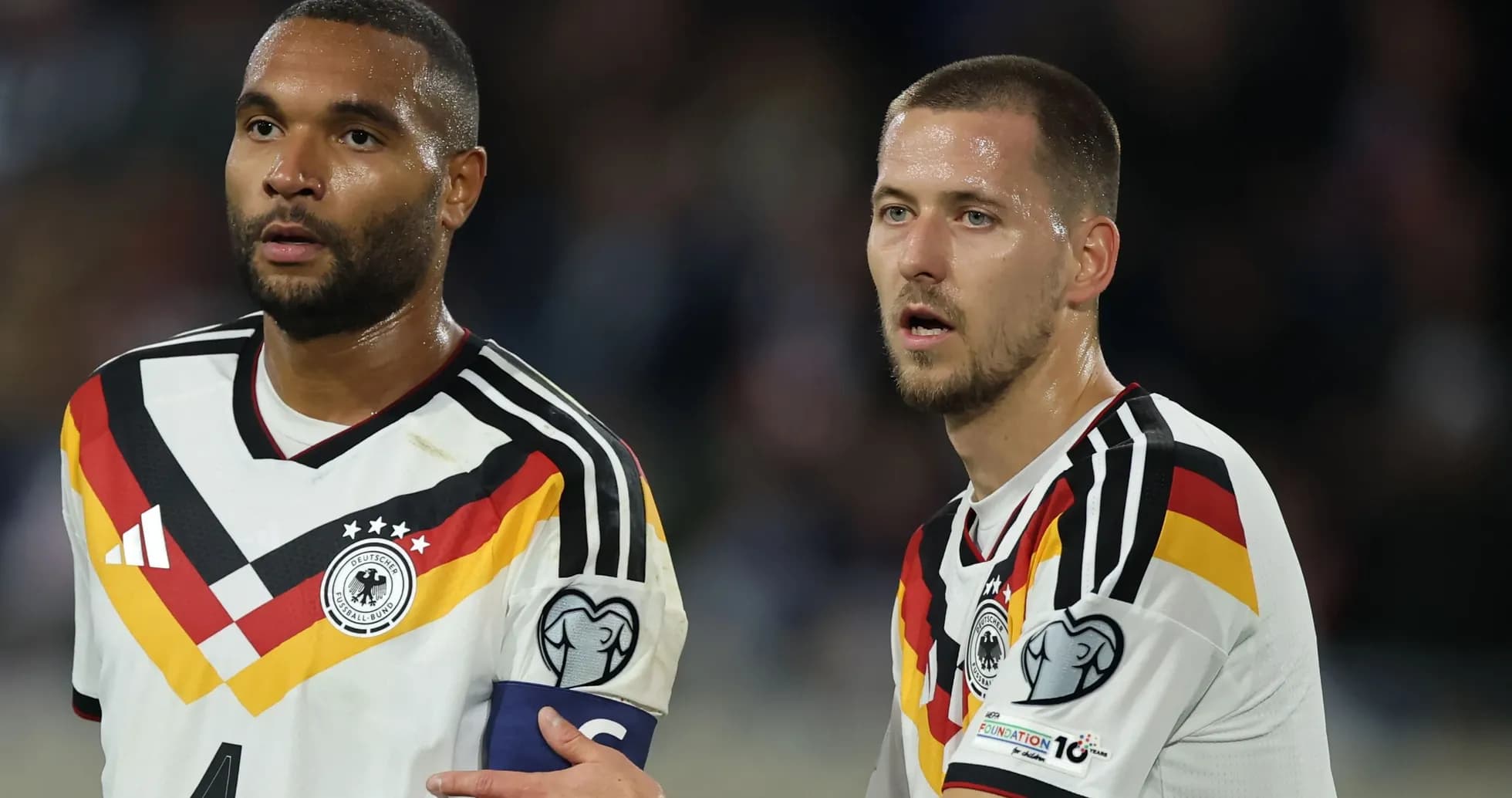
Waldemar Anton doesn’t do drama. He does defending.
Yet on Saturday night in Stuttgart, there was a small scene that said a lot about where he stands – at Borussia Dortmund and in German football.
When Serhou Guirassy trudged off in the 74th minute of Dortmund’s 1-0 win over VfB Stuttgart, he took his time. Too much time. Under the new rules, that slow walk meant Fabio Silva had to wait 60 seconds before entering. Dortmund briefly played with ten men, and Niko Kovac’s irritation on the touchline was obvious.
Anton’s reaction? The same as always. A quick word for his striker, then straight back into the trenches.
This was his old stadium, his old club, his old life. The whistles rained down every time he touched the ball, a lingering verdict on the way he left for Dortmund two years ago. The 30-year-old didn’t flinch. He had a game to close out, a clean sheet to protect, a league campaign to drive.
Again, nobody got past him. Again, nobody got past Dortmund.
The quiet anchor of Kovac’s new Dortmund
Since Niko Kovac walked into the dressing room, Dortmund’s identity has shifted. The romance of wild 4-3s has given way to something more ruthless: structure, duels, control. Defensive work is no longer a chore; it is the foundation.
Last season, BVB already finished with the best defence in the league, conceding just 34 goals. Now, four matchdays into the new campaign, they have three clean sheets and only two goals conceded, level with Bayern Munich at the top of the defensive charts.
Anton sits at the heart of it.
His first year in Dortmund was anything but smooth. Two muscle fibre tears in quick succession cost him more time than any injury spell in his career. Rhythm vanished, doubts crept in. For a defender who lives on timing and repetition, it could have broken the season.
It didn’t. It sharpened him.
By the end of that campaign, Kovac was already calling him a “total constant” at BVB. The label stuck because the performances did. He stabilised the back line, looked more assured than partner Nico Schlotterbeck, and became the reference point when the rest of the team wobbled.
The numbers underline it. In 2025/26, Anton missed only three of 47 competitive matches. In league and cup, he played all 35 appearances from first to last whistle. No rotation, no rest days, no hidden breaks. Just relentless availability.
Ironman with a steel mentality
Kovac has never hidden his admiration. He talks about Anton as a leader, a player who “thinks, eats, sleeps, drinks football 24/7,” someone who drags team-mates with him rather than waiting for others to speak.
The defender, for his part, wants nothing to do with big titles like “defensive leader.” He stays in the background, speaks little, trains hard, plays harder. Very calm. Very modest. Very humble. That’s how his coach once summed him up.
But the pitch doesn’t lie.
Anton’s game is stripped of ornament. No unnecessary dribbles, no theatrical gestures, no show. He defends on the front foot, steps into duels early, reads passes before they are played. His anticipation has become one of his defining traits. Since Mats Hummels at his peak, no Dortmund centre-back has defended so aggressively and yet so cleanly in advance of the play.
The data backs up the impression. He ranks among the league’s best for duel success, aerial wins, interceptions and clearances. When Dortmund hold a lead, he becomes the calm in the storm. When they are under pressure, he is usually the one clearing, blocking, organising.
He went to the World Cup with Germany, came back with less pre-season than almost anyone in the squad, and simply carried on. No easing in, no visible rust. Fifteen caps now, and he looks like he has been playing at this level for a decade.
Best German centre-back right now?
On current form, there is a blunt truth: no German centre-back is playing better than Waldemar Anton.
Jonathan Tah at Bayern Munich remains the established number one in the national team hierarchy. That status is earned and recognised. Schlotterbeck, with his strong left foot and laser diagonal balls, offers a different profile that may, over time, give him an edge in certain setups.
But form matters. Reliability matters. Mentality matters.
Anton brings all three. Week after week.
He is central to Dortmund’s defensive stability and has become one of the faces of their resurgence under Kovac. While others catch headlines with goals and assists, he quietly dictates the structure that allows them to shine. He supports younger defenders, marshals the back line, and turns chaotic phases into manageable situations.
For Jürgen Klopp, now tasked with reshaping the DFB team, that profile is gold. Klopp wants a national side built on a rock-solid base, a team that can press high without constantly fearing what happens behind. In Anton he finds experience, physical robustness, tactical intelligence and a player who naturally puts the team above his own ego.
It is hard to imagine a restart for Germany’s defence that does not feature him prominently.
No more battles at club level
The irony is that the fiercest competition in Anton’s career now lies with the national team, not at his club.
At Dortmund, currently setting the pace at the top of the league, his status is no longer up for debate. He is the first name in the back line, the “Ironman” Kovac trusts when games get tight and legs get heavy.
He will not campaign for more recognition. He will not launch public debates about his role for Germany. That is not his way.
He will simply keep doing what he did in Stuttgart: walk into hostile territory, listen to the boos, ignore the noise – and leave with another clean sheet.
The question now is not whether he belongs at the heart of Dortmund’s defence. It is how long Germany can afford to build its new era without making Waldemar Anton just as untouchable.