VAR Controversy Overshadows Haaland's Goal in Manchester Derby
Old Trafford has seen its share of chaos, but this derby will be remembered less for Erling Haaland’s finish and more for the flashing screens in a distant VAR hub that decided it.
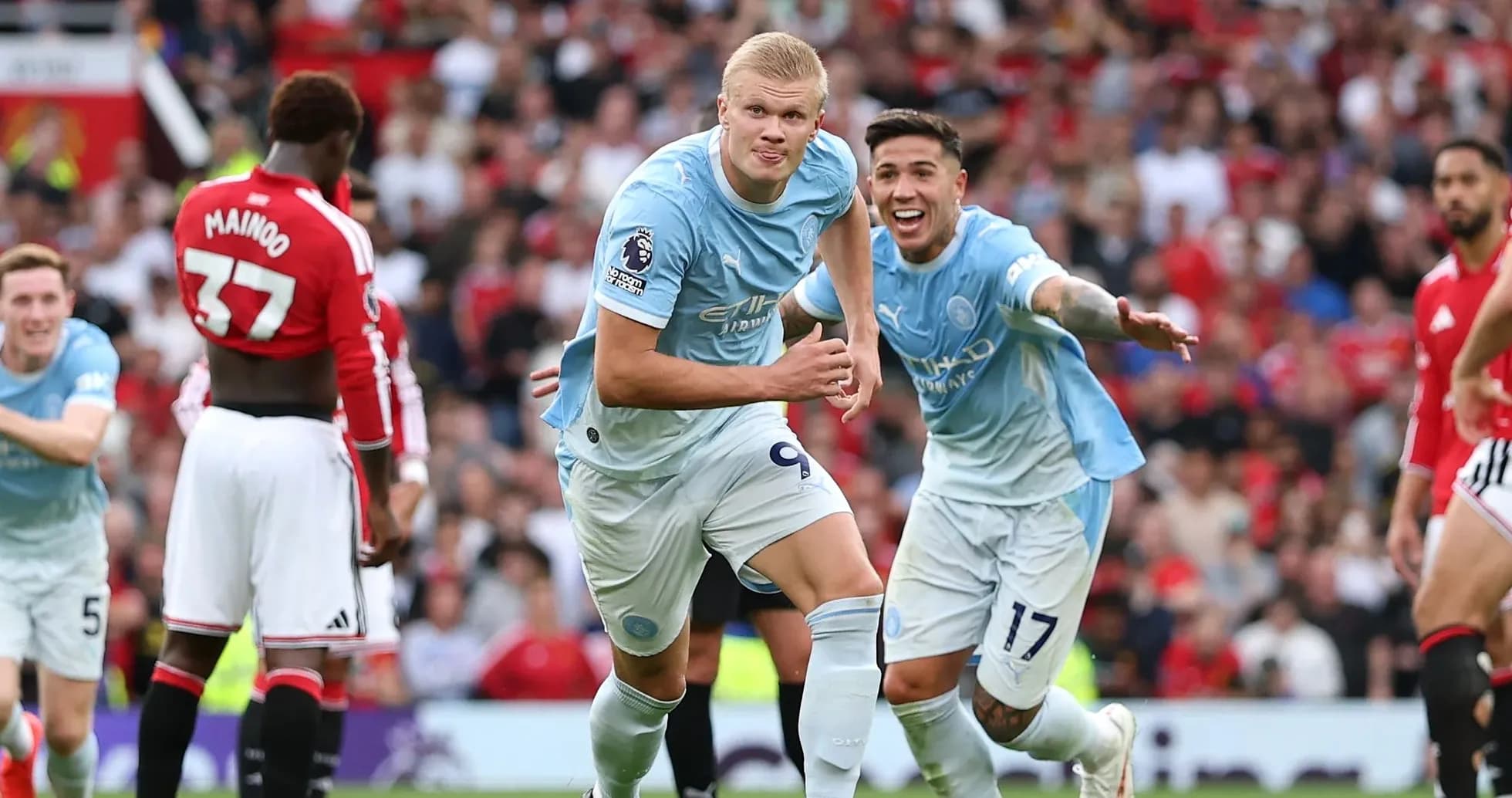
On the hour, Haaland slid in to turn home a Josko Gvardiol cross, the away end erupting as the ball hit the net. The flag went up. Old Trafford paused. The familiar choreography of modern football began: players pleading, fans frozen, eyes fixed on the referee’s earpiece rather than the penalty area.
Then came the twist. After a lengthy check, VAR overturned the on-field call and awarded the goal, ruling Haaland onside and deciding that Enzo Fernandez, in an offside position and clearly involved in the phase, had not played the ball. The decision swung the derby – and detonated a fresh storm around the technology that was supposed to tidy up the game’s grey areas.
A Goal, A Flag, A U-Turn
The Premier League Match Centre initially stood firm. On social media, it backed the VAR team, insisting they had correctly judged Haaland’s position and concluded that Fernandez, while offside, had not played the ball.
Inside Old Trafford, that explanation did little to cool the anger. United players surrounded the referee. Fans raged. Pundits in the gantry and studio tried to decode a law that suddenly seemed to belong to a different sport.
Within 24 hours, the stance collapsed.
The Professional Game Match Officials body privately contacted Manchester United to concede what many had already decided in real time: this was an error. In their own words, it was an "error of judgment." They admitted the VAR team "did not recognise the likely impact" of Fernandez’s position and accepted that they "should have recommended an on-field review."
The goal stood. The points stayed put. But the credibility of the system took another hit.
Schmeichel’s Fury: “Scrap VAR”
Few voices carry more weight at Old Trafford than Peter Schmeichel’s. The former United goalkeeper, a serial winner in this stadium, watched the scenes unfold and saw something deeper than a single mistake.
Speaking on Viaplay, Schmeichel cut through the diplomatic language that often cushions these debates.
"I wish that we could scrap VAR," he said, the frustration obvious. For him, the problem is no longer just about accuracy or interpretation. It’s about what the game feels like.
"We've got into a system now where VAR and the referees are the most important people in football. It sucks all the energy out of it. As soon as there is a goal, you're not allowed to celebrate."
This was not nostalgia for a romanticised past. It was a direct attack on the way technology has rewired the emotional rhythm of a match.
Schmeichel pointed to those first minutes of the game, when a goal finally stood and the celebrations broke out, but even then, he argued, something had changed.
"We saw after five minutes, the players and the fans could celebrate -- but it's not the same. The ball goes in the back of the net, it's a goal, but then the linesman puts his flag up for offside."
The stop-start theatre of flags, replays, and delayed joy has, in his view, stripped football of one of its defining sensations: the instant, unfiltered explosion when the ball crosses the line.
"I wish, and I'm longing for these days, we could scrap VAR because it's such an annoyance and it's interfering with football. And it hasn't made it better."
That last line lands hardest. It hasn’t made it better. For a figure like Schmeichel, that is a damning verdict.
Neville Lost in the Laws
Schmeichel was not alone.
On co-commentary for Sky Sports, Gary Neville watched the same replays, listened to the same explanations, and found himself drifting into the role of confused spectator rather than expert analyst.
"I'm going to need the offside law explaining to me, because that has lost me, I have to say," he admitted on air.
Neville has lived the offside line as a defender, then dissected it for years as a pundit. When someone with that experience says the interpretation no longer makes sense, the problem is no longer a one-off mistake. It’s structural.
He predicted, live, that the officials’ body would have to walk the decision back. By Sunday evening, his prediction had been vindicated by the PGMOL’s admission of error.
The offside law, once a relatively simple concept, now lives in the realm of frame-by-frame analysis, freeze-frames, and forensic debates about "phases" and "interference." What used to be instinctive has become academic.
A System on Trial
The fallout from this derby has gone far beyond the scoreline. Each high-profile mistake under VAR does not just spark anger; it deepens a sense of fatigue.
The promise was clarity. What fans see instead is confusion, delay, and a growing feeling that the game now belongs to those in the booth, not those on the pitch.
For the Premier League, the pressure is intensifying. The question is no longer simply how to tweak the protocol or tidy up the language of the law. It is whether the current incarnation of VAR can coexist with the raw, spontaneous emotion that makes the sport what it is.
At Old Trafford, as Haaland’s goal survived and the derby tilted, the story should have been about the finish, the movement, the rivalry. Instead, the night ended with statements, apologies, and a familiar sense of mistrust.
Schmeichel’s longing is blunt and, to many, increasingly persuasive: strip it back, scrap the system, give the game – and its celebrations – back to the moment.