USA Secures Fifth Straight World Cup Crown Against France
The dynasty is still alive. It just looks different now.
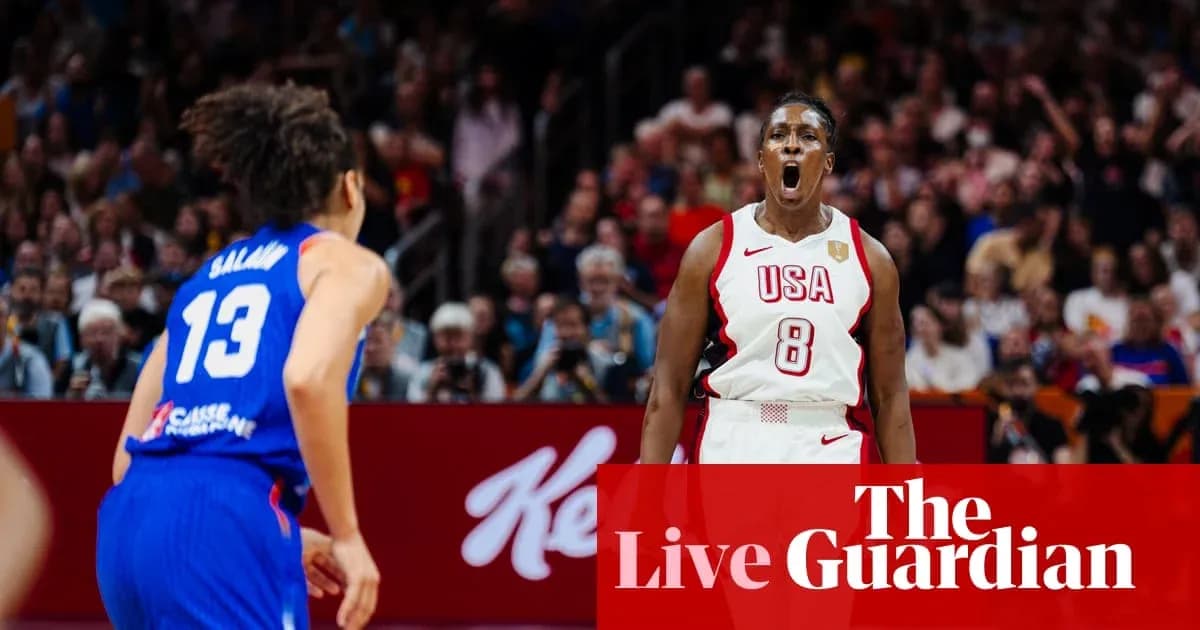
For a half in Berlin, the sport’s balance of power felt as if it might finally tip. France moved the ball with swagger, hit threes in rhythm and built a double-digit lead that rattled the four-time defending champions. At 31-17 to the team in blue, the World Cup final had the feel of a reckoning.
By the final buzzer, it looked like so many American title games before it: USA 97, France 79, a fifth consecutive World Cup secured, and another streak – 72 straight wins at the sport’s top level – still intact.
The difference was the route they took to get there.
France land the first punch
France arrived with scars and motivation. Two years ago, Gabby Williams’ last-second shot in the Olympic final was worth two instead of three, her toe grazing the line and denying overtime. This time, she and a fearless young core came out as if determined to rewrite the script.
They carved up the US defense early, every French bucket coming at the rim in the opening minutes. Badiane, then Malonga, then Lacan. Williams glided through the lane. Ayayi and Salaun spaced the floor. When Ayayi and Leite both connected from deep and Leite added a jumper, Kara Lawson had seen enough. Timeout, USA, down 28-17 in the second quarter and second-guessing their shot selection.
France’s confidence only swelled. Williams buried a three. Ayayi knocked one down. Salaun joined in from long range. The lead peaked at 14 when Williams hit from beyond the arc again. The US looked static, their offense reduced to rushed drives and hopeful jumpers.
Then the veterans took the ball back.
Gray, Young and Stewart flip the game
The turning point did not come with a spectacular runout or a viral highlight. It came with Chelsea Gray calmly slipping a no-look pass through traffic to Jackie Young in the corner, her three beating the shot clock and finally stemming the bleeding. On the next trip, Young pushed in transition and fed Breanna Stewart. The deficit shrank in a hurry.
Gray orchestrated everything. She hit impossible fallaways as the clock bled out, drew fouls, and kept the US offense from unraveling completely. Young matched her poise with aggression, drilling line-drive jumpers, hitting from deep and repeatedly finding teammates in stride. Stewart, after a ragged start, began to live at the free-throw line and on the glass.
France still held the edge late in the half. Williams stole and scored, Salaun drew contact on a step-back and hit at the stripe, then buried a corner three. At 45-39, the Americans looked one bad possession away from serious trouble.
Instead, the bench finally bit back. Aliyah Boston disrupted a Johannes three, ran the floor and scored. Stewart added free throws. And as the horn sounded, Caitlin Clark – quiet and turnover-prone to that point – slipped into the corner and buried a three at the halftime buzzer. Officially, it went in as her second attempt of the game, though even the stats feed was struggling to keep up.
France still led, 45-43. But the game had changed.
A brutal third quarter for France
The Americans opened the second half with a statement: Stewart tied it on the first possession, and from there the US defense locked in. Passing lanes shrank. The same French looks that had fallen in the first 20 minutes suddenly rattled out.
Collier muscled in the basket that finally gave the US their first lead in what felt like an eternity. Copper splashed a three off a Collier save. Young pushed the advantage with another jumper. France’s timeouts grew more urgent; their rhythm never returned.
Williams and Malonga briefly revived French hope with a slick two-woman game, cutting the lead to four. Young immediately answered from deep. Malonga scored again, but Gray and Young, so precise all afternoon, simply came back at them. Stewart pounded the glass, drawing fouls and extending possessions. Boston chipped in, though an overeager travel stalled one promising trip.
Then came the sequence that broke France’s resistance.
With under a minute left in the third, Copper slashed to the rim and drew a heavy foul from Johannes. Officials went to the monitor to assess an “act of violence” and upgraded the contact, awarding four free throws and possession. Copper hit three of four. On the ensuing play, Clark slipped a pass inside to her Indiana teammate Boston for a layup.
In a blink, a manageable deficit became a 73-57 mountain at the end of the quarter. The wheels had come off for France. A period that had started at 45-45 ended with the US up 16. The quarter was, in the bluntest terms, horrific for the team in blue.
Clark’s cameo, Reese’s edge, and a deep rotation
Clark’s night mirrored her tournament. Uneven, occasionally messy, but dotted with flashes that hint at what she might become at this level.
She turned the ball over twice on her first two touches in the opening quarter, dribbling into trouble and stepping on the baseline. In the fourth, she picked up a foul, argued, and earned a technical – a very WNBA sequence – before immediately answering with a quick-release three and a driving layup. In just over 10 minutes, she scored 12 points on 4-of-5 shooting, including 2-of-3 from deep, while also drawing a technical of her own.
Her stat line came with four turnovers, but in a game already decided, she showed why coaches keep trusting her minutes: she can change the geometry of the floor in an instant.
Angel Reese had a rough introduction, missing two free throws badly and fouling a three-point shooter, but she later delivered a signature play – a big block, then a cut and finish off a Stewart feed in the closing minutes as the lead swelled back to 20. Boston provided sturdy minutes inside, altering shots and running the floor. Rhyne Howard brought energy, a steal and a coast-to-coast finish, then nearly beat the shot clock late with a three that would have nudged the USA to 100.
Paige Bueckers barely featured. Sonia Citron and Kiki Iriafen did not play until the final minute, when Lawson finally emptied the bench after Stewart, Gray and Young had done the heavy lifting. The plus/minus numbers told the story: Gray and Young were deep in the positive; early in the night, Clark, Howard and Collier had worn the worst of France’s opening surge.
Malonga’s fight, Williams’ fade
France’s box score will show big nights from their stars. Dominique Malonga finished with 21 points, bullying her way to the rim, hitting a corner three and sparking a personal 13-2 run in the fourth that at least forced the US to keep their starters on the floor longer than expected. Williams added 20 points and seven assists, a stat line worthy of a final.
But the timing betrayed them.
Williams scorched the US in the first half, drilling threes, slicing to the rim and dictating tempo. After the break, her influence waned. A missed free throw on Clark’s technical, a wild turnover on a frantic drive, and a long stretch in which she barely touched the ball while the US lead ballooned. By the time she rediscovered the net with a late three, the game was gone.
France’s shooters cooled at the worst possible time. They had opened 8-of-14 from beyond the arc, moving the ball beautifully to find open looks. Once the US defense tightened, those same shots came under duress, and the percentage crashed.
Stewart and the glass, USA and the standard
The stat that underpinned everything: rebounding. The USA controlled the glass 36-27, with Stewart grabbing nine boards to go with her 22 points. She fell one rebound shy of a double-double but owned the interior when it mattered, especially in that decisive third quarter.
Young poured in 18 and handed out five assists. Copper added 15, repeatedly attacking the rim. Gray scored 12 and matched Young’s five assists, her early shot-making and late control both vital. Clark’s 12 came in a short, sharp burst. The production was spread, the responsibility shared.
France leaned heavily on Malonga and Williams, with Ayayi chipping in eight and Johannes orchestrating stretches of offense before going cold. Their fight never disappeared – Malonga’s late flurry and the ovation she received when subbed off underlined that – but the margin for error against this US team remains microscopic.
A dynasty under pressure – and still standing
Dominance can suffocate a sport. Softball has wrestled with that reality on the Olympic stage. Women’s basketball has long flirted with the same problem, the US juggernaut rolling through tournaments with a predictability that dulled the edge of global competition.
This World Cup felt different. Italy pushed the US to the brink in the group stage, nearly stealing a 55-52 shock. Spain stood toe-to-toe in the semifinal, tied at 58 heading into the fourth before the Americans pulled away. France led this final by 14 and had the game in their hands for much of the first half.
The US are no longer untouchable. They are, however, still unbeatable when it counts.
That reality now passes to a new generation. Stewart, Gray, Young, Copper and Collier remain the spine of this team. Behind them, Clark, Reese, Boston and Bueckers wait for larger roles. Citron and Iriafen are learning on the fly. The next Olympics, the next World Cup, will not be processions. France, Spain, Italy and a growing pack of European powers will make them work for every medal.
For now, the scoreboard in Berlin reads the same way it has for more than a decade: USA on top, trophy in hand, streak extended.
The gap has narrowed. The standard, for the moment, has not.