U.S. Women’s Team Advances to FIBA World Cup Final Against France
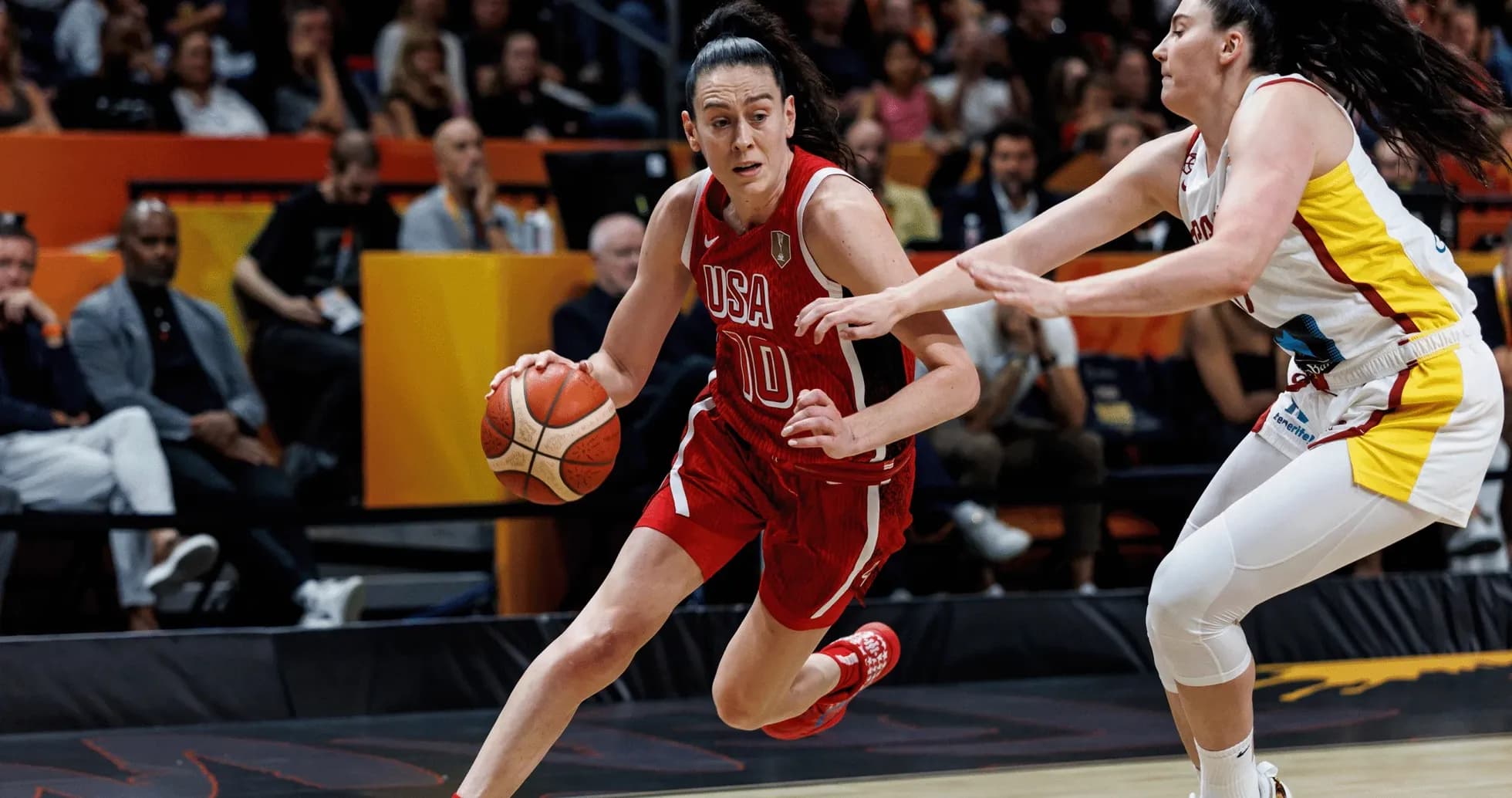
In Berlin, the U.S. finally had to sweat.
Breanna Stewart’s 16 points and Kahleah Copper’s 13 were enough to drag the Americans past a stubborn Spain, 76-66, and into the women’s FIBA World Cup championship game — but this was no familiar blowout stroll. It was a grind, heavy on whistles and free throws, light on rhythm, and decided only when the U.S. finally imposed itself in the fourth quarter.
Next up: France, in a straight reprise of the 2024 Paris Olympics gold medal game, which the U.S. edged by a single point. Same opponents, same stakes, different stage.
A streak under real stress
The U.S. arrived on a 35-game World Cup winning streak, untouched in the competition since a semifinal loss to Russia back in 2006. Four straight titles already in the bag, a fifth now one victory away — a run that would pull them level with the former Soviet Union for the most consecutive championships.
Spain didn’t bow to that history. They punched first.
Nine of the game’s first 10 points went to Spain, who blitzed the Americans out of the gate and handed them their largest deficit of the tournament. The previous mark? A modest three-point hole against Italy in that nervy 55-52 escape. This was different. At 16-9, the U.S. looked unsettled, out of sync, and second best.
Then the bench changed the temperature of the game. The U.S. newcomers came in, picked up the defensive intensity, and turned stops into momentum. A 12-2 run closed the opening period and flipped the scoreboard, but not the tone: Spain had made it clear this would be a fight.
Whistles, contact, and no flow
The second quarter turned into a parade to the foul line. Spain’s physical defense disrupted every American set, bumping cutters, contesting drives, and living with the consequences. The result was a choppy, fractured half in which the U.S. spent almost as much time at the stripe as they did in live action.
By the break, the numbers told the story. The U.S. had taken 27 free throws — making 19 — against just 26 field-goal attempts. They led 39-36, but it felt fragile, more a product of persistence than control.
The Americans never really found their trademark offensive flow. Spain’s resistance kept dragging them into half-court battles, where every cut drew contact and every drive drew a whistle. The U.S. survived on composure, not fluency, and kept cashing in at the line, finishing 27 of 35 on free throws.
Game on in the fourth
Spain refused to go away. Every U.S. surge met a response, every mini-run met a counter. By the end of the third quarter, nothing separated them: 58-58, tension rising, the streak suddenly in view.
That’s when the U.S. finally broke the game open.
They came out for the fourth with a different edge, locking in defensively and attacking the rim with purpose instead of searching for the perfect play. The pressure finally told. The Americans ripped off 12 of the first 14 points in the quarter, turning a deadlock into a 70-60 lead with 5:20 remaining — their biggest advantage of the night.
Spain, so brave for three quarters, could get no closer than eight from there. Every time they threatened to creep back, the U.S. answered with a timely score or another trip to the line. The contest narrowed, then slipped away.
One more step toward history
This semifinal never turned into the showcase performance the U.S. might have wanted. It turned into something else: a reminder that even dominant dynasties need nights like this, when the shots don’t fall, the offense sputters, and the path to victory runs straight through toughness and free throws.
The win keeps the World Cup streak alive at 36 and moves the Americans within one title of matching the Soviet-era benchmark for consecutive championships. It also brings a familiar opponent back into view.
France awaits, just as they did in Paris, with a gold medal on the line again.
The U.S. has handled every challenge so far. Now the question is simple: can anyone stop them from turning a remarkable run into an era-defining five in a row?