Untold Raygun: Breaking Badly – A Dance Between Fame and Criticism
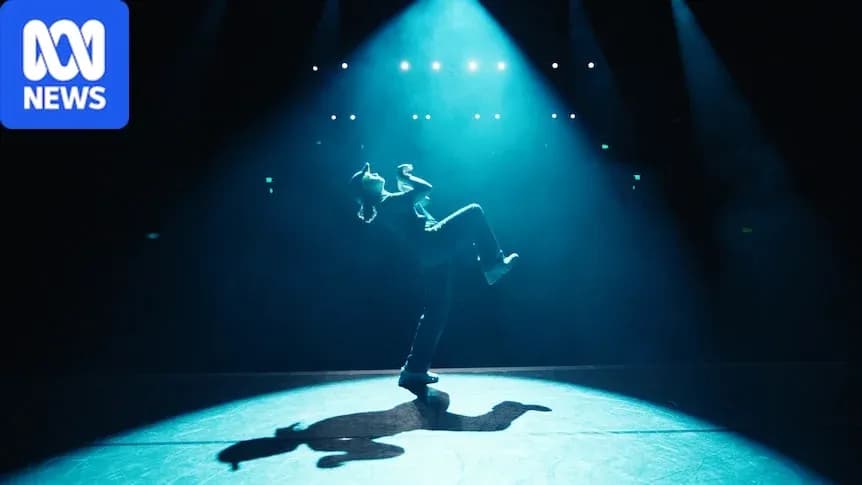
The Netflix documentary Untold Raygun: Breaking Badly opens like an offbeat love story. Not between an athlete and Olympic glory, but between Rachael Gunn, her husband Samuel Free, and the shared language of dance that bound them together long before Paris 2024 turned her into a viral lightning rod.
Sammy – “Sammy (Sex)” in the film – isn’t just the partner in the wedding footage sprinkled through the early scenes. He’s also her coach, the man on the other side of the living-room rehearsals and late-night debates about music, movement, and how far you can stretch the definition of breaking on the biggest stage in sport. Their wedding, shown in affectionate flashes, is exactly what you’d expect: vows, laughter, and a dance floor that looks like a rehearsal space that got invaded by relatives in formalwear.
Then the fairy tale runs straight into the Olympic rings.
Gunn, better known now by her B-Girl name Raygun, arrived in Paris as an academic-turned-athlete, a breaker stepping into a discipline making its Olympic debut. The documentary makes no attempt to hide it: she looked brutally undercooked for what was coming. In the countdown to the Games, the cameras capture a competitor with ideas, heart, and originality, but not much of a high-performance machine around her.
There is no entourage, no elite support team, no army of specialists. Just a small circle and a big dream.
She knew the risk. In one of the film’s most telling moments, Raygun recalls a session with her therapist in the days before the Games. She admits she panicked. The therapist asked the classic question: what’s the worst that could happen? Her answer was chilling in its accuracy. The worst, she said, was that the whole world could laugh at her.
That line lands hard because the viewer already knows what came next.
Her performance in Paris detonated online. The kangaroo. The sprinkler. The quirky, theatrical moves that sent social media into overdrive and turned a niche Olympic event into global water-cooler material. Memes, comedy skits, conspiracy theories – they all piled in. Opinions were ferocious on both sides. Some saw a joyful, experimental routine. Others saw an insult to an art form they’d spent their lives protecting.
Raygun didn’t just become a talking point. She became pop culture currency. American rapper Snoop Dogg weighed in. British superstar Adele did too. The clip travelled faster than any technical breakdown of footwork or freezes ever could.
Back home, her parents Russell and Beverly watched the storm build around the girl they remember as “just a normal suburban girl.” In the documentary, Beverly traces her daughter’s path through childhood ballet, tap, and jazz before she fell into breaking. Russell, for his part, jokes that when he flew to Paris he thought he was on his way to console his daughter, not to see her turned into a global punchline and conversation piece at the same time.
Not everyone is smiling.
Fellow B-Girl Tinylocks is one of the most scathing voices in the film. She didn’t even attempt to qualify for the Olympics, she says, precisely because she cares so deeply about breaking as an art form. Watching Raygun on that stage, she was appalled. “Who could have imagined it would have gone so wrong?” she asks, and the question hangs there, pointed and raw.
The criticism cuts even closer when it comes from inside Raygun’s own circle. B-Girl Flix, who describes a 15-year friendship with her, admits she felt “offended” and “embarrassed” by the routine. That sense of betrayal – of a culture misrepresented at the moment it finally reached the Olympic spotlight – drives much of the documentary’s tension.
The film doesn’t spare Raygun on the sporting side either. Footage of her Olympic qualifier shows her facing B-Girl Molly. Both look tight, nerves written in their shoulders and timing. The battle lacks the flow and edge that define top-tier breaking. Neither appears fully at home under the glare of a world suddenly paying attention.
In Paris itself, the judges were ruthless. Raygun failed to receive a single vote in her rounds. On paper, it was a non-contest.
On screen, though, the story is less about scores and more about fallout. Large sections of the documentary are given over to Raygun’s own voice – before, during, and after the storm. She narrates the chaos like someone still not entirely convinced it really happened. “Sometimes this all feels like a really wild dream,” she says early on. “It’s like I’ve been charged with some crime.”
That framing matters. For many in the breaking community, the crime was artistic. For Raygun, it feels closer to a public trial of her character, her competence, and her right to be on that stage at all.
By the end of the film, the personal cost is clear. Raygun reveals she has left her job in academia, stepping away from the stability that once defined her life. The documentary doesn’t offer a neat next chapter or a redemption arc. It leaves her in that uncertain space between infamy and opportunity, between ridicule and reinvention.
Breaking made its Olympic debut in Paris. Raygun’s routine made sure the world noticed. The question now is what she does with a name everyone knows, for reasons she once feared most.