Uefa's Legal Battle Against Fifa's Infantino: A Governing War
The language is incendiary, even by football’s bare‑knuckle political standards.
“Criminal mismanagement.”
“A stunning dereliction of duty.”
“A fraudulently off‑market price.”
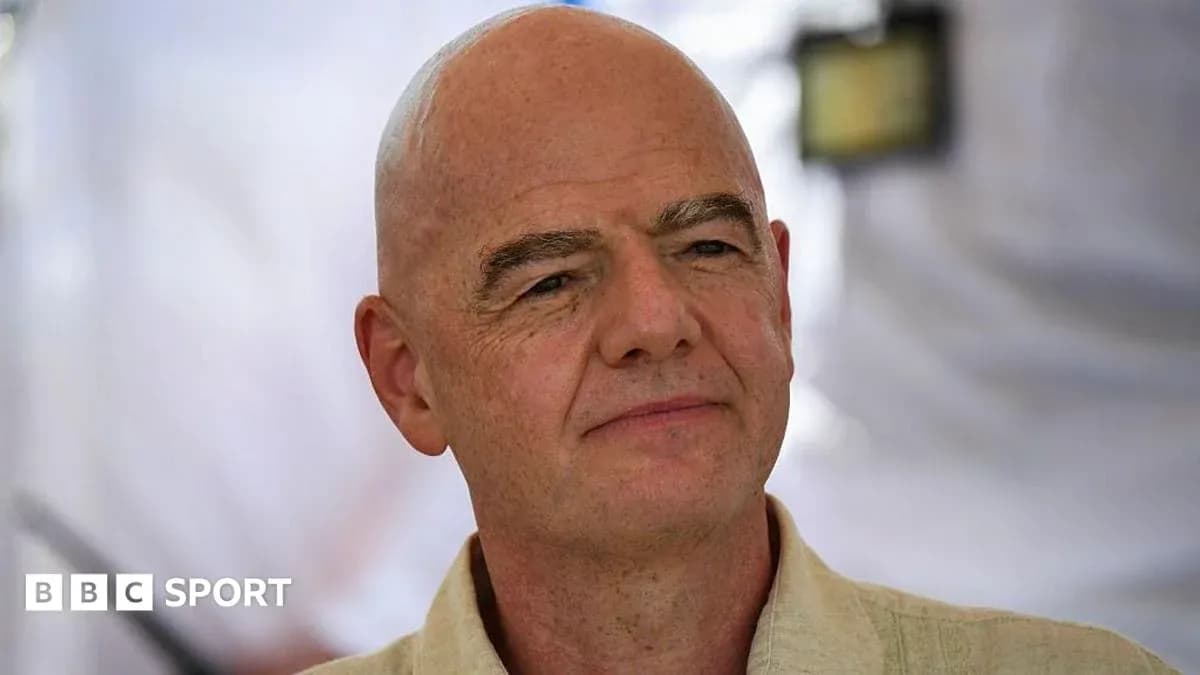
Those are not the words of angry fans on social media, but of Uefa’s own lawyers, laid out in stark black and white in court papers filed in the United States. At the centre of the storm: Fifa president Gianni Infantino and his now‑abandoned Fifa Forward Enterprise (FFE) scheme, a plan to sell stakes in Fifa competitions to private investors.
Uefa accuses Infantino of driving a deal that placed an “absurdly low enterprise value” on the World Cup – about £15bn – in a process it says was neither open nor independently tested, and carried out “under a veil of secrecy”. The documents speak of “cronies” and “co‑conspirators”, and even include a chapter on “the enduring history of corruption among Fifa officials”.
This is no routine skirmish. It is a governing war.
From boycott threats to subpoenas
The FFE project surfaced a little over a month ago and collapsed almost as quickly, but the fallout has only intensified. Uefa had already threatened a boycott of Fifa competitions, only to pull back after receiving assurances the scheme would not be revived. That retreat looked like a rare win for Infantino.
Then came the counter‑punch.
Uefa is now seeking access to evidence and documents in the US for use in potential criminal proceedings in Switzerland against the Fifa president. The request targets Fifa itself, Thrive Capital – the venture capital firm lined up as lead investor – its founder Josh Kushner, and former Formula 1 chief Greg Maffei, described in the filing as “the key commercial adviser” on the deal.
For Thrive and Kushner, Uefa’s legal team wants subpoenas covering “the production of documents and communications and for deposition testimony”. Kushner, brother of Jared Kushner, has stayed silent, but legal specialists suggest he could try to block any subpoena by arguing that the details of the deal are commercially sensitive and must remain confidential to protect his wider business interests. He has, after all, just agreed a record £9.3bn purchase of the Los Angeles Lakers.
How long that battle over disclosure will drag on is anyone’s guess. Uefa needs enough material to sustain its claim that the World Cup was deliberately undervalued and that Fifa and its 211 member associations suffered “direct and concrete injury”. Only then will it decide whether to push a criminal complaint in Switzerland.
That is a high bar. The Swiss authorities have trodden this path before. In 2002, several Fifa executive committee members filed a criminal complaint against then president Sepp Blatter. Nothing came of it. Blatter denied wrongdoing, and the public prosecutor declined to proceed. Last year, Blatter and former Uefa president Michel Platini were fully cleared of corruption charges after a long‑running investigation.
Nick de Marco KC, a leading sports lawyer, offers a sober assessment. Uefa, he says, must show “an arguable case for criminal proceedings” to unlock the disclosure it wants. He believes the chances of success at that initial stage are “high”, but stresses that any decision to prosecute lies with the Swiss authorities and will take time. What he does expect is “disclosure of very interesting documents and more light shone onto this plan”.
Infantino’s best week in his worst crisis
The irony is hard to miss. As the legal rhetoric hardens, Infantino has just enjoyed what may be his strongest week since the FFE row erupted.
Saudi Arabia’s powerful football federation issued what it called “qualified” support, backing his “continued efforts…to restore unity”. For a president under siege from Europe, that is no small ally.
He also stared down calls from three confederations and a host of other stakeholders to step aside. Uefa’s decision to drop the boycott threat, once it had been reassured the FFE scheme was dead, was widely interpreted as another point on the board for Infantino.
On the surface, he has carried on as if insulated from the storm. Fifa officials insist they are concentrating on delivering the U20 Women’s World Cup in Poland, which starts next week. Infantino, meanwhile, has been on the road – the Dominican Republic, Paris, Vietnam – posting upbeat videos of “wonderful” visits that increasingly resemble a global campaign trail to shore up support.
He has defended FFE as a bold attempt to unlock Fifa’s commercial potential, then apologised for “errors”. On the latest legal salvo from Uefa, he has said nothing.
The silence is telling. So is the travel itinerary.
A divided game, and a presidency under siege
Uefa’s move for US court‑ordered disclosure is a dramatic escalation, but it also reveals a strategic calculation. The organisation knows that criminal cases in Switzerland are fraught with uncertainty. It also knows Infantino still commands significant backing in South America, Africa and parts of Asia.
Publicly, Uefa is now framing its campaign in broader terms. It has pledged to “secure fundamental reform, restore proper limits on presidential authority and ensure that Fifa is once again governed as an institution – not around one individual”. It wants a “genuinely independent external review” of the FFE saga.
Privately, the political arithmetic is obvious. Many inside the game still expect Infantino to survive and seek a fourth term in the spring. Uefa has warned that if he does, it will “join forces with its partner confederations” to offer a “credible alternative” – a candidate, it says, committed to “integrity, accountability, development and genuine institutional change”.
Finding that figure is the next great challenge.
Uefa vice‑president Laura McAllister, speaking in Monaco, sketched out the profile: someone who will modernise football governance, make it “accountable to its most important stakeholders”, and anchor it in principles of transparency, independence, critical challenge and due diligence. She insists there are “lots of credible candidates”, but stresses the need for a unifying figure with the “credentials and the credibility and the buy‑in” to drive reform.
The message is clear: this is not only about FFE. It is about the way Fifa is run.
The clock to October – and a pivotal election
Timelines now matter. In October, Infantino will sit across the table from some of his fiercest critics at the first Fifa Council meeting since the rebellion over FFE. The mood is expected to be combustible.
In November, presidential candidates must be formally nominated. Then comes March, and an election that could set the direction of world football for a generation – if, as most expect, Infantino decides to stand again.
Between now and then, Uefa’s legal push in the US will grind forward. The Swiss authorities will watch. So will the rest of the football world, waiting to see whether those “very interesting documents” emerge and what they reveal about how close Fifa came to selling a slice of its crown jewel at a price Uefa calls “absurdly low”.
The game’s leaders talk of unity. The reality is a governing landscape fractured by suspicion, ambition and old grievances. The intrigue will not fade quickly. Nor will the rancour.
The question now is brutally simple: in a sport that has lived through Blatter, Platini and a decade of scandal, can Fifa find a way to change – or is this just the opening act of its next great crisis?