Tyson Fury Turns to Oleksandr Usyk Amidst Joshua Stalemate
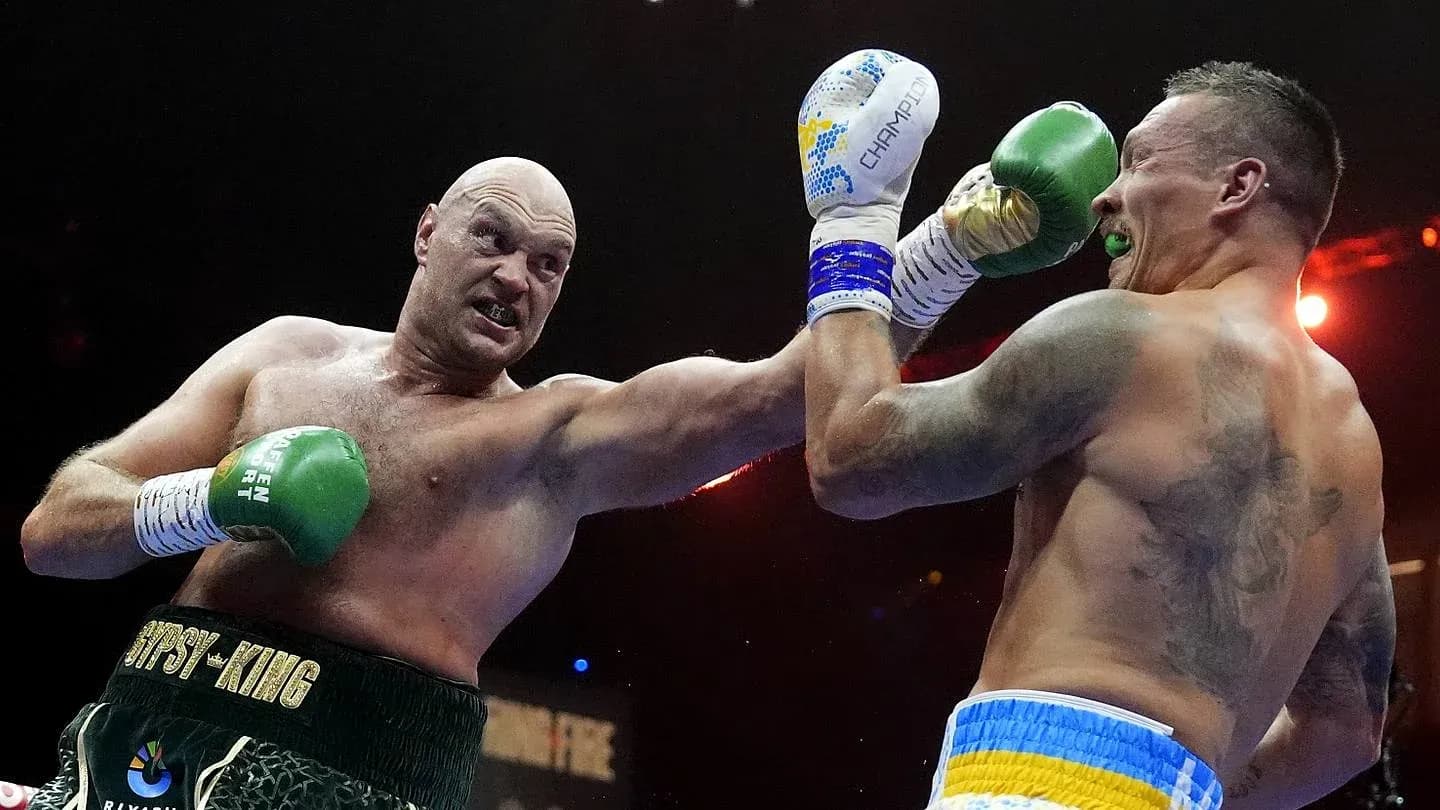
Tyson Fury is used to chaos. He has built a career on it – thriving in hostile arenas, ripping up scripts, walking through storms of doubt. But this time, the turbulence looks different. This time, it looks like a man running out of road.
With the Anthony Joshua superfight stuck in neutral and the clock ticking toward November 2026, Fury tried to yank the narrative back into his hands over the weekend. The target: an old foe who has already had the final word over him twice – Oleksandr Usyk.
Fury turns to Usyk as Joshua talks stall
The collapse of Fury vs Joshua, at least for now, comes down to geography and power. Fury has signed off on New York, on the bright lights of Madison Square Garden, on the idea of conquering America one more time. Joshua, by contrast, wants home soil, wants Wembley Stadium, wants 90,000 voices behind him in London.
Hovering over all of it is Turki Alalshikh, the Saudi powerbroker driving Zuffa Boxing’s ambitions. He wants the American market, wants the sport’s biggest nights staged under U.S. lights, and sees Fury–Joshua as the perfect vehicle.
While the venue tug-of-war drags on, Fury has turned to the one name guaranteed to move the needle. Usyk. The man who took his unbeaten record, outboxed him over 24 rounds, and walked away as a generational, former undisputed heavyweight champion.
Fury grabbed a microphone and went to work, using Sky Sports as his platform and November 2026 as his deadline.
“You got the decisions last time; fair play to you. Good luck to you; let's do it again. Let's run it back in November,” Fury said. “The ball is now in your court... do you want to fight me this year, 2026, or are you calling it quits? Let me know because I am now looking for a new opponent.”
It sounded less like a callout and more like a plea. A last-minute attempt to secure a date, a stage, a purpose.
Usyk’s last dance – and why Fury isn’t invited
Usyk has his own clock to watch. The Ukrainian is nearing the end, his legacy secure, his status as one of the greats of this era already carved in stone. He wants one more fight. Not just another payday, but a farewell that feels right – his “last dance.”
That is precisely why Fury’s offer holds little appeal.
From Usyk’s side, there is no urgency to bail out a rival whose plans have fallen apart. No appetite for a rushed, late-notice trilogy when the previous two fights told such a clear story. Across those 24 rounds, Usyk controlled the narrative. He didn’t edge Fury; he outclassed him. The scorecards, the momentum, the memory – all point in one direction.
If those bouts had been razor-thin, if controversy hung over them, a third fight might sell itself. Instead, Usyk’s dominance strips the rematch of sporting necessity. It becomes a favor to Fury, not a requirement for Usyk.
His manager, Sergey Lapin, made that point with a sharp jab of his own.
“Usyk is not Tyson's backup plan. If Fury needs an opponent, he should visit the Ready to Fight platform. They can help him find a worthy opponent there,” Lapin said.
No ambiguity there. No opening. No interest.
A champion with no leverage
Strip away the noise and a harsh reality emerges: Fury’s leverage is evaporating.
The Joshua fight – the one that could define his era, the one the public has demanded for years – drifts further from reach with every stalled negotiation and every venue dispute. Fury’s attempt to drag Usyk back into the ring only underlines the problem. When a fighter starts calling out the man who has already beaten him twice, on short notice, for a date that suits his own schedule, it doesn’t project control. It projects need.
And need is a bad look at the elite level.
Usyk can choose his exit. He can pick his opponent, his country, his stage. Fury cannot force his hand with words alone, not when the recent history between them is so one-sided.
So Fury stands at an awkward crossroads. The Saudi backing is there. The American stage is there. The name he truly wants – Joshua – is locked in a tug-of-war over where the ring gets built. The man he’s just called out – Usyk – has no sporting reason to say yes and a team that has already said no.
The question now is brutally simple: if Joshua doesn’t budge and Usyk walks into retirement on his own terms, who does Tyson Fury fight next – and how much does that opponent really do for a legacy that suddenly feels vulnerable?