Tiffany Teo Wins Gold at Asian Games: A Historic MMA Moment for Singapore
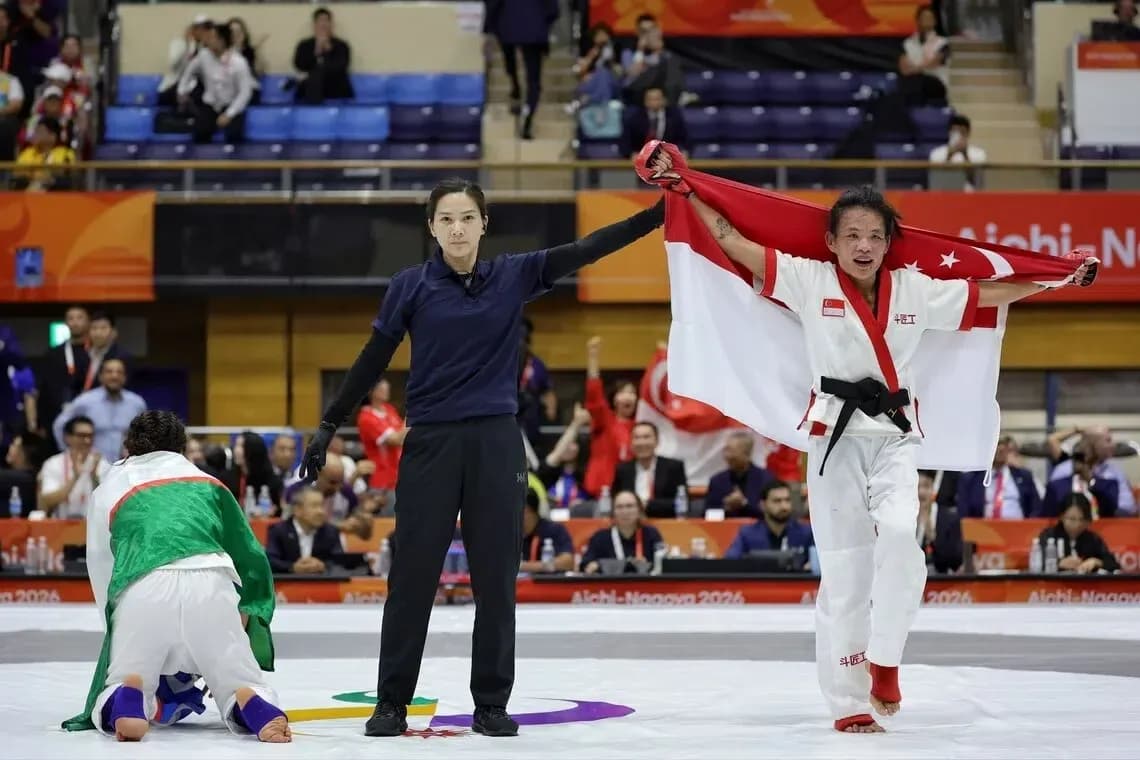
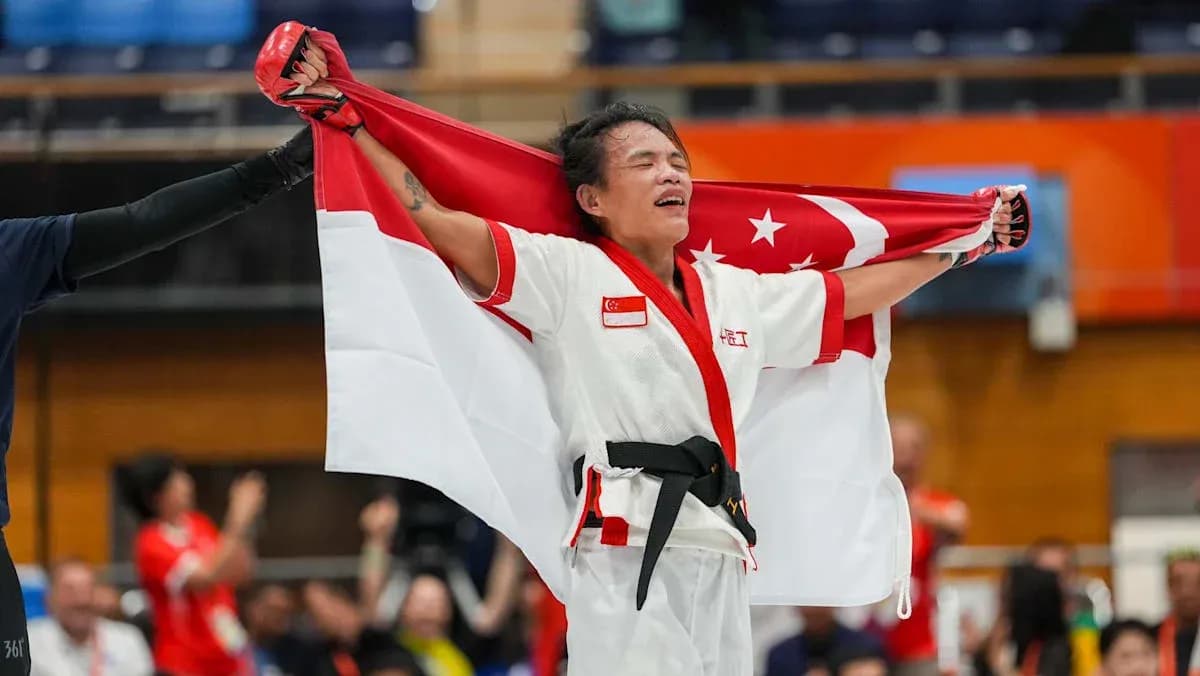
NAGOYA – By the time Tiffany Teo finally stepped off the mat at Nagoya City Inae Sports Centre, Singapore had its first gold medal of the Asian Games – and MMA had its statement moment.
The 36-year-old beat Uzbekistan’s Khilola Sobirova in the women’s traditional 60kg final on Sept 22, closing out a tense, tactical contest that went all the way to overtime. One round each on the judges’ cards, one last frame to decide history.
Teo found a way.
When the final verdict came, she crumpled. Blood on her uniform, tears on her face, the Singaporean dropped to her knees before her husband and coach, Sim Kai Xiong, lifted her onto his shoulders. Years of grind and a near three-year exile from competition, all pouring out in one raw, unfiltered release.
She had waited a long time for this opponent too. Sobirova had beaten her in May in the final of the 2026 Asian Mixed Martial Arts Championships. That defeat stung. This time, Teo walked out with gold and a slice of revenge.
“I was really overwhelmed,” she told reporters, still trying to process it all. She admitted she had never cried after a fight before. Representing Singapore at the Asian Games, she said, came with a different weight, a different expectation. When the gold was finally secured, the emotion broke through – tears, yes, but only of joy.
Her victory carried more than personal meaning. For Teo, this was a platform.
A professional since 2016, she has long seen herself as a pioneer for MMA in Singapore, but also watched with concern as the sport struggled to gain traction. She spoke openly about wanting this Asian Games run to shine a light on MMA as a legitimate pathway, just like boxing, wrestling or judo – sports that already have national-team structures and clear targets for young athletes.
Her message was simple: a gold medal can change minds.
Teo’s road to the top of the podium was anything but straightforward.
On Sept 20, she opened her campaign with a composed, unanimous decision win over Iranian fighter Arezou Salimighalehtaki in the quarter-finals. That victory alone was historic – Singapore’s first Asian Games medal in MMA, a sport making its continental debut.
With both losing semi-finalists guaranteed bronze, Teo knew she had already secured a place in the record books. She wanted more.
The semi-final against India’s Suchika Tariyal on Sept 21 turned into a test of nerve and rulebook nuance. The pair split the first two rounds. In overtime, the judges initially awarded the bout to Teo, and it looked settled. Hand raised, final secured.
Then came the twist.
Suchika’s corner challenged the decision. Under Asian Mixed Martial Arts Association (AMMA) procedures, a different set of referees reviewed the overtime round on video. They overturned the original call and declared the round a draw.
That triggered one of the sport’s more obscure tie-breakers: the morning weigh-in.
Teo had come in at 58.8kg. Suchika weighed 59.85kg. By the narrowest of margins, the Singaporean advanced. A semi-final decided not by a punch or a takedown, but by 1.05kg on the scales.
It was a brutal way to progress, yet it underlined how fine the margins are at this level. Teo took that lifeline and refused to waste it.
Her story adds another layer. From 2016 to 2022, she built an 8-2 record with One Championship, a steady rise that suggested she belonged among Asia’s elite. Then came the wilderness. Nearly three years without a fight, her career stalled until she resurfaced in June 2025 with Chinese promotion JCK MMA.
Nagoya has become her answer to all those lost months.
Teo’s gold also set the tone for Singapore’s third day at the Asian Games, giving the 304-strong contingent a landmark moment early in the campaign. It joins swimmer Gan Ching Hwee’s historic silver in the 1,500m freestyle and wushu exponent Zeanne Law’s bronze in the women’s taijiquan-taijijian in a growing medal tally.
In Hangzhou 2023, Singapore finished with 16 medals – three golds, six silvers, seven bronzes. The bar is clear. The question now is whether Teo’s breakthrough in Aichi-Nagoya becomes just another line in the medal table, or the spark that finally pulls MMA into the national sporting mainstream.