Thames Derby at 100: Old Grievances and New Realities
When Millwall and West Ham walked out at The Den on Saturday, they carried more than a fixture list. This was the 100th competitive meeting between two clubs born out of the same river, the same industry and the same hard-edged idea of what football – and life – should look like. It was also their first competitive clash in 14 years. The gap had only sharpened the edge.
Separated now by miles of regenerated London, they were once near neighbours on the north bank of the Thames: Millwall on the Isle of Dogs, Thames Ironworks around Canning Town. Before Millwall crossed the river to New Cross in 1910, the clubs were barely more than two miles apart. The distance was short, the rivalry anything but.
Back then, Millwall were the Dockers. West Ham became the Irons, a name that still nods to the Thames Ironworks and Shipbuilding Company. Both clubs were forged in the brutal uncertainty of dock work, where men queued each morning not for a wage, but for the chance of one. No guarantees. No security. Just a daily scramble for a day’s labour.
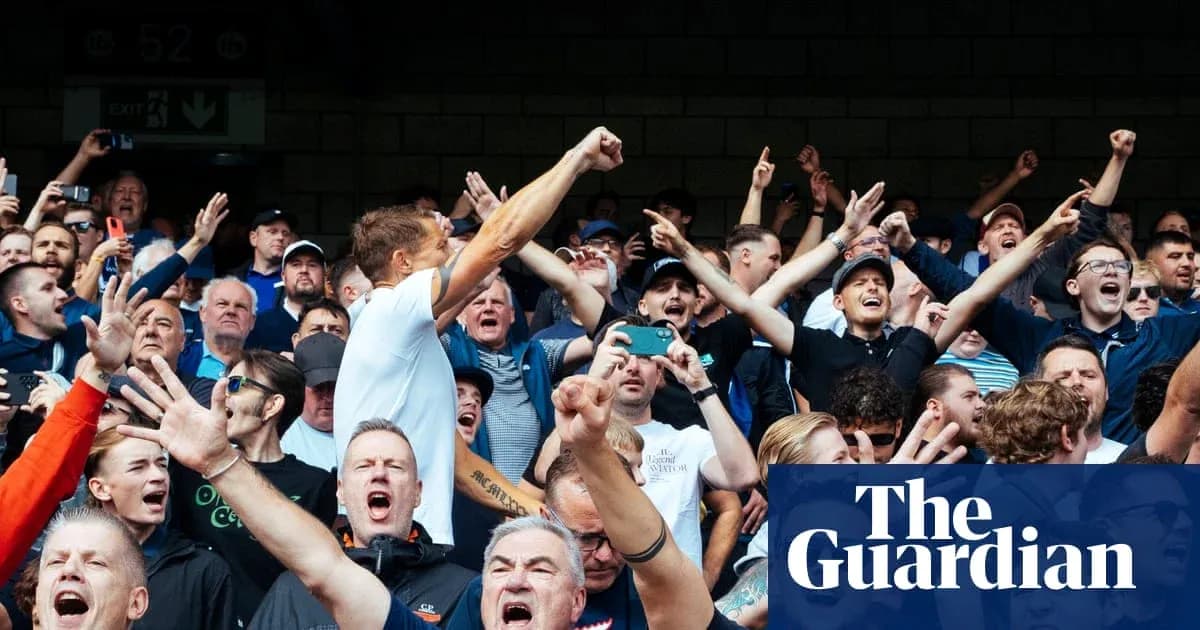
That world baked toughness, loyalty and graft into the local identity. Those values still sit at the heart of how both clubs see themselves and sell themselves. On Saturday, you could feel it in the songs, in the faces, in the way neither set of supporters ever quite relaxed.
History, though, is messy. It bleeds into myth. One of the most enduring stories claims the rivalry was born in the General Strike of 1926: West Ham dockers backing the strike, Millwall men supposedly refusing to join. It’s a neat tale, too neat. Historians David Sullivan and Brian Belton have pulled it apart. Belton argues the strike held firm in the Millwall docks, and that only a small number broke ranks near Canning Town. The evidence doesn’t match the legend.
But football rarely lets the facts get in the way of a good story. The myth has lasted a century, woven into the folklore around this derby.
The clubs’ paths first crossed in the 1890s, when Millwall Athletic faced Thames Ironworks. Belton warns against seeing Thames as a simple early version of West Ham; the works team folded before West Ham United emerged in 1900. Sullivan and Belton both challenge the idea of some ancient, unbroken “Dockers Derby”. The real venom came later.
By the 1970s, the rivalry had hardened into something darker. Harry Cripps’s testimonial in 1972 – for a player loved on both sides – was marred by serious disorder. In 1976, a Millwall supporter died after falling from a train, with some believing West Ham fans were involved. When the clubs finally met competitively again in 1978, trouble followed. The football was only half the story.
Look at the wider picture and the timing feels telling. The same years that saw the rivalry intensify also saw the docks close, factories shut and tens of thousands of jobs vanish across east and south-east London. Traditional industries collapsed. Communities that had built their lives around the river and the yards were left staring at unemployment and decline.
It would be lazy to draw a straight line from industrial ruin to hooliganism, but they grew side by side. As the old certainties crumbled, football grounds became one of the last places where territory, masculinity, belonging and local pride could be loudly, physically asserted. If the docks no longer defined you, your club could.
The 1980s, 90s and early 2000s added fresh chapters. Most people think of Upton Park, 2009. A League Cup tie that turned into a national story: fighting outside the ground, a stabbing, pitch invasions, the fixture’s reputation dragged through prime-time news bulletins. Their Championship meetings in 2011-12 were quieter, almost routine by comparison. Then silence. No competitive meetings until this season.
On screen, films like ID and Green Street turned the Millwall–West Ham rivalry into a kind of cult export. Both clubs became shorthand for football violence, the Dockers Derby a ready-made backdrop for tales of “real” fans and “proper” trouble. That mythology still clings, even when reality moves on.
Which brings us back to Saturday. The build-up online was predictably loud, full of pointed posts and choreographed bravado. On the ground, the mood was different: wary, watchful, but with a broad expectation that the day would pass without major incident. That proved largely right.
There is, though, a deep suspicion of journalists and photographers around both fanbases. Warnings to “be careful” came from both sides. A few insults flew during the day, the sort of thing that comes with the territory. They were drowned out by something more striking – the sense of community. Families in club colours, long-time mates meeting on the concourse, strangers swapping stories and jokes. The warmth was real, if you were close enough to see it.
The authorities were taking no chances. ITV cameras were in place, kick-off dragged forward to 12.30pm to cut down drinking time. Around 400 police officers were deployed. West Ham received only 1,774 tickets in a crowd of about 20,000, and most of their fans came stripped of colours, blending into the city rather than parading through it. Their route was tightly managed: London Bridge to South Bermondsey, then escorted to the away end.
On the pitch, the script refused to follow the league table. West Ham arrived top, fresh from a 6-0 demolition of Wrexham. Millwall, patched up and carrying injuries, were supposed to be hanging on. They did anything but. The Lions tore into the first half, sharper, hungrier, and went in at the break two goals to the good. The old ground shook with the noise.
West Ham’s quality finally surfaced. They dragged themselves back, inch by inch, and with 10 minutes to play, they found the equaliser. The reaction was ferocious. Fists in the air, bodies surging, voices cracking. For a moment, you could feel the tension straining at the seams. Extra police moved into position, a visible line between celebration and confrontation.
Then, late chaos. In the 89th minute, Kyrell Lisbie burst clear, the game there to be won. Mohamadou Kanté hauled him down. Straight red. Millwall roared for justice, West Ham breathed out in relief. The foul may have denied Millwall a famous winner; it certainly denied them a clean run at it. The whistle went on a 2-2 draw that left both sides with mixed feelings – pride and frustration bound together.
Outside, there were a few brief skirmishes between Millwall fans and police, flashes of anger that flared and then fizzled. Within minutes, the scene had shifted. Kids lined up for autographs. Groups of supporters stood in clusters, dissecting substitutions, missed chances, refereeing calls. The temperature dropped. The football took over again.
To anyone looking in from the outside, the similarities between these clubs can feel more striking than the differences. Both lean heavily on the language of working-class London: toughness, loyalty, authenticity. Many supporters have family members or close friends on the other side. Yet when the shirts face each other, there is still real animosity among parts of both crowds. That tension fuels the fixture.
Maybe that is the heart of it. Millwall and West Ham are not just rivals on the pitch; they are rivals in what they claim to represent. The same river, the same lost industries, the same stories of graft and survival – but each club insisting it is the truer, more authentic voice of that world.
They have now met across three different centuries. The docks that gave this derby its character are largely gone. The clubs have moved grounds, moved up and down divisions, moved further apart on the map. The games themselves have become rare events, circled in red when the draw throws them together.
What has not faded is the contest over meaning – over identity, territory and memory. On Saturday at The Den, in the noise and the nerves and the 2-2 stalemate, that battle felt as alive as ever.