Team USA's Quest for Gold at FIBA Women’s Basketball World Cup
The lights go on in Berlin in less than a day, and the standard is brutally simple for Team USA: win a fifth straight FIBA Women’s Basketball World Cup or go home disappointed.
On Friday, Sept. 4, the United States opens against China (8:15 a.m. ET, TruTV/TNT/HBO Max), a first step in a 10‑day sprint that the Americans fully expect will end on Sept. 13 with gold medals around their necks. Expectation, though, meets reality quickly at this level.
Caitlin Clark knows it.
“Even getting to play here in the World Cup, that's special within itself, too,” the guard told FIBA. “Sometimes this is an even harder competition than the Olympics. I think one of the most fun parts is the international game and talent is growing and growing. These competitions are only getting harder to win.”
That’s not just a soundbite. It’s the backdrop for a roster that arrives in Germany powerful, but not untouched.
Life without A’ja Wilson and Kelsey Plum
The United States will start this tournament without two of its most reliable veterans. A’ja Wilson and Kelsey Plum are sidelined with injuries, stripping head coach Kara Lawson of a dominant interior force and a proven backcourt scorer.
So Lawson has to improvise, but not by throwing players into unfamiliar roles just for the sake of star power. The plan, as it shapes up, is to keep as many players as possible in their natural positions and lean on balance, versatility and defensive bite.
That philosophy frames the projected starting five.
Chelsea Gray at the controls
Point guard belongs to Chelsea Gray of the Las Vegas Aces. Lawson is expected to trust her experience to steady a young guard group that hasn’t yet played a World Cup or Olympics with the senior national team.
The question isn’t whether Gray starts. It’s how much she plays and how much of the offense runs through her hands.
In five FIBA Qualifying Tournament games in March, Gray saw limited minutes as the staff evaluated the pool. The numbers were modest — 5.6 points and 4.8 assists per game — but they don’t capture what Lawson will want from her now: orchestration, tempo control, and a veteran voice when the game tightens in the final five minutes.
Behind her, of course, waits Clark. But more on that in a moment.
Jackie Young: the two-way lock
At shooting guard, Jackie Young looks as close to a lock as this lineup has.
She’s never played in a World Cup, but the Aces guard brings something this roster can’t manufacture on the fly: two-way reliability. She scores at all three levels, facilitates, and guards the opponent’s best perimeter option without blinking.
In Paris with the 2024 U.S. national team, Young averaged 9.5 points, 2.3 rebounds, 2.3 assists and tied for the team lead with 1.5 steals per game. Those aren’t empty numbers; they’re the profile of a player who affects every possession. Lawson can start games with her and feel secure at both ends.
Napheesa Collier shifts to the wing
Napheesa Collier is the likely answer at small forward, even if that means a positional tweak.
The Minnesota Lynx star usually operates at power forward, but Lawson may slide her to the three, trusting her mobility and instincts to cover the perimeter. Like Young, Collier hasn’t played in a World Cup for the senior national team, but she’s no stranger to USA Basketball pressure.
She already owns two Olympic gold medals, from Tokyo 2020 and Paris 2024, where she averaged 6.7 points, 6.5 rebounds and 1.3 assists. Those numbers hint at her versatility. She can rebound like a big, pass like a wing and defend multiple spots. On this roster, that flexibility is gold.
Breanna Stewart, the anchor with three World Cups
If there is a heartbeat of this team, it’s Breanna Stewart.
The New York Liberty star slots in at power forward, with the understanding that she can slide to center when Lawson wants to go smaller or more mobile. Stewart brings more World Cup experience than anyone else on the roster: three tournaments, three gold medals.
Her 2022 World Cup run was a masterclass — 12.8 points, 6.6 rebounds, 3.0 assists, 1.3 steals and 1.4 blocks per game, capped by a spot on the tournament’s All-Star Five. In Berlin, she’ll be asked to do even more: produce in the paint, protect the rim, quarterback the defense, and set the standard for urgency.
When the U.S. needs a stop or a smart possession, eyes will go to Stewart first.
Aliyah Boston steps into the void
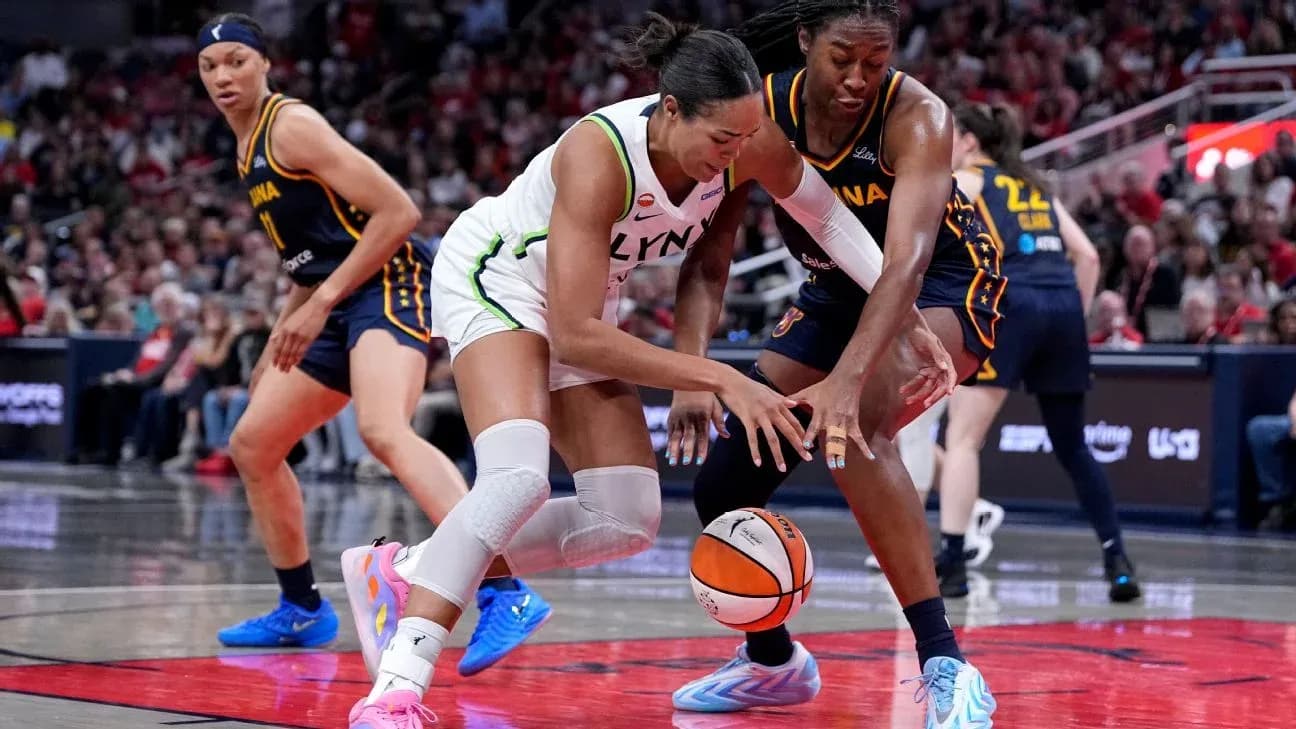
With Wilson out, the starting center job belongs to Aliyah Boston.
The Indiana Fever standout gives Lawson a different look in the middle — powerful, yes, but also agile and quick in tight spaces. Expect Lawson to push Boston to ramp up her one-on-one defense on the block and punish opponents who try to front or double her.
Boston withdrew before the 2026 World Cup Qualifying Tournament, so she wasn’t part of that group. She did, though, feature on the 2024 Olympic Qualifying team, averaging 5.0 points, 5.5 rebounds, 1.0 steal and 1.0 block in nearly 23 minutes per game. Those are the bones of a classic World Cup big: active, physical, and impactful without needing a high-usage role.
If she controls the glass and closes out possessions, Team USA’s transition game becomes lethal.
The bench: Clark, Bueckers and a wave of energy
The starting five looks settled on paper. The rotation does not.
Lawson hasn’t tipped her hand on minutes or combinations, but the shape of the bench unit is clear enough.
Caitlin Clark will almost certainly be the first guard off the bench, spelling Gray at point. She arrives as the MVP of the FIBA World Cup Qualifying Tournament in March, where she averaged 11.6 points and 6.4 assists. Her court vision is elite, her range stretches defenses to the logo, and she can flip the rhythm of a game in a single quarter.
Next to her, Paige Bueckers of the Dallas Wings should see time behind Young. Her two-way game mirrors some of what Young brings — scoring, playmaking, defensive edge — and that symmetry gives Lawson options. She can rest a starter without completely changing the team’s identity.
On the wing, Kahleah Copper of the Phoenix Mercury profiles as the primary backup to Collier. That’s a punishing one-two punch. Copper’s slashing, physical style can shred tired defenses, and her energy can lift the entire second unit.
Frontcourt depth: Iriafen and Reese
Behind Stewart and Boston, Lawson has two intriguing pieces in Kiki Iriafen and Angel Reese.
Iriafen, now with the Washington Mystics, should get steady minutes in relief of Stewart. Her activity, length and willingness to run the floor fit perfectly in a tournament where games come thick and fast. She doesn’t need plays called for her to influence the scoreboard.
Reese, with the Atlanta Dream, is listed as the backup for Boston but could see time at both power forward and center. She’s already been playing center this WNBA season as the Dream navigate injuries, so the physical demands won’t surprise her.
How Lawson uses them, though, remains an open question. Does she pair Reese with Boston for a bruising, rebounding-heavy lineup? Does she go small with Stewart at the five and Iriafen at the four? The combinations are there. The answers will arrive in real time.
A new chapter in a familiar chase
This isn’t the same U.S. juggernaut that has rolled through past World Cups on autopilot. The core is older. The challengers are better. Two stars are missing.
But the expectations haven’t moved an inch.
Gray’s calm, Young’s edge, Collier’s versatility, Stewart’s pedigree, Boston’s presence, and a bench led by Clark’s electricity — it’s a mix built not just to survive Berlin, but to own it.
In less than 24 hours, we find out whether this version of Team USA can keep the gold standard alive, or whether the rest of the world has finally closed the gap.