Team USA Dominates Group Play at FIBA Women’s World Cup

Team USA rolls into the break in Berlin looking exactly like what the betting markets say they are: overwhelming favorites, and very much in control.
Three games, three wins, three statements. The latest came on Monday, a 105-64 demolition of Czechia that sealed top spot in Group D and stretched the Americans’ World Cup winning streak to 33 games, a run that started back in 2006. This wasn’t just a routine group victory. It was a reminder to the rest of the field of the gap that still exists when the U.S. locks in.
They now sit at 3-0, with a couple of days to breathe before the quarterfinals on Sept. 10, also in Berlin. The opponent will be the winner of Hungary vs. Japan, but whoever emerges knows what’s waiting.
Stewart steady, Young leading, Clark directing
This U.S. team is loaded with star power, yet the production has spread neatly across the roster.
Breanna Stewart, in her fourth World Cup, has taken up her familiar role as the tournament’s metronome. She’s averaging 10.3 points and 8.3 rebounds, not forcing the issue, just controlling games in the way she has for a decade on the international stage.
Jackie Young has stepped into the role of leading scorer so far, putting up 11.3 points per game. She has given the offense a sharp edge, turning defensive stops into quick strikes and punishing any lapse in transition.
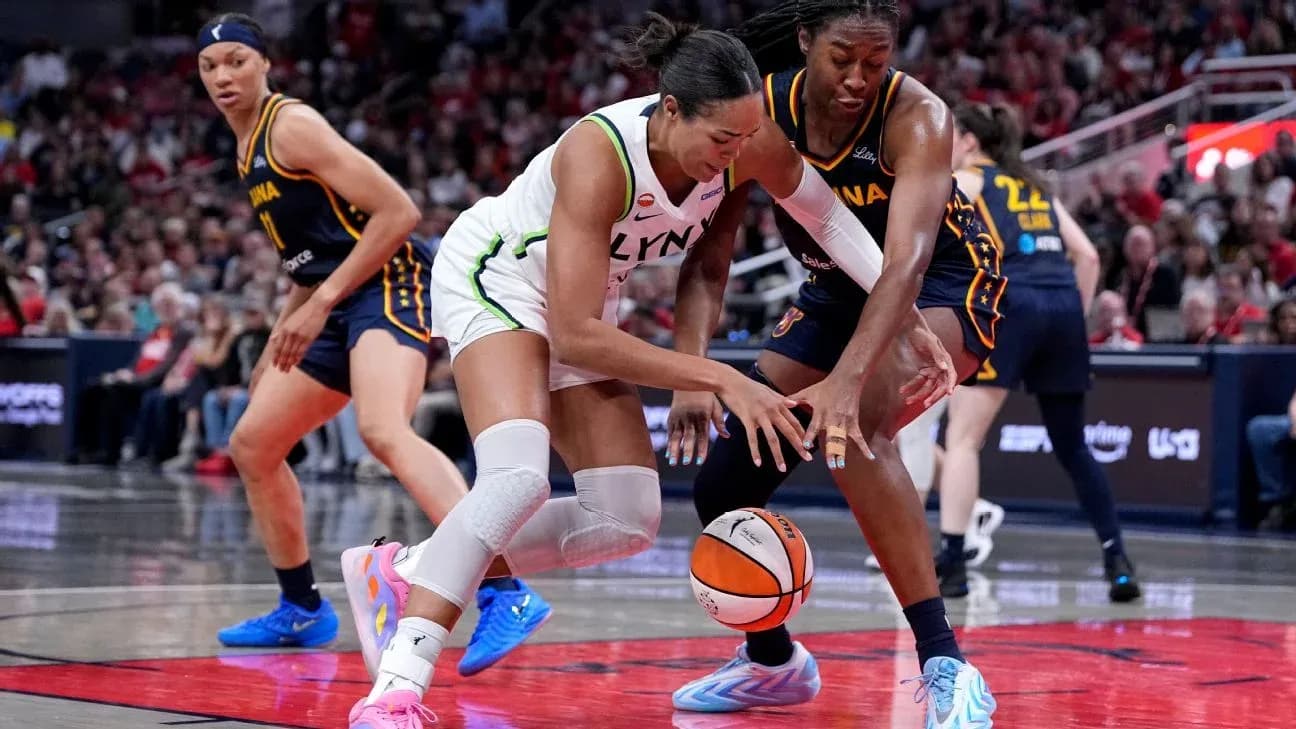
Then there is Caitlin Clark, the team’s creative engine. She tops the squad in assists at 6.3 per game, and her impact has been obvious from the opening tip of the tournament.
“(Caitlin) provides a great playmaking aspect to her game on our team,” head coach Kara Lawson said. “We rely on her at the point guard position when she’s in, to run the team. We saw that in the first game when she had 11 assists and zero turnovers.”
Lawson didn’t stop there. She framed Clark’s performance as part of a broader youth movement on this roster.
“She’s another young player that’s feeling her way through her first World Cup, you know? And she’s really motivated and wanting to help our team win. And I think that’s a great place to be. And I think all of our young players will take a lot from these three pool play games, give them a lot of confidence as we go into the middle round.”
Paige Bueckers has made her presence felt at the rim, leading the team with 1.3 blocks per game, while Rhyne Howard has been the most disruptive on the perimeter, averaging 1.7 steals. The stat sheet tells a clear story: this isn’t a one- or two-player show. It’s a deep, balanced group that can hurt opponents in every phase.
The bracket tightens
With group play done, the World Cup shifts into a 12-team, do-or-die format. Every game from here is a straight knockout.
The qualification round starts Tuesday, Sept. 8, with four matchups that will feed directly into the quarterfinals:
- Hungary vs. Japan, 11:45 a.m. ET (winner faces the United States)
- Germany vs. South Korea, 2:45 p.m. ET (winner faces Belgium)
On Wednesday, Sept. 9, two more spots in the last eight are on the line:
- Puerto Rico vs. China, 11:45 a.m. ET (winner faces France)
- Italy vs. Australia, 2:45 p.m. ET (winner faces Spain)
The quarterfinals arrive Sept. 10, followed by the semifinals on Sept. 12. The tournament will crown its champion on Sept. 13, with the bronze medal game also on the final day.
The 12 teams still standing after the group stage:
- Group A: Japan, Spain, Germany
- Group B: Hungary, South Korea, France
- Group C: Belgium, Australia, Puerto Rico
- Group D: United States, Italy, China
Some have already looked the part of contenders. Others have survived more than thrived. All of them now live with the same reality: one bad quarter, one cold stretch, and the World Cup is over.
Odds, expectations, and a Berlin stage
The bookmakers see what the scoreboard shows. At BetMGM, the United States sits as a commanding favorite at -500 to win the 2026 FIBA Women’s World Cup. No one else is close.
France follows at +600, then Belgium at +1400. Spain sits at +2000, Australia at +2800. China, Germany, and Italy are all listed at +6600. Japan, South Korea, Puerto Rico, and Hungary round out the board at +20000.
The message is blunt: this is Team USA’s tournament to lose.
All of it is unfolding in Berlin, where the World Cup is split between two venues: Berlin Arena and Max-Schmeling-Halle. Both buildings host group-stage games, but once the knockout rounds begin, Berlin Arena becomes the center of the basketball world.
The Americans have already turned it into a familiar stage. They’ve silenced one opponent after another, racked up another double-digit win, and extended a streak that spans generations of talent.
Now comes the only question that matters: with the field narrowing and the pressure rising, can anyone actually stop them?