Team USA Dominates China in 2026 FIBA Women’s Basketball World Cup Opener

Team USA didn’t just open its 2026 FIBA Women’s Basketball World Cup campaign. It planted a flag.
A 94-61 dismantling of China in Berlin on Friday set the tone for Group D and reminded everyone why the Americans arrived chasing a fifth straight world title. New faces, same standard.
Statement win, familiar message
China came in with size, reputation and a frontcourt that can overwhelm most opponents. Team USA turned that challenge into a showcase.
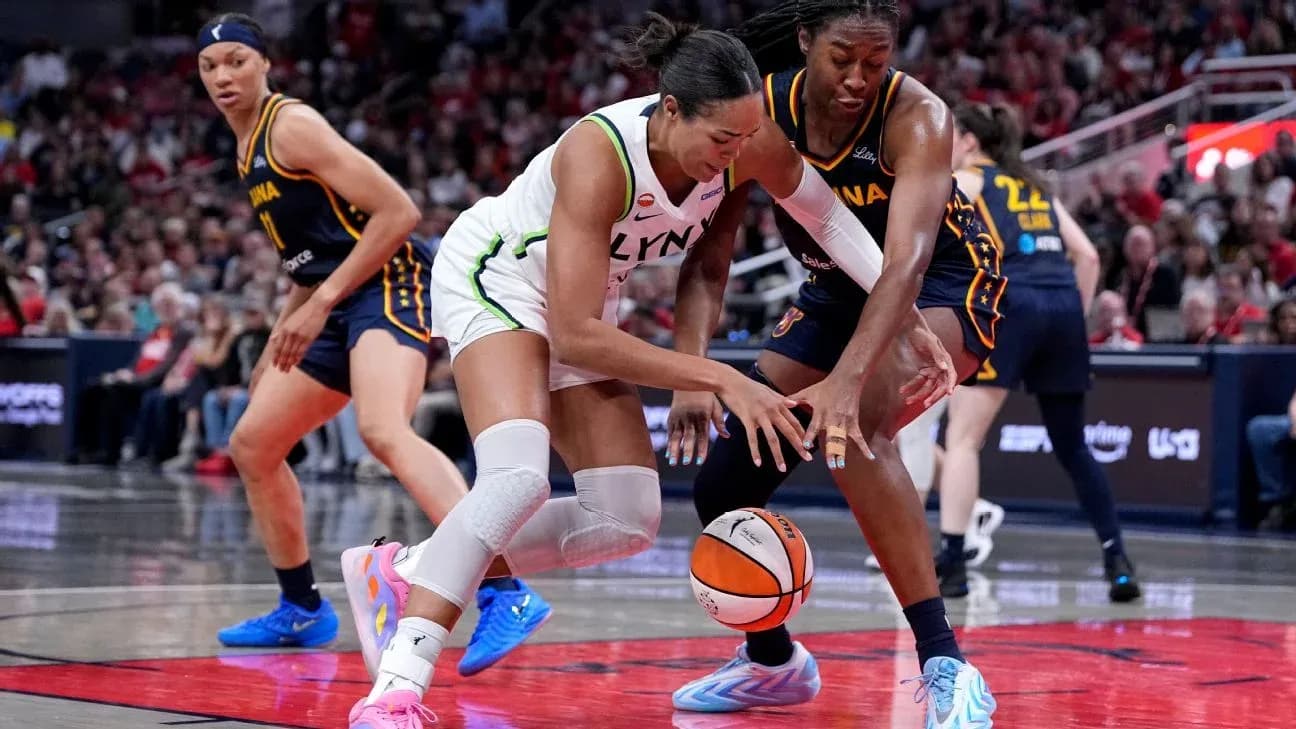
Caitlin Clark’s first World Cup game looked nothing like a debut. She ran the floor, split traps, and finished with 14 points and 11 assists, dictating tempo as if she’d been here for years. Rhyne Howard matched her 14. Paige Bueckers added 14 of her own. Three perimeter scorers, all in rhythm, all comfortable on this stage.
The margin ballooned to 33 by the final buzzer. More important than the number was the way it happened: waves of pressure, layers of options, and a roster that already looks deeper than the absences on the team sheet.
This is not the lineup many expected when preparations began. A'ja Wilson and Kelsey Plum withdrew before the tournament with health and injury concerns, stripping the Americans of two proven stars. USA Basketball responded by bringing in Sonia Citron and Kiki Iriafen, and shifting even more responsibility onto Breanna Stewart, Napheesa Collier and the veteran core.
On opening night, that adjustment looked less like a problem and more like an opportunity.
The new format, the old target
The World Cup’s revamped structure leaves no room for drifting through the group stage.
Sixteen teams. Four groups of four. Three games each. Top spot in the group goes straight to the quarterfinals. Second and third? They’re thrown into a single-elimination qualification game just to reach the last eight.
One bad night there, and a title favorite can vanish.
Team USA sits in Group D with China, Italy and Czechia. The Americans have already banked two competition points and a commanding point differential after routing China. Italy beat Czechia on opening day, leaving USA and Italy at 1-0 and setting up a potentially decisive clash on Sunday, before the Americans close group play against Czechia on Monday.
From a pure qualification standpoint, the math is simple: win one of those two games and the job is done. A 2-1 record in a four-team group guarantees a top-three finish and a place in the knockout phase.
But this is Team USA. Just sneaking into the last 16 has never been the point.
Why first place matters more than ever
Finishing first in Group D doesn’t just look good on paper. It changes the entire shape of the tournament.
Top spot sends the Americans directly into the quarterfinals. No qualification game. No extra 40 minutes where foul trouble, a hot opponent, or a cold shooting spell can flip a tournament on its head. It also buys an extra recovery day in a compact schedule, an edge every contender craves.
Three wins from three would secure that path, provided the United States stays ahead on record. Even at 2-1, the Americans could still top the group if results and tiebreakers break their way. But they don’t need help from anyone else. Beat Italy. Beat Czechia. Control the bracket.
The opening performance suggested they’re fully capable of doing exactly that. Clark orchestrating. Howard and Bueckers stretching defenses. Stewart and Collier anchoring the spine. Younger players like Citron and Iriafen sliding into roles with freedom and energy.
This is what a No. 1-ranked team is supposed to look like.
The looming threats beyond Group D
Outside this group, the landscape is far from soft.
France pushed the United States to the brink in the 2024 Olympic final, losing by a single point. That memory still hangs over this tournament and explains why so many see the French as the most serious threat to another American gold.
Belgium and Australia sit in that next tier of contenders, both capable of building the kind of momentum that can carry a team deep into a knockout draw. China, even after Friday’s defeat, showed again how its size can distort matchups and force opponents into uncomfortable decisions.
This is why the Americans are so intent on avoiding the qualification round. One extra do-or-die game means one more chance for a contender to stumble. Remove that risk, and the path becomes clearer: quarterfinals, semifinals, medal games, and a familiar stage on the final day.
The road ahead
For now, the equation for Team USA could not be more straightforward.
Beat Italy or Czechia and a top-three finish in Group D is secure. Win both, and they likely claim the cleanest possible route to the quarterfinals, preserving legs and limiting chaos in a tournament that rarely forgives hesitation.
The roster blends experience, athleticism, playmaking and depth in a way that few nations can match, even with Wilson and Plum watching from afar. The opening night in Berlin suggested the standard hasn’t slipped; it may simply be evolving, with a new generation stepping into the spotlight.
If this is the baseline, the real question isn’t whether Team USA will survive Group D.
It’s who, if anyone, can stop them once the games truly start to tighten.