
Sheffield United's Frustrating Defeat at Charlton
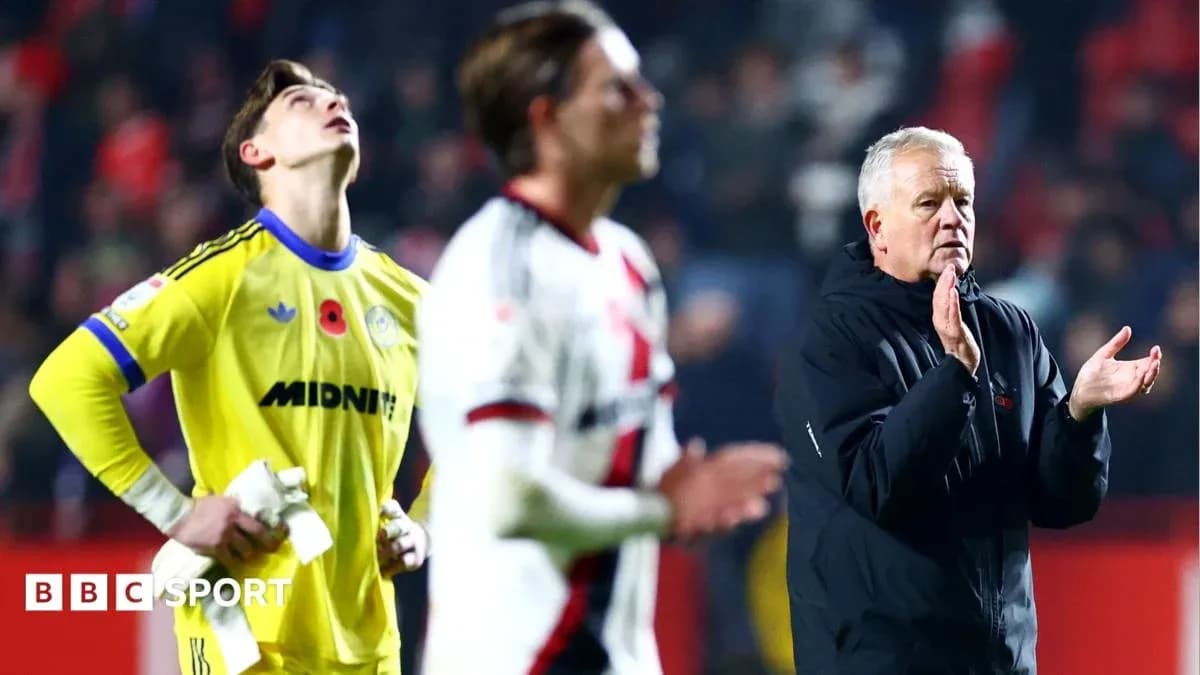
Chris Wilder walked towards the Sheffield United supporters with his hands raised in appreciation. Then he turned away, and the mask slipped. A shout of anger, aimed at the sky more than anyone else, told you everything about how this 2-1 defeat at Charlton felt.
This was a chance. A big one.
Three wins in a week would have shoved United into the play-off places, seventh in the table and only four points off the automatic promotion spots. They would have hit the international break riding a wave, their recovery under Wilder no longer just encouraging but emphatic, even if it is still only 15 games into the season.
Instead, they head into the pause with a bruise that will sting for a while.
A game there to be won
The numbers underline the frustration. United outshot Charlton 13-9, with seven efforts on target. Those aren’t the figures of a side clinging on. They’re the numbers of a team that had the game where they wanted it for long stretches and somehow walked away with nothing.
There were long spells when United looked in control, moving the ball with authority, pinning Charlton back, dictating the tempo. Yet they never once got their noses in front. The pressure kept building, but the door never came off its hinges.
At the other end, the goals they conceded will haunt the video review.
The first was the sort that leaves a goalkeeper replaying it in his head all night. Michael Cooper made a rare mistake with his positioning, and Millenic Alli spotted it instantly. From the press box, the angle told the story: Alli glanced up, saw the gap, and in a heartbeat whipped a shot with the kind of accuracy that punishes even the slightest misstep. It was ruthless. Clever. And it turned a half-chance into a highlight.
The second goal was less about brilliance and more about bad habits resurfacing. Another cross, another failure to deal with it. Alli’s delivery should have been cut out before it ever reached the danger area. Wilder’s frustration centred on his defenders, who again allowed a ball from wide to become a clear opportunity.
Matty Godden’s finish was sharp, the sort of composed touch that strikers are paid for, but inside the away end you could almost feel the collective eye-roll. Supporters have seen that type of goal too often this season. So has their manager.
Missing pieces and unexpected sparks
United’s attacking play still carries a noticeable gap: the absence of Patrick Bamford as a focal point. Without him, there is less of a fixed target to play off, fewer moments where the ball sticks up top and allows the midfield to swarm around second balls. They can create, they can threaten, but they miss that anchor.
Romelle Donovan, though, continues to light up matches. He is playing with the swagger of a genuine X-factor talent, the kind of player who makes defenders nervous before he even receives the ball. His energy without possession matches his menace with it, a rare blend that gives Wilder’s side both bite and invention.
Not every story from The Valley was about tactics or table positions. The suspected ruptured patellar tendon suffered by Femi Seriki is a brutal blow. For the player, it is the start of a long, demanding road back. For the club, it removes a useful option in a squad already stretched. Whatever the league table says, that kind of injury cuts deeper than any single result.
A wild Championship, a noisy minority
Step back from the emotion of a single afternoon and the picture becomes stranger, and more intriguing. The Championship has opened up again, just as chaotic and unforgiving as last season.
Look at the standings and it jars. Birmingham sitting top. Stoke in third. Swansea having already enjoyed a spell at the front of the pack. At the other end, Burnley and Derby wrestling with problems of their own. The old certainties have fallen away.
With 30 games still to play, there is space for three clubs to seize the moment and turn this unpredictable landscape to their advantage. Sheffield United are in that conversation. That, at this stage, is all any reasonable observer could expect.
The fact they are “only” in the mix and not sitting first, second, third or fourth has sparked some of the more hysterical criticism aimed at Wilder and his players in recent weeks. Most of it comes from a loud online minority, the kind of noise that can distort reality if you let it.
The reaction inside the ground told a different story. The away end at full-time offered warmth, not fury. Those supporters have seen the churn of the summer, the departure of three key attacking players, two of them in the final days of the window. They know this squad has been patched together on the fly.
Given all that, to be where United are right now is, by any fair measure, a net positive. If you insist on painting it as a disaster, you are working very hard to ignore context.
There is, however, one criticism that does carry weight – and it is not aimed at the dugout. The ongoing uncertainty created by the club’s ownership, and the looming threat of a possible points deduction, hangs over everything. It risks undermining the graft being put in on the pitch.
Wilder can fix defensive lapses from crosses. He can tweak systems, demand more ruthlessness in front of goal, reshape a team that is already competitive. What he cannot do is control what happens in the boardroom.
In a season this open, that might be the most dangerous opponent Sheffield United face.





