Shea Lacey's Impact Sparks Manchester United's Hope
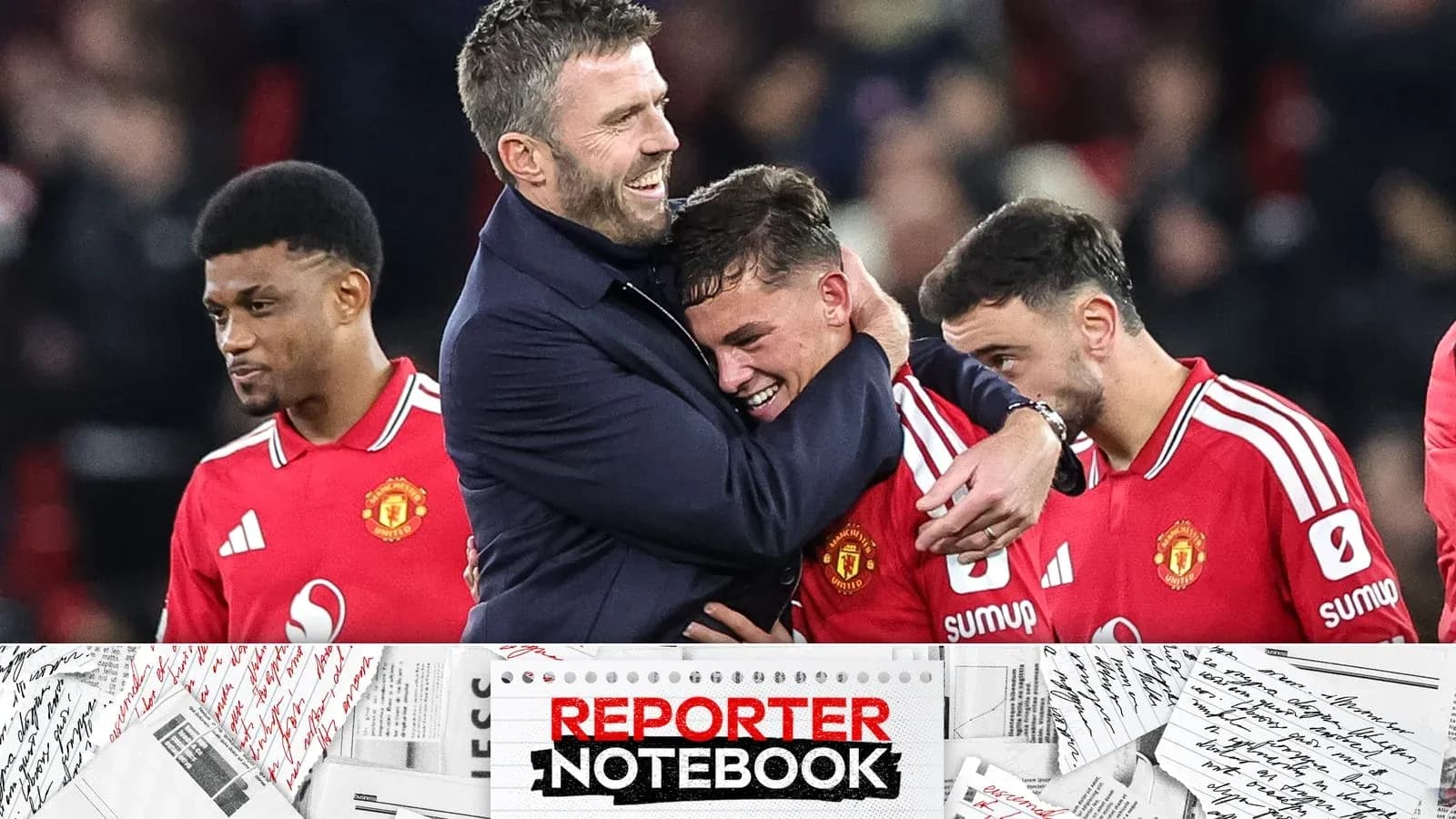
Old Trafford has not sounded like that in a long time.
For once this season, the noise was not nostalgic or angry, but alive – a stadium jolted back into believing, if only for one night, that Manchester United can still stir the soul. Whether that surge of feeling lingers or fades is a problem for another day. What mattered on Tuesday was that, in the middle of a fraught campaign, United found both a comeback and, perhaps, a new face to carry them forward.
Shea Lacey stepped into that noise as if he had been waiting his whole life for it. In truth, he has.
A boyhood decision, a grown-up performance
Lacey was eight when he chose the red of Manchester over the pull of his family’s Liverpool roots. No parental pressure, no gentle nudges back towards Merseyside. He picked United, picked Carrington, and set himself on a path that led, 11 years later, to a 15‑minute cameo that crackled with intent.
Thrown on against Roma with United chasing, the 19-year-old did not hide. He demanded the ball. He drove at defenders. He played like someone who believed the stage was his, not borrowed.
His moment came with that pass. A slide-rule, perfectly weighted ball into Matheus Cunha that sliced Roma open and set up the winner. Not a hopeful swing, but a calculated incision – the kind of decision-making United’s attack has too often lacked this season.
In a night full of storylines from a dramatic comeback, that contribution stood out. Not just because of what it created, but because of who created it.
Built at Carrington, hardened in the shadows
Lacey’s rise has not been a straight line. Injuries have nudged him off course at times, yet by last season it was obvious to those watching the U21s that he had outgrown that level.
His game has always carried a certain swagger. The trademark move is familiar to anyone who has tracked his progress: stationed on the right, cutting inside onto his left foot, defenders guessing and usually guessing wrong. But the trick alone is not what marks him out.
It is his awareness – the way he scans, the way he finds pockets of space and sees passes others do not. His finishing has sharpened, too, giving him the profile of a forward who can both create and decide games. In a United side short on invention, those qualities feel precious.
He has not tried to shortcut the physical step up either. Since joining first-team training on a permanent basis last season, Lacey has attacked the unseen work. Extra sessions in the gym. Extra care in the kitchen. Extra drills after training with senior pros and with Travis Binnion, the coach who helped shape him at U21 level and continues to fine-tune his game.
The result is a teenager who does not just look technically ready for senior football, but physically and mentally tuned to its demands. Around Carrington, that effort, allied to a bright, bubbly personality, has left a mark. It has also convinced Michael Carrick that this season could be Lacey’s moment.
On Tuesday night, that belief looked well placed.
A squad stretched, a door opening
Context matters. United’s attacking options are thin. Benjamin Sesko and Marcus Rashford are both out injured. Amad Diallo, so gifted on his day, is struggling for conviction in front of goal.
Into that gap, Lacey has sprinted.
On this evidence, calling for him to start against Aston Villa on Sunday is not a rush to anoint the next star. It is a logical football decision. He brings something this squad badly needs: directness, imagination, and the courage to take responsibility in the final third.
He was not the only young player to rise to the occasion against Roma. Kobbie Mainoo, back in the XI for the first time since early October after his own injury lay-off, drove United forward with a maturity that belied his age. Leny Yoro, still in the early chapters of his Old Trafford story, continues to grow with every appearance.
They did so on a night when the old guard also stood up. Harry Maguire, so often scrutinised, delivered a commanding performance. Youri Tielemans brought control and quality in midfield. Together, they built the platform for the comeback.
But it was the injection of youthful energy that changed the feel of the game – and, just maybe, the mood around the club.
Carrick’s crossroads
Carrick has not been reckless with youth since taking the job. If anything, he has leaned on experience. Lisandro Martinez and Maguire remain his preferred centre-back pairing when fit, ahead of Yoro and Ayden Heaven. The imminent return of Matthijs de Ligt from a back injury will only crowd that area further.
At left-back, he has shuffled through four different options rather than turn fully to Harry Amass, the only natural alternative to Luke Shaw. Amass has had to make do with fleeting cameos against Sabah and Como, glimpses rather than opportunities.
The temptation for any manager under pressure is to trust what he knows. To cling to the tried and tested, even when the tried and tested are part of the reason a season has drifted.
Lacey’s performance against Roma might just nudge Carrick in another direction. Here was proof, under the floodlights and with the stakes high, that a teenager can not only cope but change a game. Proof that the academy pipeline still carries players who are ready, not just promising.
For a club that prides itself on its youth tradition, that matters. For a coach fighting to reshape an underperforming side, it might be a lifeline.
A spark in a difficult season
No one should pretend a single comeback win fixes a campaign that has stuttered and sagged. United remain in a difficult spot. The questions over Carrick’s long-term future have not disappeared. Some inside and outside the club may feel the moment to fully back him has already slipped.
Yet football seasons often pivot on nights like this. On 15-minute cameos that shift belief. On home crowds that remember what it feels like to roar for something new, not just for the past.
Carrick has shown hints that he can piece together a revival: a clearer structure, a willingness to adjust, and now a sign that he may be ready to lean more heavily on the energy and fearlessness of his younger players.
That is the challenge now. To turn that second-half surge against Roma into something more durable when Aston Villa arrive. To treat Lacey’s cameo not as a one-off, but as the start of a bigger role.
Because if one thing was obvious under the Old Trafford lights, it was this: Shea Lacey no longer looks like a kid waiting for his chance.
He looks like a player who should be starting.