Shakhtar Donetsk Holds PSV Eindhoven to a Draw in Champions League
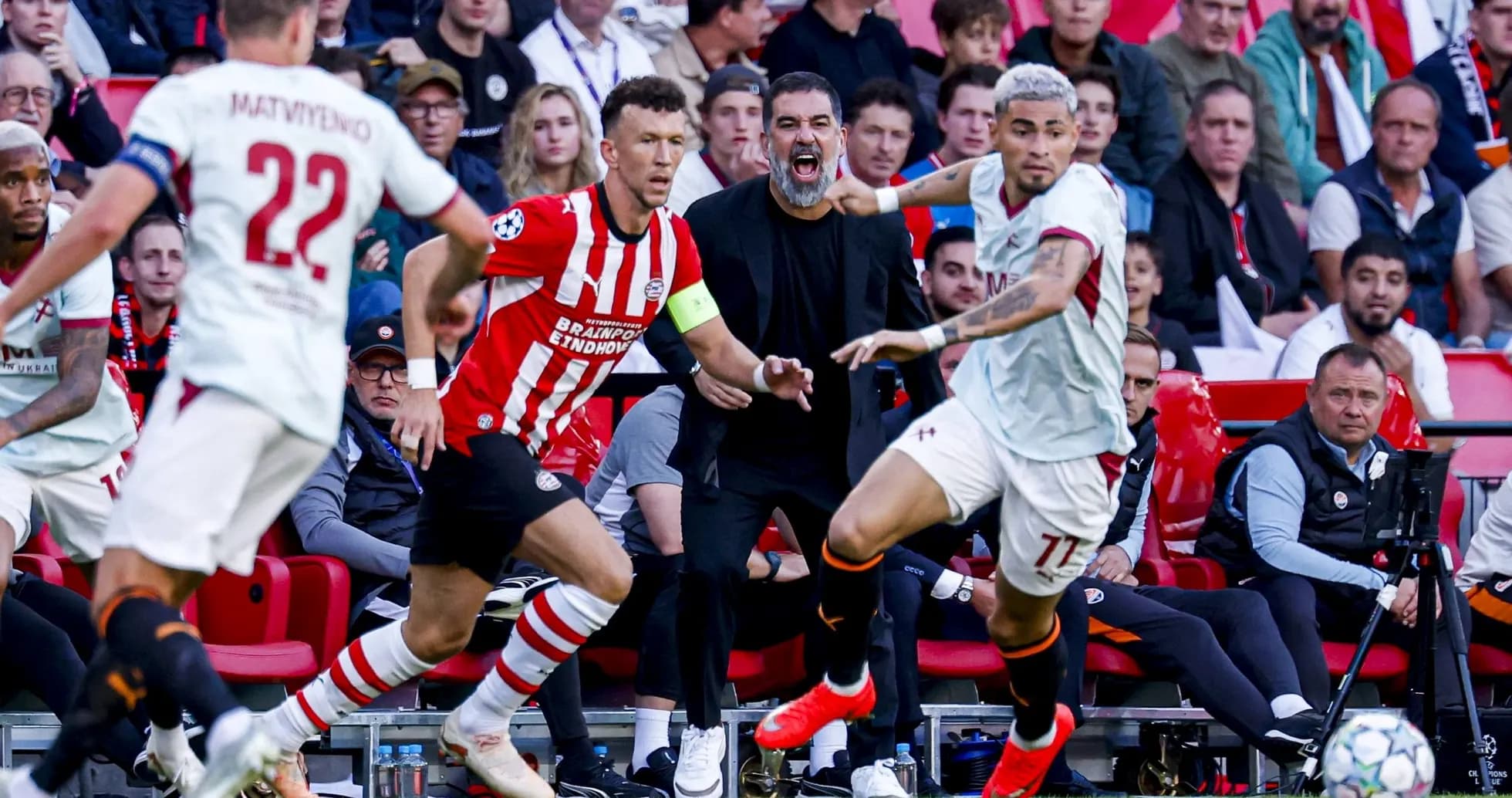
Shakhtar Donetsk walked out of the Philips Stadion with more than a 1-1 draw. They left with proof that, even against one of Europe’s most ferocious pressing machines, their own identity can hold.
Gleiker Mendoza’s stunning strike in first-half stoppage time briefly silenced PSV Eindhoven and lit up Shakhtar’s opening night in the UEFA Champions League. Sergiño Dest’s equaliser early in the second half restored order for the Dutch champions, but not control. That belonged, stubbornly, to a Ukrainian side that refused to be bullied or bent out of shape.
By the final whistle, Shakhtar had survived a late siege, bodies flung in front of shots, clearances hacked away under the Philips Stadion floodlights. A point, yes. But also a statement.
Turan’s blueprint: don’t copy, conquer
Arda Turan did not come to Eindhoven to imitate. He came with a plan to out-think.
Facing one-on-one pressing from a PSV side that loves to suffocate opponents high up the pitch, the Shakhtar head coach drilled his players on details that rarely make headlines but decide European nights: angles, diagonals, body shape.
He told them bluntly that trying to mirror PSV’s intensity would be a trap.
“I told them: if we play like PSV, we will not win,” Turan said afterwards. His message was simple: trust your own football, not someone else’s. Use the press, don’t fear it.
Shakhtar’s midfielders and defenders repeatedly opened up their bodies to receive under pressure, turning out of tight spaces and hitting diagonal passes that sliced through PSV’s first line. Those tweaks in positioning – half a step here, a shoulder turned there – allowed them to bypass the home side’s initial swarm and find pockets of calm in a frantic game.
The pressure came in waves. Shakhtar chose to ride them, not drown in them.
Mendoza’s moment in the half-spaces
The breakthrough came from the very zones Turan had circled on the tactics board.
Deep into first-half stoppage time, Mendoza drifted into the half-space between PSV’s defensive lines, exactly where his coach had told him to live. One touch, a glance, and then that curling finish – a debut Champions League goal struck with the confidence of a player who knew he was in the right place at the right time.
“I can’t put my emotions into words,” the Venezuelan midfielder admitted, still riding the adrenaline of his first night on this stage. He pointed straight back to Turan’s instructions: attack the gaps between the lines, punish the spaces left by PSV’s man-to-man aggression.
The goal did more than change the scoreline. It rattled a stadium that had grown used to seeing visiting sides smothered, not slicing through.
Dest’s leveller shortly after the interval restored parity, but not the sense of control PSV craved. The Dutch champions pushed, probed, and pinned Shakhtar back for long spells, yet the visitors refused to panic. They stayed compact, disciplined, and relentlessly committed to the duels Turan had warned them were coming.
A blanket in a bombing raid
For all the tactical nuance, the night also belonged to something far more human.
Turan spoke with unusual tenderness about 19-year-old midfielder Isaque, who made his Champions League debut in Eindhoven. The coach did not just see a teenager stepping into elite European football. He saw a survivor.
“When I think about Isaque, I remember a photograph on my phone,” Turan said. “It was taken on the night when we were being bombed and I covered him with a blanket in the hotel lobby. I told him he has to be ready for the fight.”
That image – a young player under a blanket in a hotel lobby during a bombing raid – hangs over every European night Shakhtar play. It explains the steel in their running, the edge in their tackles, the refusal to fold when the pressure rises and the crowd roars.
Turan framed that shared trauma as the foundation of their resilience. If you can get through that, you can get through a high press at the Philips Stadion.
A point earned, a standard set
As PSV threw everything forward late on, Shakhtar bent but did not break. Clearances flew into the Dutch night, challenges snapped in, and the clock ticked in their favour. When the whistle finally went, it felt less like survival and more like vindication.
Mendoza, still processing his goal and the occasion, looked ahead rather than back. The Champions League’s intensity, he admitted, is something else entirely. The key now, he stressed, is to “continue at this pace and keep picking up points.”
Turan will demand exactly that. He has seen his team absorb one of Europe’s most aggressive pressing structures and still find ways to play, not just to endure.
On this evidence, Shakhtar are not in the Champions League just to fill a group. They are here to test how far their football – and their scars – can carry them.