
Scotland's Gritty Victory Over North Macedonia
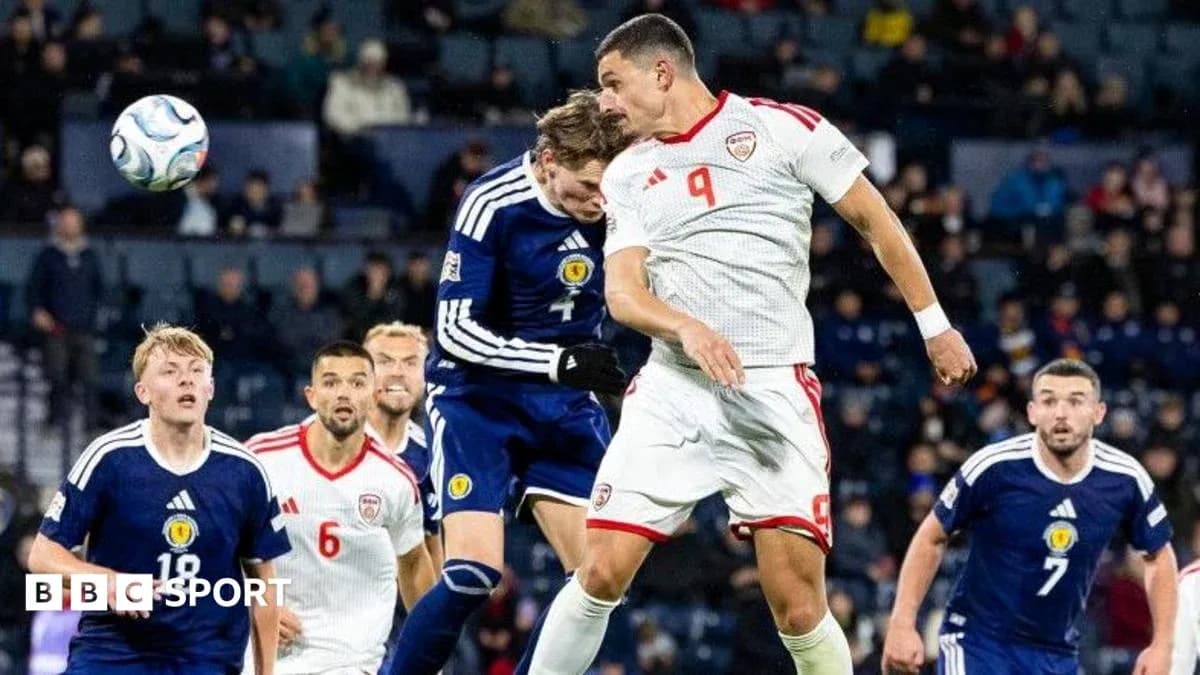
If Sebastien Pocognoli’s honeymoon as Scotland manager ended with Slovenia’s win at Hampden in October, Friday night felt like the first serious row of the marriage. Voices raised, doors slammed, plates maybe not quite flying, but nobody leaving under any illusions.
This was not peace. It was not progress. It was a scratchy 2-1 victory over a North Macedonia side that arrived with no points, no goals and 10 conceded in four games. It was also absolutely essential.
A win was non-negotiable. The manner of it, though, was another uncomfortable glimpse of Scotland’s ceiling.
A night of graft, not guile
The usual virtues were there. Effort, intensity, a refusal to fold. This team never hides from the running. What they can’t outrun is their own technical limits.
Scotland huffed and hurried their way through a first half that produced half-chances rather than conviction. The back three looked muddled, the build-up slow, the patterns vague. Attacks came less from structure and more from sheer persistence.
North Macedonia, a side who had failed to register a shot on target in three of their previous four group games, barely existed as an attacking force. That was the context. Against this level of opposition, a comprehensive home win would have been a statement. It always felt a stretch.
Still, the dread that swept Hampden just before the half-hour was real enough.
Gilmour’s miss and a Hampden gasp
The game’s defining moment, in pure theatre, came early in the second half.
Billy Gilmour, usually so reliable, found himself staring at an open goal from point-blank range. It was the chance to settle everything. Instead, he leaned back, ballooned the ball over the bar and straight into the national canon of howlers.
Chris Iwelumo’s Norway nightmare in 2008 has long stood alone as the benchmark. Gilmour has now joined him in that purgatory. The Napoli midfielder at least has time on his side, a career’s worth of games to change the memory. Crucially for him, and for Scotland, this miss did not cost points.
Hampden groaned as one. A roar of disbelief, then a wave of mockery, then a sort of stunned silence. You could feel the anxiety tighten around the place.
The pressure finally told.
Moments later, John McGinn struck. The ball broke, the captain for the night pounced, and the finish brought a surge of relief that rolled around the old stadium. Against North Macedonia, one goal usually ends the argument. Their recent history says so: almost no threat, almost no resistance once they fall behind.
That script was torn up within minutes.
A goal from nowhere
North Macedonia had offered nothing. No shots on target in Switzerland, one against Slovenia, none against Scotland in Skopje, another blank in their second meeting with the Swiss. They had gone four Nations League games without scoring, nine matches in all competitions since their last goal – a year ago, in a 7-1 hammering by Wales.
So when Elmin Rastoder flashed in at the near post, stealing a march on a sleeping Scott McTominay to nod home, the shock was total.
Rastoder sprinted away, almost disbelieving, arms wide, a first goal in five Nations League outings, an end to a year-long drought for his country. Hampden’s mood flipped from relief to simmering fury in an instant.
Scotland, from a position of control, were suddenly staring at catastrophe.
McGinn drags Scotland over the line
They found a way, just about. Not through fluency, not through some grand tactical plan, but through individual will.
Ben Gannon-Doak, thrown in as a wing-back, charged into the box and drew a penalty. It summed up his night: brave, direct, but often looking like a young player trapped between three roles – full-back, wing-back, winger – and never entirely sure which one he was meant to be.
McGinn took responsibility from the spot. No disguise, no fuss, just a thump down the middle. 2-1. Hampden exhaled again, this time with more resignation than joy.
Those two goals carried McGinn clear of Hughie Gallacher in Scotland’s all-time scoring charts, leaving him only six behind Kenny Dalglish and Denis Law. That is elite company, and his contribution to this era of the national team has been enormous. On a night short of artistry, his numbers still shone.
There was another landmark, too: a 102nd cap for Andy Robertson, the latest chapter in a remarkable international career. Yet even his milestone felt like something you had to dig out of the rubble rather than celebrate in the open.
A system that doesn’t convince
Strip away the result and what remains is troubling. Scotland, back to a three-man defence, looked unsure of themselves from the first whistle. Positions blurred, distances were wrong, and the team rarely resembled a side with a clear identity.
The chances they did create came mostly from relentless running and second balls, not from a system slicing open a limited opponent. They won the game through volume of effort, not quality of thought.
McGinn said as much afterwards, mixing the satisfaction of a brace with some blunt assessment of where this team stands. Pocognoli, McGinn and Robertson all acknowledged the reality: relief, yes, but no sense of a corner being turned.
A narrow path to the Euros
The table offers no comfort either. Scotland sit a point behind Slovenia with one game left. Switzerland have already wrapped up top spot. The fight is for second place and a kinder route into the Euros.
Slovenia hold the advantage. They travel to North Macedonia on Monday, a fixture that, on paper, looks close to a formality. Scotland head to St Gallen to face a Swiss side with nothing to play for and likely to rotate. It may not matter. If Slovenia win, Scotland’s fate is sealed.
Third place looms. If that happens, next month’s Euro 2028 draw in Belfast becomes an exercise in hope rather than expectation. Pot three beckons, a bracket loaded with jeopardy and awkward opponents. It is not where Scotland want to be, not after the strides of recent years.
The win over North Macedonia keeps the campaign alive, but only just. It also throws up the questions that won’t go away: about systems, about shoe-horning players into roles that don’t fit, about a team still trying to work out what it wants to be.
Hampden saw three points. It also saw heavy weather. The storm, you sense, might be waiting in Switzerland.





