
Scotland's Narrow Win Over North Macedonia Raises Concerns
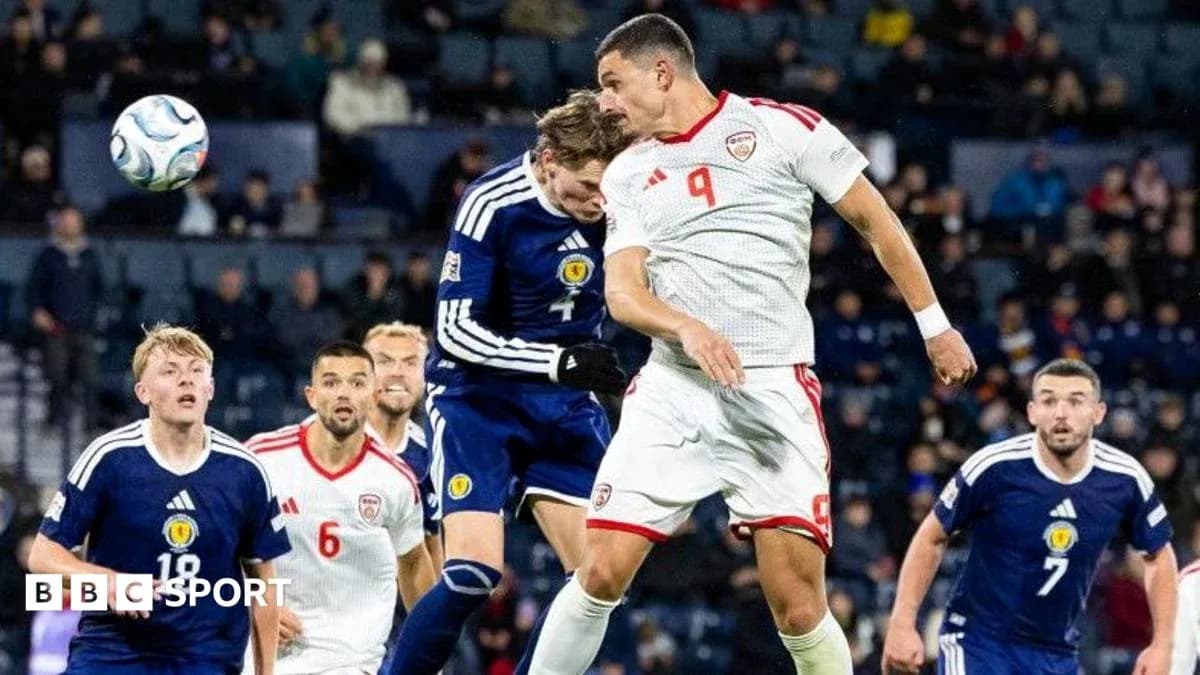
Sebastien Pocognoli’s honeymoon as Scotland manager ended weeks ago. On Friday night at Hampden, the marriage very nearly moved straight to counselling.
It didn’t quite descend into open revolt, but nobody inside the stadium could dress this up as a sign of health. Scotland beat North Macedonia 2-1. They stayed alive in the race for second place. And yet, for long spells, they looked like a team wrestling with themselves as much as their opponents.
This was not a performance to stir the blood. It was a grind. Again.
A must-win that never felt comfortable
Three points were non-negotiable. Against a side with no points, no goals and 10 conceded from their first four group games, a statement win would have been ideal. Realistic? Maybe not. Necessary? Absolutely.
Instead, Hampden got a night laced with dread. A draw would have been a calamity, and around the half-hour mark that possibility felt uncomfortably real: one goal each, nerves fraying, belief evaporating.
Scotland worked. They always do. Effort, desire, aggression – that part of the identity remains intact. The problem lay everywhere else. Coherence. Composure. Technical sharpness. Any kind of rhythm. Every promising move seemed to hit a loose touch, a poor choice, or a muddled run.
The system didn’t help. Pocognoli stuck with three at the back, and the team looked like they were reading different pages of the same manual, none of them in their native language.
Gilmour’s miss that will live long in Hampden folklore
Early in the second half, Hampden finally jolted awake – first in disbelief, then in relief, then in fury.
Billy Gilmour found himself staring at an open goal from point-blank range. It was the kind of chance that doesn’t just beg to be scored; it pleads. Instead, the Napoli midfielder leaned back and ballooned it over the bar, a miss so startling it instantly invited comparison with Chris Iwelumo’s infamous moment against Norway in 2008.
Iwelumo has lived in that particular circle of Scottish football hell for 16 years. He has company now. Gilmour will be reminded of this one for the rest of his international career. The only saving grace for him is that it did not cost Scotland points.
The groans were still echoing when John McGinn did what John McGinn does. A clever run, a calm finish, and Hampden exhaled. At last, a breakthrough. Against this North Macedonia side, one goal has tended to be enough. Their recent record told its own story: no shots on target against Switzerland in their opener, one against Slovenia, none against Scotland in Skopje, another blank against the Swiss second time around.
Score once and you usually shut the door on them. That has been the pattern.
Rastoder shocks Hampden, McTominay switches off
North Macedonia had offered next to nothing in the first half. They barely suggested they knew where Angus Gunn’s goal was. So when Elmin Rastoder darted across Scott McTominay at the near post and glanced in the equaliser, it felt like a punch from nowhere.
Rastoder’s celebration carried a hint of disbelief. His team had just scored their first goal in five Nations League games, their first in nine matches overall. The last time they had found the net was a year ago, in a 7-1 defeat by Wales. From nowhere, they had dragged Scotland into a full-blown crisis of their own making.
Hampden turned edgy. The players turned anxious. The structure, already fragile, threatened to collapse.
Gannon-Doak’s raw edge, McGinn’s ruthless streak
Scotland, to their credit, found a way back. Not through slick patterns or a well-oiled plan, but through sheer force of will.
Ben Gannon-Doak, deployed as a wing-back, looked like a young player trying to solve three positions at once. At times he was a full-back, at others a winger, occasionally something in between, never fully sure which role he was supposed to inhabit. A square peg in a shape-shifting hole.
Yet it was his direct running that turned the game again. He drove into the box, drew the foul, and earned the penalty that Scotland so desperately needed. McGinn took responsibility, stepped up, and hammered his spot-kick straight down the middle.
No fuss. No disguise. Just power and conviction.
Those two goals carried McGinn past Hughie Gallacher in the all-time Scotland scoring charts and left him astonishingly close – just six behind Kenny Dalglish and Denis Law. For a midfielder, it is a staggering body of work. On a night short of quality, his contribution once again towered above the rest.
There was history, too, in Andy Robertson’s 102nd cap. Another landmark, another reminder of the experience at Pocognoli’s disposal. But anyone searching for positives had to dig deep beneath a performance that never really settled.
A team winning in spite of itself
This win came from sweat, not structure. The chances Scotland created sprang mostly from persistence and pressing rather than any clear tactical blueprint dismantling a limited opponent. They looked like a team improvising their way through a game plan they didn’t fully trust.
They didn’t so much outplay North Macedonia as outlast them.
Afterwards, McGinn spoke as frankly as he played. Two goals and a blunt assessment of where this team stands. Pocognoli and Robertson echoed the mood. Nobody pretended this was good enough. All were relieved, none were satisfied.
Switzerland, Slovenia and the looming draw
The table is brutally simple. Scotland sit a point behind Slovenia with one game left. Switzerland have already won the group; the only live contest now is for second place.
Slovenia hold all the cards. They travel to North Macedonia on Monday in what, on paper, looks like a gift. Scotland head to St Gallen to face a Swiss side with nothing to play for and every chance of rotating heavily.
It may not matter. If Slovenia do their job, Scotland are almost certainly finishing third.
That would send them into next month’s Euro 2028 draw in Belfast in pot three – a position that invites trouble. Pot three is where awkward groups are born, where hope tends to meet harsh reality. It is not where Scotland want to be, not if they harbour serious ambitions of moving beyond plucky cameos at major tournaments.
For now, they cling to the win. A narrow, ugly, necessary win.
But beneath the result lies a long list of questions: about systems that don’t fit the players, players wedged into roles that don’t suit their strengths, and a team that seems to be fighting its own confusion as much as its opponents.
The storm hasn’t broken yet. Switzerland away will reveal whether this was just heavy weather – or the first rumble of something far more ominous.





