Rúben Amorim Defends Milan's Style Amidst Criticism
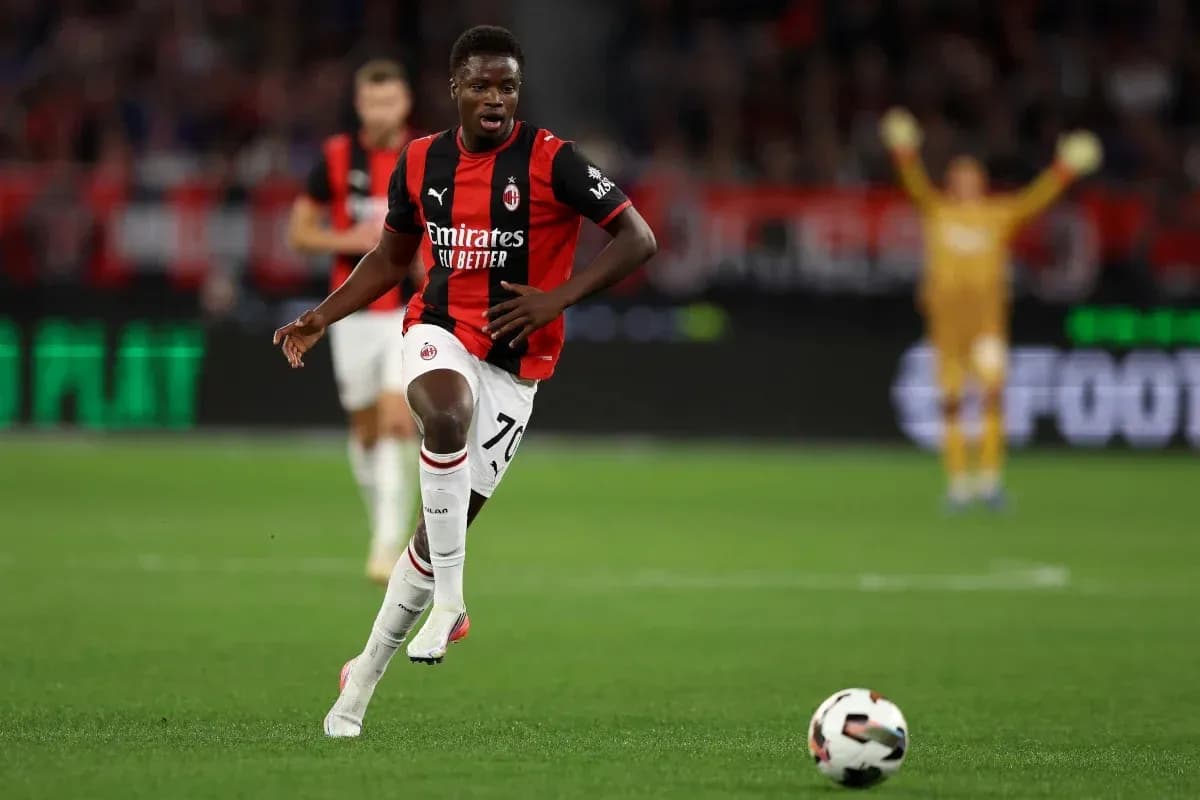
Rúben Amorim walked into the press room with three games on the board, seven points in his pocket, and a storm already circling overhead.
Two wins, one draw, and still Milan’s coach found himself defending his football, his centre-forward, and his star winger. He didn’t flinch.
“Criticism? I’ve seen worse.”
The 0-0 against Juventus left a mark. Not on the table, but on the narrative. Milan were accused of being too cautious, too flat, too safe.
Amorim pushed back.
“The last game wasn’t just static; I think we lacked energy,” he admitted. Milan had controlled the ball for long spells, especially in the first half, but never really tore into Juve’s back line. The aggression vanished where it mattered most: in the final third and inside the box.
He went straight to the details. Sloppy passes. Cheap turnovers. Juventus chances born not from brilliance, but from Milan’s carelessness.
“I showed the players that a lot of opportunities for Juve came from us losing the ball, sometimes even without pressure. Just a sloppy pass. Those details can change the game and the momentum. We worked on that, and we need to do better.”
The criticism, though, doesn’t bother him. Not after Manchester United.
“Criticism is normal. I already experienced that in my former club [Manchester United]. More than that, it’s impossible,” he said, half a reminder, half a warning that he’s not easily rattled.
What he keeps repeating is a simple promise: the team comes first. Always.
Ramos under the microscope
Gonçalo Ramos felt the heat after Turin. One quiet performance was enough to drag him into the debate over Milan’s attacking approach.
Amorim refused to isolate his striker.
“I think we need to improve as a team,” he said. Ramos had shone against Torino and Venezia; that level set the bar. When he dipped, everyone noticed.
“It’s more about the understanding of the game from all the players in the team,” Amorim added, shifting the focus from one man to the collective structure he is trying to build.
He insisted nothing Milan do is random. The patterns are deliberate, sometimes demanding, and they require time. Time to understand, time to execute, time to grow under a coach who wants control but also incision.
“I understand that when you see a guy coming from abroad to say how to play your football, it is really hard,” he said, fully aware of the scepticism that greets any foreign coach in Italy. “In the first moment you are just waiting to tell me that in my face.”
He knows the rules of the game. Win, and the questions stay in pockets for another week. Drop points, and the style debate explodes again.
Pulisic “upset” and waiting
One of the most intriguing lines of the day came almost in passing. Christian Pulisic, the USMNT star, is yet to play a minute this season.
Amorim confirmed that will change. Pulisic, he said, will get his first minutes of the 2026-27 campaign, but the American is “upset” with his lack of involvement so far.
It’s a revealing detail. A big name, frustrated but still part of the plan, now pushing for his place as Milan juggle early-season expectations, a new tactical identity, and a demanding schedule.
Cissé between San Siro and the Azzurri
If Pulisic is waiting, Alphadjo Cissé is accelerating.
Two goals in the opening three Serie A games have put the young forward on the radar of Luciano Spalletti and the Azzurri. Reports in Italy suggest he will be called up for the next international break.
Amorim didn’t hesitate when asked if Cissé is ready.
“If you put Cissé on the pitch, he’s going to play. Doesn’t matter if he’s with the national team, with Bastoni or with these guys,” he said. “He’s going to play, free. For that, he’s ready.”
The coach sees a fearless talent, unafraid of the ball, unafraid of the stage. But he also sees a boy still learning the weight of certain stages.
“I saw a bit of a difference when he plays away and when he plays at San Siro. San Siro is tough, so he needs to adjust to all these small things. Let’s give time to Cissé.”
The message is clear: the mentality is there, the personality is there, but the complete player is still under construction.
“If you put Cissé in training with the national team and playing with the national team, he won’t be shy, and he’s going to have the ball. So he’s ready, but he needs time to be the player he can be. He has a lot to learn.”
Ready for Italy, still growing for Milan. A delicate balance for a coach who must protect and push at the same time.
Spalletti, Fàbregas and the tactical noise
Amorim’s Milan have already been compared to others. To Spalletti’s sides, to Como’s surprising Champions League machine under Cesc Fàbregas.
The Portuguese coach brushed aside the idea that Como are some kind of blueprint for Milan’s project.
Como were the only Serie A club to win in the first round of the Champions League, outplaying RB Leipzig and catching Europe’s attention. It prompted the inevitable question: are Fàbregas and Como a model?
“I think we are different managers, with different backgrounds and work for different clubs,” Amorim replied. “Mister Cardinale has never told me that [Como] is the inspiration, so you need to tell me, as I didn’t know.”
He drew a sharp line.
“If you want a team that plays like Como, you need to buy Como’s manager to play the same way. I’m completely different; I have my style of play, my identity.”
He knows exactly who he’s up against. Spalletti, Fàbregas, the coaches who “are really good and will push us,” as he put it. He also knows that having more of the ball than Juventus doesn’t automatically make you the better side on the night.
“Sometimes even when I have the ball, the other guy is better than me, but that doesn’t change the intention you have,” he said. “I want to dominate games, but then Spalletti, Fàbregas, all these guys, they are really good and will push us.”
One detail he underlined: late set pieces. In tight games, in tense finishes, that’s where Milan must be ruthless.
“What’s really important is to be good in the last set pieces of the game because if we win, some guys will have to keep that question in their pocket for one more week.”
Lazio away, and a project under scrutiny
Milan travel to Lazio with a solid start on paper and a restless discussion around style. Amorim keeps circling back to the same core: identity, intention, and the primacy of the team.
“The only thing I promise is the club will always be in first place. My intention is always to be better than the opponent in a certain way. I’ll try. But then you have the opponents; Spalletti was better than me, and that doesn’t change.”
He doesn’t hide from that admission. He wears it. Spalletti beat him, Juventus pinned his team back, and now Lazio await.
Cissé is pushing for Italy. Pulisic is pushing for minutes. Ramos is pushing to respond. The critics are pushing, too.
The question now is simple: can Amorim’s Milan turn intention into authority before the noise grows louder than the football?