RotoWire’s Top 150 for 2024-25 Fantasy Basketball
Two weeks out from preseason, the real countdown isn’t just to tipoff. It’s to draft night. RotoWire’s top 150 for category leagues sketches out a fantasy landscape shaped by blockbuster moves, rookie hype and a handful of aging superstars you still can’t quite quit.
This isn’t a gentle list. It forces decisions. It forces punts. And it makes clear who actually wins you categories over six months, not just headlines in November.
The New Top Tier
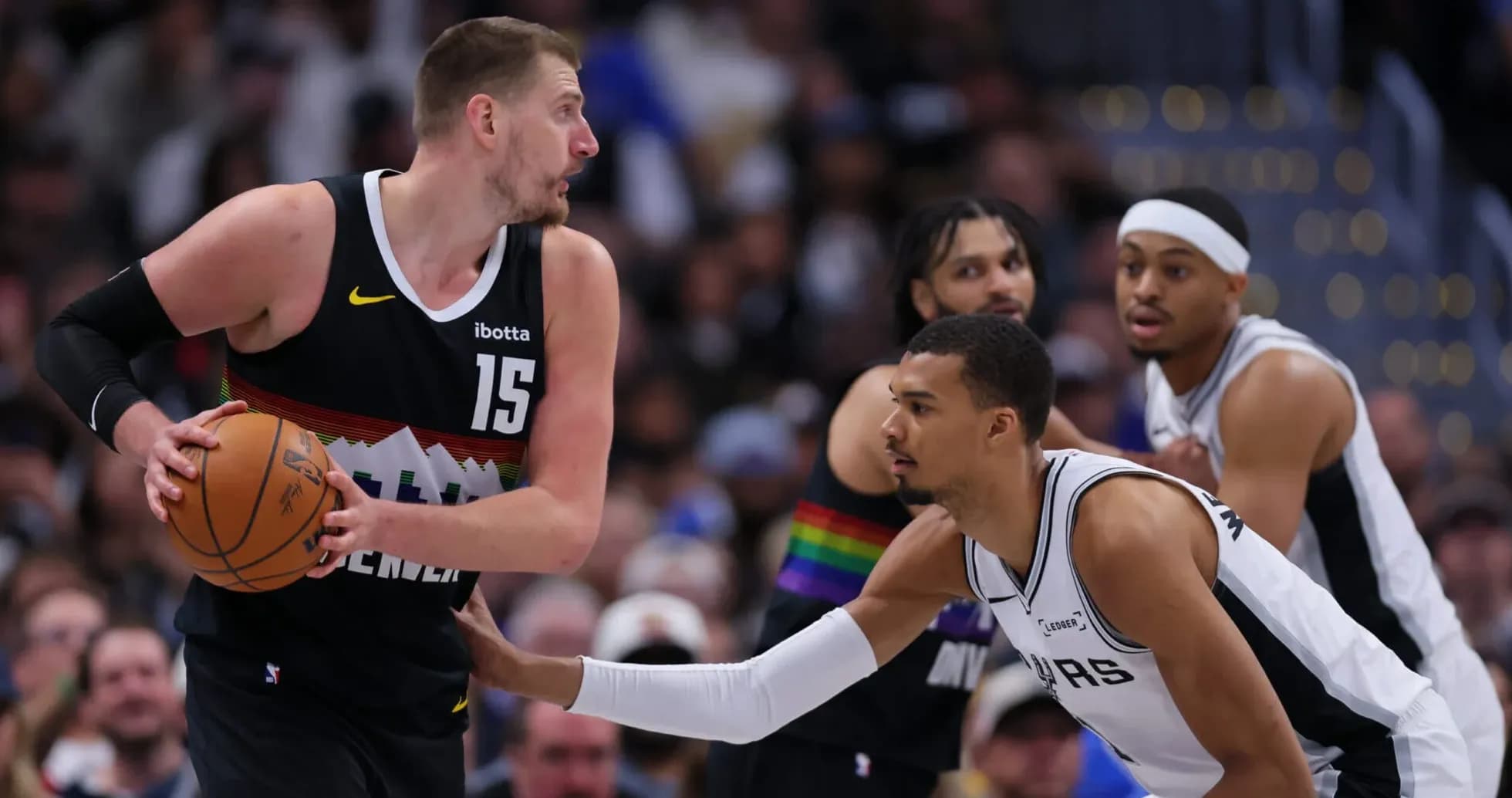
Nikola Jokić sits exactly where you’d expect: alone. There’s no hole in his line. Elite field-goal percentage on high volume, positive free-throw impact, 3s, top-tier rebounds and assists, plus steals from the center spot. In category formats, that’s as close to a cheat code as the game allows.
Victor Wembanyama is already on that plane in a different way. His blocks are the single most valuable individual asset on the board, and he layers 3s and boards on top. If Jokić is the safe empire, Wembanyama is the nuclear option.
Shai Gilgeous-Alexander thrives even more in categories than in points. His field-goal percentage for a high-usage guard, pristine free-throw work and live-ball steals make him a foundational piece. Luka Dončić, now running the Lakers without LeBron James, brings first-round counting stats and 3-point volume, but the field-goal drag and turnovers push him behind that top trio.
Cade Cunningham, Jayson Tatum and Anthony Edwards live in the middle of Round 1 for different reasons. Cunningham’s assists and rebounding from the guard spot are elite, but turnovers and efficiency remain the tax. Tatum, fully removed from an Achilles tear and again Boston’s clear No. 1, offers one of the cleanest, most flexible category profiles on the board. Edwards brings 3s, free-throw accuracy and steals with superstar usage, though a shift in playmaking around him in Minnesota will likely trim his assist ceiling.
Giannis Antetokounmpo’s move to Miami doesn’t change his fantasy puzzle. Elite field-goal percentage, elite defensive stats, huge boards — and a free-throw line plus 3-point profile that almost demands a punt build. Handle that correctly and his rank undersells his true value.
Jalen Johnson’s 20/10/6 potential with steals and blocks from a forward spot is the kind of shape category managers crave, but free throws, turnovers and games played keep him from the very top. Tyrese Maxey’s 3s, free-throw strength and sneaky steals now come with a usage squeeze in Philadelphia after Jaylen Brown and LeBron arrived, though better looks should sharpen his efficiency.
Cooper Flagg enters Year 2 in Dallas looking like a breakout waiting to happen: defensive stats from a forward, improving efficiency and Kyrie Irving back to raise his shot quality. Tyrese Haliburton closes Round 1 with elite assists, low turnovers, 3s and free throws. The only red flag is the Achilles history.
Veteran Edges and Category Specialists
Round 2 and 3 are where category leagues really separate from points formats.
Scottie Barnes, Donovan Mitchell and Karl-Anthony Towns headline a group of proven veterans whose value comes from shape, not just volume. Barnes gives you the holy grail for a forward — steals, blocks, rebounds and assists — but weak free throws and low 3s tug him back, especially with Kawhi Leonard now in Toronto. Mitchell stays predictable: 3s, free throws and better steals than his reputation suggests, while James Harden handles the table-setting.
Towns offers elite free-throw shooting from a center, strong field-goal percentage, 3s and 12 boards a night. The missing blocks force you to find rim protection elsewhere, but his efficiency is rare at the position.
Kevin Durant, now in Houston, remains one of the purest category lines in basketball. Field-goal and free-throw dominance, 3s, about a block a game. The concern is simple: he turns 38. Stephen Curry’s profile is similar — league-leading 3s, elite free throws, usable steals — with the same age and games-played questions.
Jamal Murray’s role next to Jokić is as safe as it gets. 3s, strong free throws, good field-goal percentage, volume assists and manageable turnovers. Alperen Sengun flips the usual big-man script: field-goal percentage, boards, assists and steals from the center spot, but no 3s and heavy turnovers.
Amen Thompson is the quintessential punt piece. He crushes steals and blocks from the wing with strong field-goal percentage, but he wrecks 3s and free throws. Draft him, and your build follows. Trae Young sits on the other side of that spectrum: elite assists, 3s and free throws with a useful steal rate, but you must accept the field-goal hit and turnovers.
Austin Reaves becomes a major category asset in a LeBron-less Lakers backcourt, with elite free throws, 3s and secondary playmaking, even as turnovers climb. LaMelo Ball lands in Minnesota with his usual mix of high 3-point volume, assists and steals, paired with poor field-goal percentage, heavy turnovers and ongoing durability questions. Chet Holmgren is a category archetype: 3s and blocks from a center, efficient shooting and positive free throws, even if the raw counting stats look modest.
In Round 3, the board leans hard into specialists. Josh Giddey brings rebounds, assists and steals from the guard spot, now in Chicago and finally shooting 3s at a respectable rate. Harden, now in Cleveland, remains a build-around piece: 3s, free throws, assists and steals with ugly field-goal percentage and turnovers.
Devin Booker’s down shooting year discounts him, but he’s still Phoenix’s primary creator with strong free throws, decent 3s and assists. Positive regression on field-goal percentage is the upside case. Anthony Davis, now in Washington, is the ultimate risk-reward. Twenty games last year, but a first-round category line when active: elite field-goal percentage, boards, blocks and steals.
Kawhi Leonard’s one clean season in Toronto sits against a decade of absences. When he plays, he delivers MVP-level two-way numbers, but Toronto’s depth gives the Raptors every excuse to manage him carefully.
Trey Murphy III, Derrick White and OG Anunoby are the prototype category wings. Murphy and White stack 3s, strong free throws and defensive stats with low turnovers, while Anunoby remains one of the premier mid-round 3-and-D picks: 3s, steals, blocks, good field-goal percentage and almost no turnovers.
Domantas Sabonis and Evan Mobley shape the big-man middle rounds. Sabonis piles on field-goal percentage, rebounds and assists from the center spot but offers no blocks and heavy turnovers. Mobley, by contrast, gives you blocks, steals, rebounds and usually strong field-goal percentage; last year’s slump is the only reason he isn’t a round higher.
Rising Wings, Risky Bigs and New Roles
Round 4 and 5 are filled with players whose value swings on usage and health.
Jalen Williams still profiles as Oklahoma City’s No. 2 option: balanced, efficient, two-way production. Walker Kessler moves to the Lakers and keeps his traditional big-man profile intact — blocks, boards, field-goal percentage — with easy lobs from Dončić raising his efficiency ceiling.
Deni Avdija’s All-Star breakout in Portland brought 3s, rebounds and playmaking from a forward, but Ja Morant and Damian Lillard arriving threaten his touches. Kyrie Irving, returning from an ACL tear at 34, is a category riser in Dallas: elite field-goal and free-throw percentages, 3s, steals and low turnovers for a high-usage guard.
Jaren Jackson Jr. remains a blocks-and-3s big with a rare free-throw advantage at the position, undercut by field-goal issues and foul trouble. Jalen Duren offers elite field-goal percentage and a double-double baseline with improving free throws, but thin blocks and no 3s cap his ceiling.
Brandon Miller is Charlotte’s most likely usage winner post-LaMelo trade, driven by 3-point volume. The bet is whether his field-goal percentage can survive the extra shots. Kon Knueppel, another Hornets piece, brings exactly what category leagues pay for: efficient shooting from both levels with 3s and a clear path to more usage.
Onyeka Okongwu finally gets full-time starter treatment in Atlanta: field-goal percentage, boards, blocks and emerging 3-point range. Desmond Bane and Paolo Banchero headline Orlando’s mid-round core. Bane is a clean category fit with high-volume 3s, strong free throws, steals and low turnovers. Banchero fills the box score but drags you down in field-goal percentage, free throws, defensive stats and turnovers.
In Round 5, Donovan Clingan and Kel’el Ware represent the new wave of bigs. Clingan’s sophomore role in Portland comes with blocks, field-goal percentage and a double-double baseline in limited minutes, with room to grow. Ware offers blocks, boards, field-goal percentage and some stretch shooting on a rebuilding Milwaukee team that should hand him minutes.
Nickeil Alexander-Walker’s Most Improved season built on a classic 3-and-D profile — 3s, steals and clean efficiency — now baked into a defined role in Atlanta. Darius Garland becomes the clear lead playmaker for the Clippers, bringing elite free throws, 3s and assists with some injury risk.
Dejounte Murray returns to New Orleans with his signature steals, rebounds and assists from the guard spot, while LeBron James in Philadelphia still threatens triple-doubles on strong efficiency, even as his minutes and games played become a guessing game.
Keyonte George’s breakout in Utah faces a usage crunch with multiple new additions, and Dyson Daniels remains a steals-driven asset with a weak free-throw line and no 3s. Cameron Boozer, the best-positioned rookie in Memphis, walks the classic first-year tightrope: big opportunity, but rookie inefficiency and turnovers hurt more in categories than in points.
Matas Buzelis in Chicago and OG-style wings like him — two-way forwards with steals, blocks and 3s — round out a tier built on versatility and upside.
High-Variance Swings and Late-Round Edges
By Round 6, the board turns volatile.
Joel Embiid is the definition of a high-variance swing. Elite free throws on huge volume, blocks and strong field-goal percentage, but constant availability concerns. When he plays, he wins you weeks.
Franz Wagner, Stephon Castle and Tyler Herro all carry heavy usage with uneven efficiency. Wagner’s 22/5/5 potential is obvious, but erratic free throws and 3-point accuracy plus injuries have him discounted. Castle’s weaknesses — shooting and turnovers — are exactly what category formats punish, even as his steals and assists help. Herro brings 3s and elite free throws with his highest-ever usage in Milwaukee, but his turnovers will spike and he offers nothing defensively.
Michael Porter Jr., Ivica Zubac and Julius Randle are safer mid-round anchors. Porter Jr. gives 3s at a high clip, strong field-goal percentage, rebounds and almost no turnovers, even with Julius Randle eating into his shots in Brooklyn. Zubac quietly provides solid center stats with good looks from Haliburton in Indiana, though his inconsistent shot-blocking keeps him from the top tier of bigs. Randle delivers rebounds, assists and good free throws as a likely offensive leader in Brooklyn, but minimal defensive production.
Zach Edey in Memphis is a per-minute monster — boards, blocks and field-goal percentage — coming off a lost season with a foot injury. Thirty minutes a night would make this ranking look silly. De’Aaron Fox, now in San Antonio, still offers strong point-guard numbers despite injuries and a more crowded backcourt.
Damian Lillard’s profile has aged gracefully in categories. Even in decline, his 3s and free throws keep him relevant, though age, injury history and a crowded Portland backcourt raise questions. Rudy Gobert, by contrast, has settled into a lower-volume but durable, secure role in Minnesota.
From Round 7 onward, the edges get sharper.
Alex Sarr and Naz Reid offer blocks and stretch shooting from the big spots, but Sarr’s opportunities shrink on a reshaped Washington roster, while Reid finally looks set for 30-plus minutes as a starting power forward in Charlotte.
Mikal Bridges remains the ironman of the league. His durability multiplies his value: 3s, steals, good field-goal percentage and almost no turnovers, game after game. Paul George still translates beautifully to fantasy as a low-turnover 3-and-D star who can create when needed, though absences keep piling up.
Brandon Ingram in Los Angeles, Jaden McDaniels in Minnesota and Payton Pritchard in Boston all carry specific, narrow appeals. Ingram can post 25/5/5 as a top-two option but lacks the 3-and-D punch that would vault him higher. McDaniels offers steals and blocks from a forward with improving 3s. Pritchard’s value rests almost entirely on 3-point volume and free throws in a low-turnover role.
Ausar Thompson’s per-minute steal-and-block combo in Detroit gives him a higher ceiling than this range suggests if the workload climbs. Ja Morant’s move to Portland clouds his role and comes with his usual health concerns. Immanuel Quickley, Jarrett Allen and Zion Williamson round out a group where the floor is clear, but the ceiling depends heavily on health, role and build.
Mining the Late Rounds
From Round 8 onward, category leagues reward precision.
VJ Edgecombe, Coby White and Myles Turner are classic late mid-round targets. Edgecombe brings steals and 3s from a sophomore with secure minutes in Philadelphia. White offers 3s and free throws as Charlotte’s unquestioned starting point guard. Turner remains a premium category center with blocks, 3s and strong free throws, even after a rough first year in Milwaukee.
Dylan Harper, Ty Jerome and Jalen Suggs are usage and health bets. Harper’s playoff breakout in limited minutes showcased steals and efficiency, but San Antonio’s backcourt logjam is real. Jerome’s shooting splits in 15 healthy games were outstanding, though his minutes are guesswork. Suggs’ defense-first profile translates well to categories if he can stay on the floor.
Derik Queen, Norman Powell, Caleb Wilson, Josh Hart, Isaiah Hartenstein and Nicolas Claxton each fill very specific gaps. Queen offers field-goal percentage, boards and passing with heavy turnovers. Powell’s two straight 20-point seasons on elite efficiency play much better here than in points leagues. Wilson and Claxton bring steals and blocks from the frontcourt with rookie and free-throw risks, respectively. Hart’s rebounds, assists and steals from the wing help patch rosters, while Hartenstein’s all-around center line fits neatly into builds that need glue.
By Round 9 and 10, the list leans into role players with one or two elite category skills. Jabari Smith Jr., Miles Bridges and Keegan Murray offer 3s, decent efficiency and low turnovers from forward spots, with varying degrees of opportunity. Day’Ron Sharpe, Neemias Queta and Khaman Maluach are rebounding and blocks bets tied to minutes and free-throw risk.
Toumani Camara, Cason Wallace, Ajay Mitchell and Peyton Watson headline the 3-and-D and steals-specialist tier. Camara’s starting role with steals, blocks, 3s and field-goal percentage is almost the ideal late-round filler. Wallace offers steals, 3s, strong field-goal percentage and minimal turnovers as a low-usage guard. Watson steps into a starting 3-and-D job in Cleveland where usage will be scarce, but it doesn’t need to be high to move categories.
Zach LaVine, CJ McCollum and Brandin Podziemski bring veteran scoring and shooting. LaVine could lead Sacramento in scoring if he stays healthy. McCollum’s 3s and clean percentages in a low-turnover role remain valuable. Podziemski steps into a wide-open Golden State offense behind Curry with a well-rounded guard profile.
The final rounds — 11 through 13 — are about calculated gambles.
Jusuf Nurkić, Jakob Poeltl and Paul Reed are bigs whose per-minute production isn’t in doubt; health, minutes and closing roles are. Kyshawn George, Jaime Jaquez Jr., Egor Dëmin and Reed Sheppard are young guards and wings whose category-friendly skill sets fight crowded depth charts.
Christian Braun, Quentin Grimes, Yaxel Lendeborg and Jrue Holiday close out the board as role-driven targets. Braun’s minutes next to Jokić should again be there if he bounces back from last year’s regression. Grimes offers 3s, free throws and steals as a release valve for Dončić and Reaves. Lendeborg could start as a versatile two-way piece in Golden State. Holiday, now 36 and behind Morant and Lillard in Portland, still carries steals, 3s, free throws and low turnovers that keep him relevant long after his scoring fades.
The names change, the jerseys change, the roles shuffle. The core question for managers stays the same: who actually wins you categories from October to April — and who just looks good on a poster?