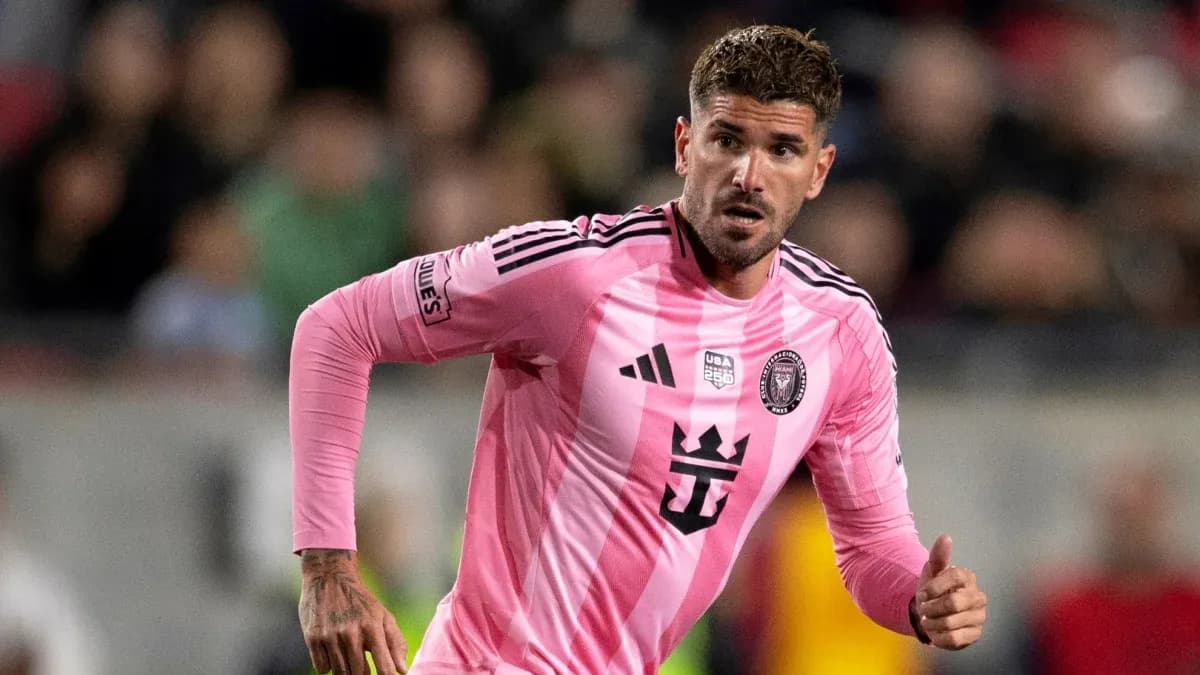
Rodrigo De Paul: From Racing to Inter Miami and World Champion
The flashpoint came late. A 1-1 draw between Inter Miami and the Chicago Fire suddenly crackled into something far more personal.
Robert Lewandowski and Ian Fray tangled first, a routine shoving match that usually fizzles out under the referee’s arm. This one didn’t. Rodrigo De Paul saw the contact, sprinted into the frame and went straight for the Polish striker, chest out, eyes locked, every movement screaming that no one touches his teammate without an answer.
In that instant, the World Cup winner’s reputation snapped into focus. This is what De Paul does. He runs, he bites into duels, he shields the players around him as if they were family. On a hot MLS night, against one of Europe’s great goalscorers, that instinct flared again.
From Racing to Miami: a fortune built the hard way
The confrontation also dragged a different part of De Paul’s story back into the spotlight: the long, lucrative road that brought him from Avellaneda to Miami’s star‑studded project.
His estimated net worth stands at around $25 million, according to Celebrity Net Worth. It is not a public balance sheet, but a reflection of more than a decade of contracts, bonuses and endorsements stitched together across Argentina, Spain, Italy and now the United States.
The clearest snapshot of his current value sits in black and white on MLS paperwork. Figures from the MLS Players Association list De Paul on a base salary of $7.57 million, with about $9.69 million in guaranteed annual compensation for 2026. Only Lionel Messi and Son Heung-min earn more in the league. In a competition built on salary caps and designated players, that number says everything about how Inter Miami view their Argentine midfielder.
None of it arrived quickly. De Paul came through at Racing Club, a talented but raw attacking midfielder who needed polishing. Valencia took him to Europe in 2014, a move that promised a leap but instead forced him to fight for relevance. The true turning point came in Italy, where five seasons with Udinese rebuilt his career and his reputation. From there, Atlético Madrid paid around €35 million to sign him in 2021, a fee that underlined how far his stock had climbed.
Four years on, Inter Miami stepped in with roughly €14.5 million to bring him permanently to MLS. Those sums went to clubs, not directly into De Paul’s pocket, yet each transfer pushed his market value higher and strengthened his hand when it came time to negotiate wages and bonuses.
Capology estimates his gross base salary earnings at close to $29.9 million across his career, before bonuses, endorsements or image rights are even counted. The trophies with Argentina add another, less visible layer. FIFA awarded the Argentine federation $42 million for winning the 2022 World Cup, but the exact breakdown for each player was never disclosed. The same mystery surrounds his personal bonuses from the Copa América triumphs in 2021 and 2024. The medals are clear; the numbers behind them remain locked away.
Different paths, different prizes
Lewandowski’s path tells a contrasting story. The Polish forward has never lifted a major trophy with his national team, yet his club résumé glitters: a Champions League title, a stack of Bundesliga crowns, season after season among Europe’s most ruthless scorers.
De Paul’s pride comes from somewhere else. He carved out his place as Messi’s relentless midfield bodyguard, the man who runs until his legs burn, snaps into tackles, and fills every gap others leave. Two Copa América titles and the 2022 World Cup have shaped his identity as much as any contract figure. The money followed, but the role came first: run, fight, protect.
That is why a nudge on Ian Fray in an MLS game does not feel minor to him. It becomes a trigger. A line that cannot be crossed.
Family, ink and life beyond Europe
Away from the stadium noise, De Paul’s life is layered and heavily scrutinized, especially back home. He is the youngest of three sons born to Mónica Ferrarotti and Roberto De Paul, a tight family unit that watched his career unfold from Avellaneda to the biggest stages in the sport.
He has two children, Francesca and Bautista, from his former relationship with Camila Homs. Their story has often filled Argentine gossip columns and television shows, sometimes rivaling his on‑field performances for attention. For a player who thrives in chaos on the pitch, the turbulence off it has become a constant backdrop.
His European chapter stretched for about 11 years, from the move to Valencia in 2014 until his departure from Atlético Madrid to Inter Miami in 2025. Those years did more than refine his pressing angles and passing range. Away from training grounds and stadiums, De Paul developed a strong interest in fashion and body art, building a personal style that stands out even in dressing rooms full of stars.
One tattoo in particular tells you exactly where his priorities lie. On his neck sits the date of Argentina’s World Cup triumph in 2022, inked forever as a reminder of the night his country reached the summit and his own career hit its peak.
So when tempers flared against Chicago and he stormed toward Lewandowski, it was not just about a single shove or a single match. It was the same fierce streak that carried him from Racing’s academy to world champion, from modest wages to the upper tier of MLS earners. The money explains his market value. The reaction showed, once again, what he is really paid to do.