Rodri's Transfer to Barcelona: A New Era in Clasico Rivalry
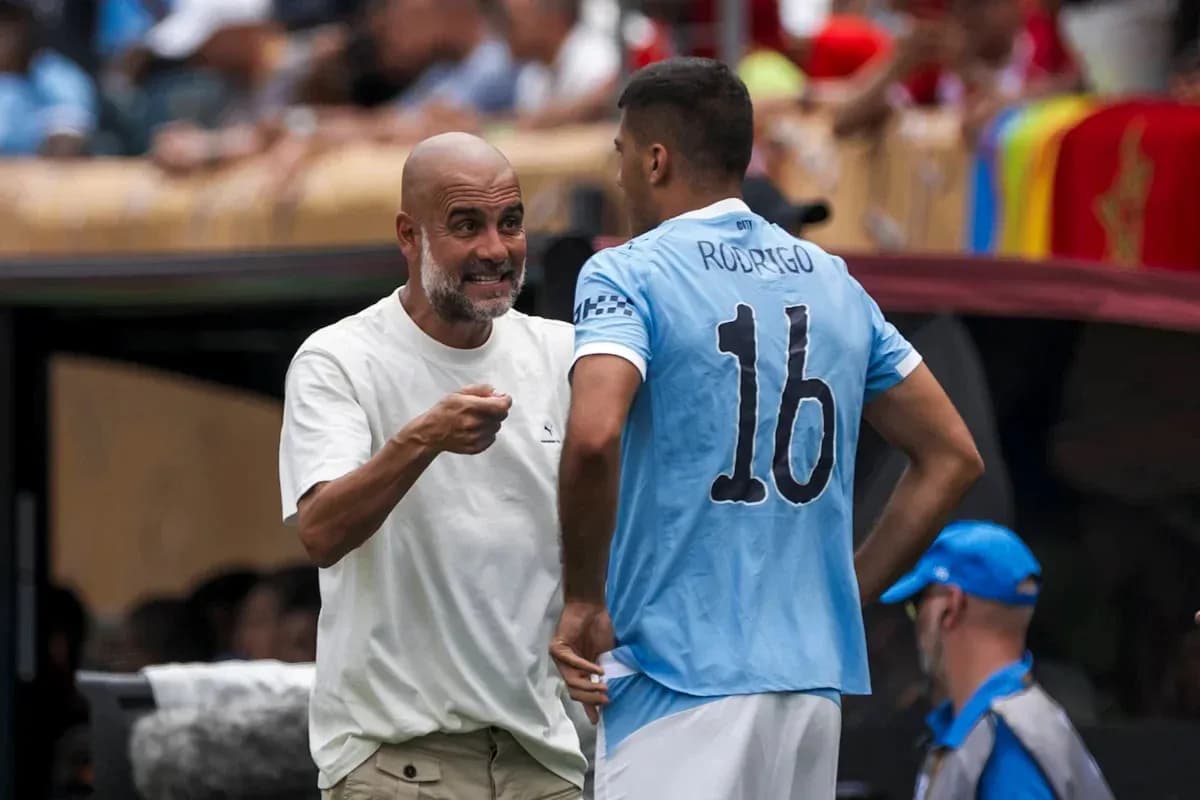
Rodri’s decision to join Barcelona over Real Madrid lands like a statement, not just a transfer. It is the kind of move that bends narratives, that drags an old rivalry back into sharp focus and forces both clubs to look in the mirror.
This was not a romantic homecoming or a late twist in a soap opera. It was calculated, methodical, and rooted in football.
Why Barcelona won the argument
According to MUNDO DEPORTIVO, Rodri weighed serious offers from both Barcelona and Real Madrid before settling on the Camp Nou. Two giants pulling at the same thread, both convinced that the Spain midfielder could be the piece that tilts seasons.
He did not treat it lightly. He spoke of needing time, of a break that was anything but restful as Manchester City tried to hold on and two Spanish superpowers tried to prise him away. He wanted the full picture: sporting project, role, development, the emotional spark that tells a player he has found the right place.
Barcelona gave him that feeling.
Deco and Hansi Flick were central. Their conversations, their clarity, their insistence on where and how Rodri would fit, appear to have tipped the scales. This is where elite transfers are really decided now: in rooms, on calls, in the precision of the plan presented to the player.
Rodri did not dress this up as an escape from Manchester or a snub born of bitterness. He framed it as attraction. Barcelona, in his eyes, offered the strongest sporting pathway, the place where he believed he could win and grow most fully.
That matters for Barça. They did not simply capitalise on circumstance. They won a straight contest with Real Madrid.
Respect for Madrid, clarity for himself
For all the noise that usually surrounds these decisions, Rodri handled Real Madrid with a notable respect. He was clear: turning them down was not easy. He highlighted the way the club treated him, the seriousness of their approach, the care in their pitch.
That is the language of a player who understands the scale of the badge he refused. Saying no to Madrid still carries weight. He did not pretend otherwise.
His remarks about José Mourinho, who tried to convince him to join Madrid, added another layer. Rodri said:
"Bueno, no creo que sea lo suyo desvelar una conversación privada, pero evidentemente expresó sus ganas de que fuera y de lo que podía aportar al equipo. El trato fue muy bueno. Cuando tomé la decisión también le llamé para agradecer el interés y el trato. Me parece un grandísimo entrenador, ya lo ha demostrado allá donde ha ido en sus grandes etapas y el Real Madrid va a ser un duro rival para esta Liga."
It was a polished answer. Diplomatic, but not cold. He recognised the effort, made his choice, and still felt compelled to close the loop properly. Top-level football often chews up those courtesies; Rodri chose to preserve them.
He also pushed away the background theatre around Madrid’s interest, the off-field theories and side stories that so often dominate the conversation. He insisted his focus stayed on football, on Spain, on his own career path. It sounded like a player who has spent years at the summit and learned the value of distance from the circus.
His observation that in England football tends to remain about football was telling too. It hinted at a man shaped by the Premier League’s relentless intensity, but now ready for a different type of pressure, a different kind of spotlight.
Barcelona’s new axis of control
On the pitch, the implications are obvious. If Rodri hits his Manchester City level in Spain, this is a signing that can decide big games and, over time, title races.
Barcelona have secured control, intelligence and steel in the heart of midfield. They have taken one of the game’s most coveted organisers and placed him at the centre of their rebuild. And they have done it while going head-to-head with Real Madrid and winning.
That goes beyond one player. It sends a message: about the pull of the Barcelona name, about the coherence of their sporting project, about their ability to convince the very best that their future should be painted in blaugrana.
For Madrid, there will be irritation but not humiliation. They moved decisively, made their case and were treated with respect. They did not lose this because they were asleep. They lost it because, this time, Barcelona’s project resonated more deeply with the player.
For Barcelona, that is the sweetest part. Rodri knew the alternative, knew exactly what he was walking away from, and still chose them.
The Manchester City void
From a Manchester City perspective, the emotions are tangled.
There is pride, first of all. Pride in seeing Rodri discussed as the midfielder both Barcelona and Real Madrid wanted most. Pride in knowing that the calm in chaos, the organiser in possession, the man who made an era-defining team feel balanced, did his growing in Manchester.
He became this version of Rodri at City. He refined his game in the Premier League, shouldered huge responsibility and evolved into one of the sport’s most influential midfielders under unforgiving lights.
But there is also that familiar irritation. The feeling that when Europe’s traditional giants circle, they behave as if City players are simply part of their natural ecosystem. As if this was always the end point.
Strip away the emotion and City are left with a brutal, practical question: how do you replace that authority?
Who controls matches now? Who dictates tempo when games become stretched and ragged? Who gives the team that sense of certainty, that quiet assurance that the storm can be managed?
That is Rodri’s legacy at City. He leaves a vacuum at the very centre of their structure. All the glamour of Spain, all the theatre of Barça versus Madrid, does nothing to soften that reality in Manchester.
In Catalonia, though, the equation is different. Barcelona have taken the player who calmed the Premier League’s chaos and dropped him into the heart of La Liga’s fiercest rivalry.
The next Clasico will not just be about colours and history. It will be about a midfielder who looked at both sides of the divide, listened to every argument, and chose the Camp Nou as the stage for the prime years of his career.