Rio's Journey to Gold: From Illness to Victory in Brazilian Jiu-Jitsu
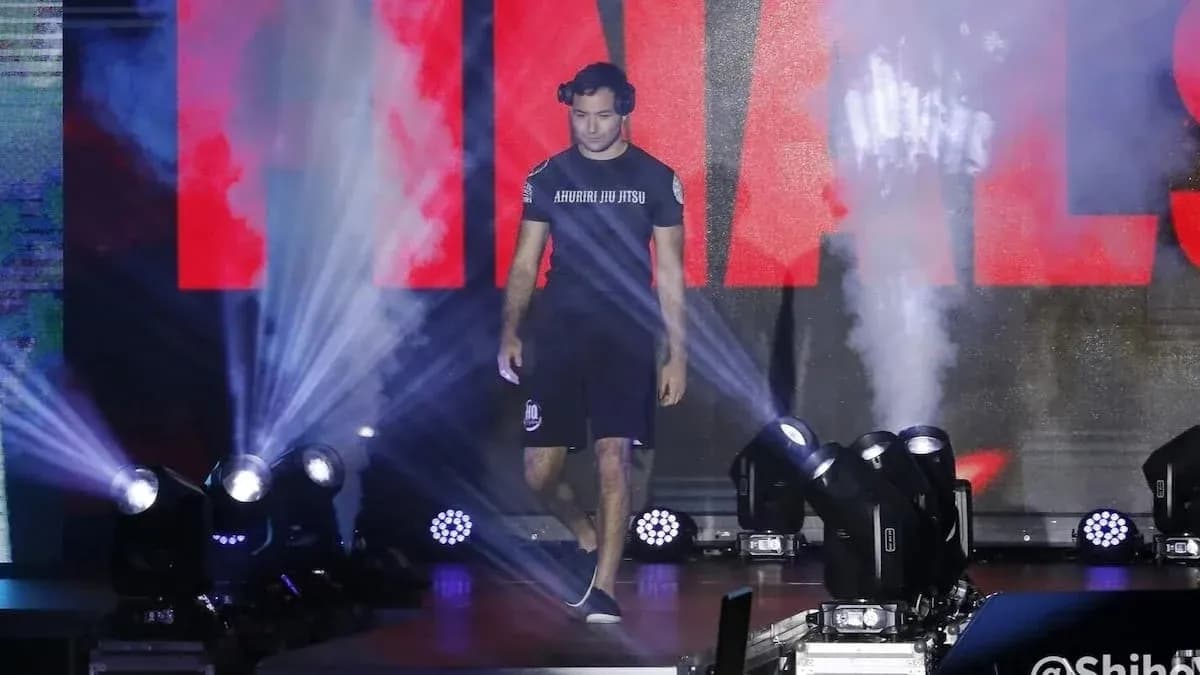
The gi felt heavier than usual. The lungs did too.
In the bright glare of a Japanese competition hall, Rio stepped onto the mats carrying more than just a black belt and a game plan. He brought a winter illness that had floored him in the build-up and the fresh ache of losing his coach barely a month earlier. For a fighter chasing his first international medal at black belt, it was the worst preparation he’d ever had.
It didn’t matter once he slapped hands and bumped fists.
From sickness to submissions
Gi and No-Gi Brazilian Jiu-Jitsu ask different questions of an athlete. In the gi, the thick cotton jacket, pants and belt become weapons and anchors. You grab, you drag, you choke with cloth. In No-Gi, there’s nowhere to hide behind fabric – just tight rash guards, board shorts and the raw geometry of underhooks, wrist ties and body locks.
Rio answered both tests the same way: with ruthless efficiency.
Separated into the usual categories of sex, belt, age and weight, he cut through his division, beating opponents from Mongolia and Mexico to claim gold. The first fight barely had time to settle. He snatched a limb, locked it, and finished with an Aoki lock – a brutal footlock – inside the opening minute. No feeling-out process, no slow start. Just a clean, clinical submission.
The final needed more craft and a little more heart. It also needed a triangle.
A coach’s legacy in a choke
On paper, this was a career milestone: Rio’s first international medal at black belt level. On the mats, it meant something else entirely.
He had lost his coach, Damian Smith, in the lead-up to the event. Processing that while trying to peak for a major tournament was a mental battle as draining as any weight cut. When the final opened up and he felt the angle for a triangle choke, instinct met memory.
Smith was a triangle specialist, the man who had drilled those details into him, rep after rep, tournament after tournament. As Rio cinched the legs, adjusted the angle and tightened the squeeze, his thoughts went straight back to those sessions and those sideline instructions that would never be heard again.
He didn’t just win gold. He closed the show with his coach’s signature weapon – the ending he called the perfect way to finish the tournament.
Built by a tight-knit bay
Rio walked away with the medal, but he made it clear he didn’t walk alone.
He paid tribute to his team at Gracie Allegiance Ahuriri and Gracie Allegiance Team New Zealand, and to the wider Brazilian Jiu-Jitsu community across Hawke’s Bay. In a sport that often looks like a solitary struggle under bright lights, he pointed back to the grind: the training partners who push the pace, the teammates who show up on cold nights, the coaches who shape careers and characters.
“You get nowhere in martial arts without good teammates and training partners,” he said, a simple truth echoed on mats around the world. Hawke’s Bay’s BJJ scene, he added, is tight-knit; train long enough and you get to know most of the gyms and the good people inside them.
That network, that shared effort, sat behind every grip, every transition, every submission in Japan.
Staying on the mats
There was no rush to come home. Rio and his partner, fellow coach Yukako Mori, stayed on in Japan for a few more weeks, catching up with friends and squeezing in more Brazilian Jiu-Jitsu and Judo training. Even in the afterglow of a gold medal, the focus stayed the same: learn, roll, improve.
When he returns to Hawke’s Bay, the plan is straightforward. Keep training in Ahuriri. Keep coaching. Keep having fun with Jiu-Jitsu.
For him, the art is more than medals and podium photos. It’s self-defence that actually works, fitness that doesn’t feel like a chore, and a community that turns training partners into lifelong friends. The door, he insists, stays open.
Anyone is welcome.