Rangnick's Warning: Manchester United's Left-Back Dilemma
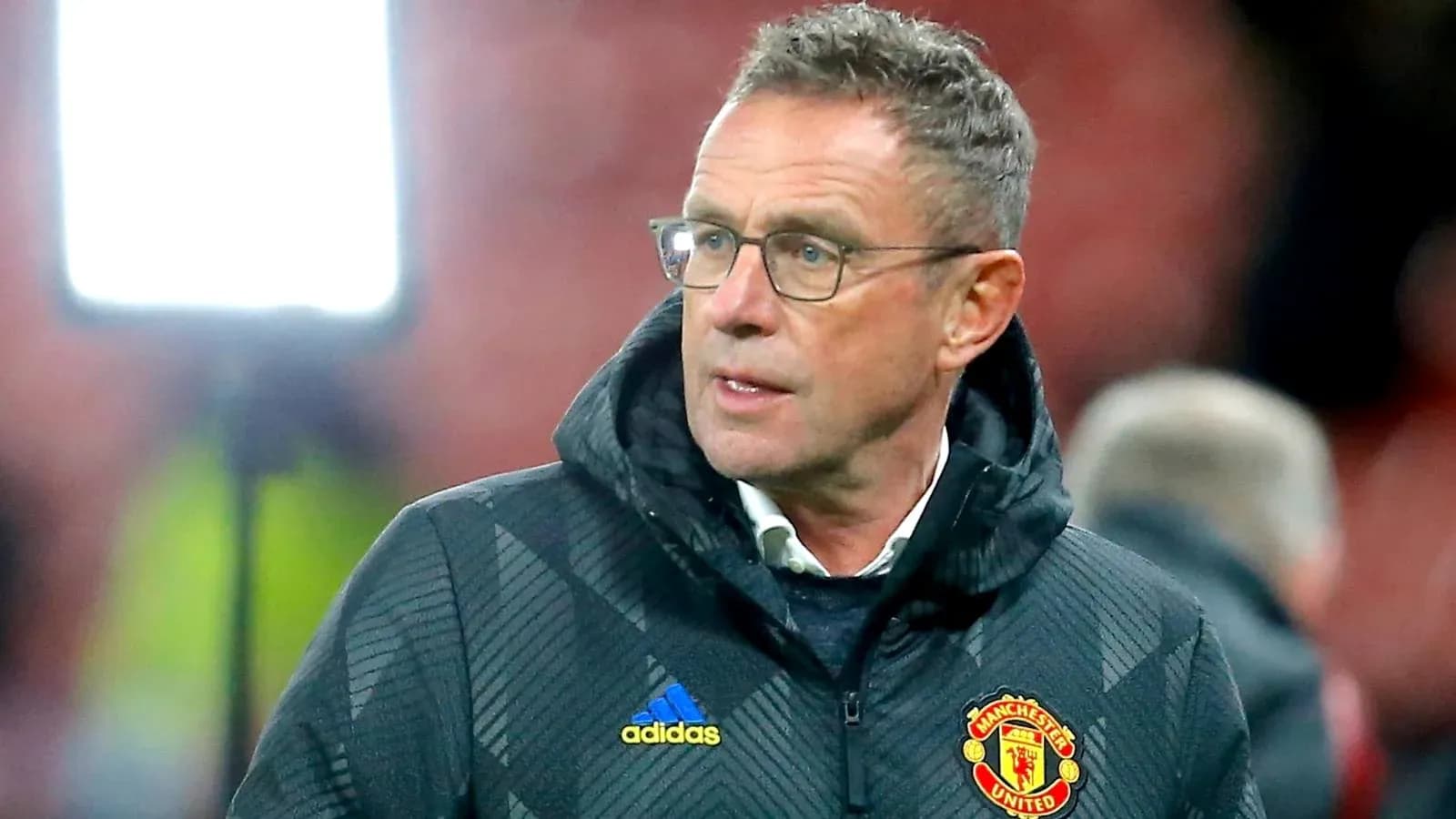
Ralf Rangnick’s Manchester United tenure never really caught fire on the pitch, but three years on, one of his bluntest warnings is echoing loudly around Old Trafford.
The German, parachuted in as interim manager during the 2021-22 season, left with his reputation as a strategist intact even if his points return – 1.54 per game, the worst of any post-Sir Alex Ferguson manager bar Ruben Amorim – gave the club little reason to cling to his ideas. Yet the “godfather of gegenpressing” did not just talk about pressing triggers and tactical structures. He talked about personnel. Specifically, he talked about the left-back.
And United ignored him.
Rangnick’s early warning
A year before he ever sat in the Old Trafford dugout, Rangnick laid it out. United, he felt, needed a new left-back.
“I think on the market there are quite a few interesting young central defenders,” he said back in 2020. “I also think that they could do with a left-back. I know they have Luke Shaw, but I’m not so sure if he’s still on the same kind of level that you need to be for a club like Manchester United.”
It was a cold assessment of a player many at the club regarded as a survivor, a symbol of resilience after serious injury and years of scrutiny. But it was also precise. Ruthless. The kind of call top clubs are supposed to make before decline sets in, not after.
That clip has resurfaced with a vengeance this week, shared and reshared as the transfer window slammed shut without United signing a single full-back.
A window closes, an old problem stays open
The 2026 summer window ended on Tuesday with Manchester United still one short in a position that has been flashing amber for years. There were links, of course. Newcastle’s Lewis Hall. Barcelona’s Alejandro Balde. Names that fit the modern full-back profile: athletic, progressive, high ceiling.
None arrived.
The context makes the decision feel even more stark. Luke Shaw, now 31 and United’s longest-serving player, has opened the season in worrying form. He played all 38 league games last term – a testament to his fitness and importance – but those minutes have not translated into authority in the early weeks of this campaign.
He did not make Thomas Tuchel’s England squad for the 2026 World Cup. Domestically, the spotlight has been just as unforgiving.
Shaw under the glare
On the opening weekend, newly promoted Hull City walked into Old Trafford and left with a 2-0 win that rattled the stadium. Wayne Rooney, United’s all-time leading goalscorer, did not spare Shaw on Match of the Day, questioning his level after a flat, uncertain display.
The pattern did not immediately improve. Against another promoted side, Ipswich Town, Shaw’s afternoon turned sour early as he was beaten and outpaced by Abdul Fatawu for the visitors’ opening goal. United eventually blew Ipswich away 5-2, with Bruno Fernandes dragging the game away from danger with a hat-trick, but the scoreline did not disguise Shaw’s individual struggle.
He knew it.
“I'm disappointed in myself,” he told BBC Radio 5 Live afterwards. “With my experience, I must be doing much better for their first goal. That's not me.”
It was an honest admission from a player who has ridden out more than one storm at Old Trafford. Yet honesty does not solve the structural issue Rangnick flagged six years ago: who pushes Shaw, who replaces him, who carries that flank when his form dips?
Right now, the answer is nobody.
Rangnick’s ‘open-heart surgery’ revisited
Rangnick’s time in charge may be remembered for disjointed performances and a dressing room that never fully bought into his methods, but his diagnosis of the club’s broader problems has aged differently. He spoke of “open-heart surgery” being required at Manchester United. At the time, it sounded brutal. Today, it sounds prescient.
He recommended nine players during his short spell, including Enzo Fernandez, Julian Alvarez and Erling Haaland. None came. His consultancy role, widely discussed when he arrived, evaporated once Erik ten Hag walked through the door in the summer of 2022. The German left, his ideas boxed up with him.
Yet here United are, in 2026, still wrestling with a position he circled in red before he ever took training at Carrington.
Carrick’s dilemma
Now it is Michael Carrick who has to manage the fallout. Shaw remains first-choice left-back until at least January, by necessity rather than design. The calendar offers no mercy. Everton await this weekend, a fixture that has exposed United sides lacking in conviction before.
Carrick and the Old Trafford crowd will demand a reaction. Shaw, by his own words, knows he has to deliver one. This is not the first time his United career has appeared to teeter, and he has repeatedly found a way back.
The question is no longer just whether Luke Shaw can respond. It is whether a club that once prided itself on seeing the future can keep ignoring a warning that has been flashing since 2020.