
Premier League Insights: Madueke's Rise and Moyes' Legacy
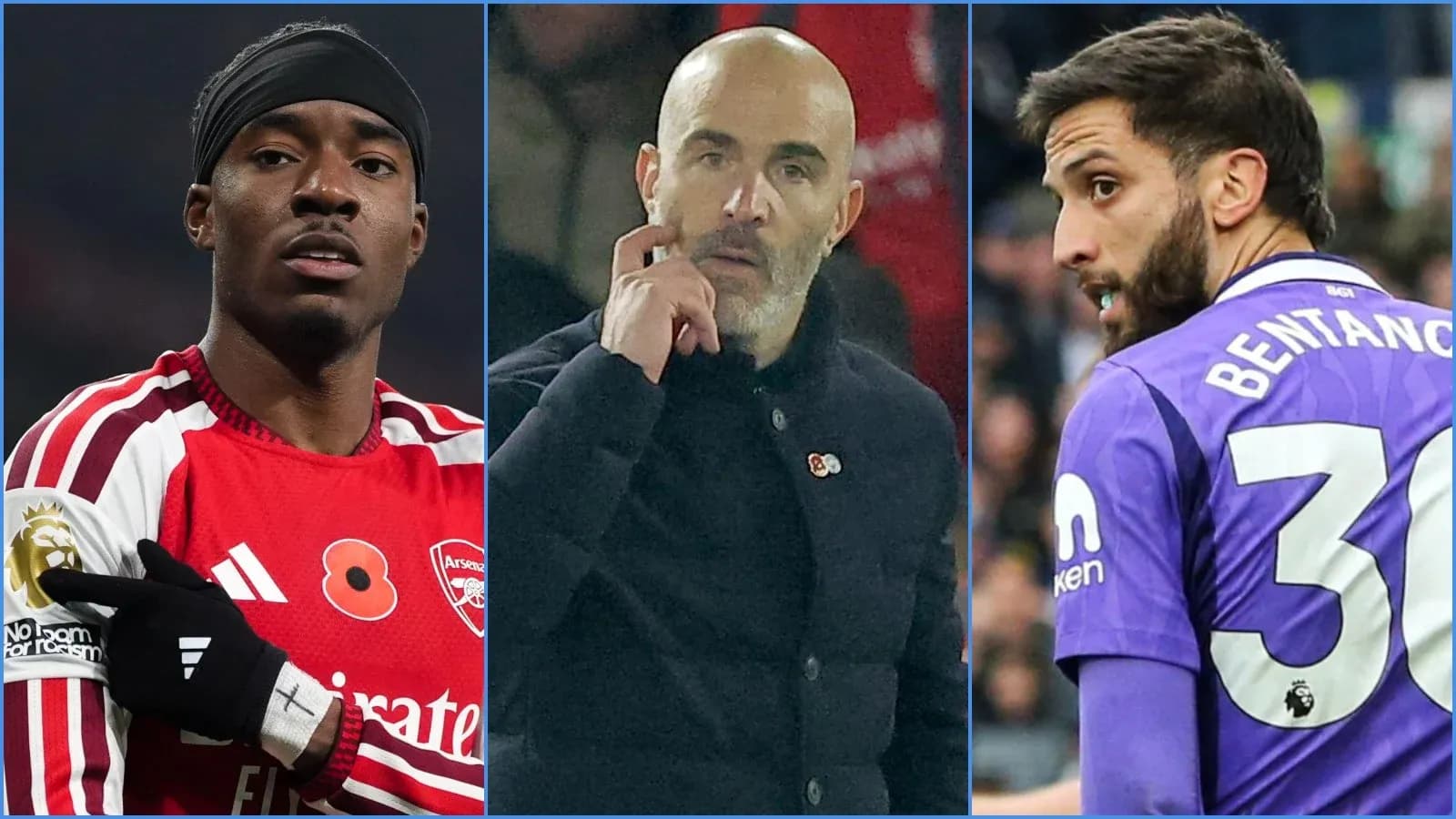
Noni Madueke, David Moyes and Rodrigo Muniz walk into the international break as winners. Unai Emery, both Manchester clubs and a cursed Spurs midfielder limp out of it wondering how on earth this league keeps exposing them.
The Premier League never does gentle resets. It spits out verdicts.
Brighton, Forest and the art of suffocation
Nottingham Forest first. On this evidence, they’re not just surviving; they’re striding towards something far bigger. This isn’t a plucky run. It’s the stride of a side that looks and feels like a title contender.
Brighton already know exactly who they are. Their last 10 Premier League wins have all come with clean sheets, built on 25 unanswered goals. Score first, shut the door, turn the key. If Brighton get in front, the contest feels over.
Pascal Gross runs the rhythm, Diego Gomez threatens from any range, and as long as everything stays in front of Luka Vuskovic, they crush you without ever breaking into a panic. The second-best team in the country? They’re playing like it. Get OOP’d into oblivion or get out of the way.
Liverpool sit 18th in the home table but top of the away standings and remain the only unbeaten side on the road. The long-standing fear that Anfield might be holding them back no longer sounds like a joke.
Bournemouth, meanwhile, have turned chaos into structure. In this calendar year alone they’ve set a new club record for their longest unbeaten run and matched their best sequence of consecutive wins, under two different managers. That’s succession planning, not blind luck. Evanilson’s knack for forcing individual errors has helped too; Bournemouth have scored at least twice as many goals from opposition mistakes as any other side. The only shame for them is the timing: they faced Manchester City before Marco Rose really joined the dots, and won’t see them again until April.
Hull are discovering a different kind of resilience. The last time they were in the Premier League, only four of their 22 defeats were by a single goal. This time, all three losses have been 1-0 or 2-1. It doesn’t change the fact their winless run has stretched to nine, but it does show an organised, combative team refusing to be the punchbag many predicted. Brighton after the break, though. That will test every bit of that resolve.
Ipswich can’t buy a clean sheet. Twenty-nine Premier League games without one is more than a quirk now; it’s a full-blown problem. The last time they shut anyone out at this level, Christopher Nkunku led the line with Joao Felix behind him. That feels like another era.
Madueke, the “different Noni” and a title charge
Noni Madueke has turned an international break snub into fuel. Arsenal’s wide forward has become the most influential player in the champions’ brutal run of nine games in 28 days, and he’s doing it with a swagger that suggests this is only the beginning.
Mikel Arteta called him “the best player in training in the last 10 days” and said he had “no option” but to start him when the club season resumed in October. By the time November’s pause arrived, the manager was talking about “a different Noni”.
The numbers back it up. In the league alone, Madueke has directly delivered four extra points: the only goal against Nottingham Forest and the shot that forced the breakthrough against Hull. Against the Tigers he was the game’s irrepressible force. No one had more shots (four) or won more duels (eight). He took at least five more touches in the opposition box than any other player and completed six dribbles – as many as everyone else combined.
Across the division, nobody is creating more chances per 90 minutes. The sample size is still only a month, but the profile is clear: this is the elite, decisive, game-breaking wide forward Arsenal didn’t manage to sign in the summer. And yet, even in his best form, there are rough edges. That overcomplicated late chance at the end of a stunning team move still screams of room to grow.
He responded to his previous England omission by flying himself to Portugal, drilling away until he went from undesirable to undeniable. Now he heads into another international break with more time to sharpen, driven by what looks very much like pure loathing for Thomas Tuchel and anyone who doubts him. Pity the full-back who has to deal with him when this pause is over.
Moyes and the eternal centre-forward factory
Say anything you like about David Moyes. Most people have, for the best part of 25 years. But the man knows how to build a Premier League centre-forward.
Thierno Barry is just the latest to walk into his orbit and walk out looking like a specialist. Moyes has a history of taking raw, awkward or underused forwards and turning them into brutally effective line-leaders. The Marko Arnautovic–Michail Antonio–Jarrod Bowen evolution at West Ham is the headline act, but Nikica Jelavic and Beto both hit 16 Premier League goals under him despite often looking like they’d just met a football.
Barry is now two shy of that mark in Moyes’ personal scoring charts. His brace against Coventry took him beyond James Beattie and into the company of Jermain Defoe and Duncan Ferguson, both on 15 under the Scot. It’s not hard to imagine Moyes genuinely believing Everton would have won the title in his first spell with Barry up front. He might not be wrong.
Brentford, by contrast, are learning hard lessons in discipline. Three red cards for violent conduct already, two of them in the last three games, is a line no serious mid-table side should cross. Igor Thiago’s dismissal drew more sympathy than Yehor Yarmoliuk’s, but both showed a naivety Brentford should have grown out of by now. Not since their debut Premier League season have they had as many as three reds. Keep ignoring the warnings and that tally will climb – along with the cost.
Muniz’s goal, and a reminder of what matters
Rodrigo Muniz’s first Premier League goal since the opening day of last season would have been significant on its own. The story he told after the draw with Newcastle turned it into something else entirely.
“Last season was really difficult for me because, now I can say it, but I had the surgery,” he said. “My wife was pregnant last season and, unfortunately, we lost the baby, but God is good all the time and now she’s pregnant again. The goal was for my baby, and I hope this season will be different than last season.”
A raw, human moment in a sport that too often forgets what its players carry with them. It is a lovely thing. Manchester United, for once, would do well not to trample it with their usual chaos.
Newcastle, meanwhile, are discovering the limits of their attacking numbers. On paper, there are 255 Premier League goals in this squad, more than most of the division. Reality is less flattering. Only two current players have ever hit double figures in a single top-flight season: Harvey Barnes for relegated Leicester in 2022/23, and Yoane Wissa across two campaigns at Brentford that have ended up costing Newcastle dearly in the market.
Joelinton sits third on their all-time Premier League list with 24 goals in six seasons. Jacob Murphy, the late hero against Fulham, has 23 in nine. Fifth is Fabian Schar. In Newcastle’s last 36 league games, only Will Osula (seven) has outscored Anthony Gordon and Bruno Guimaraes (six each). The summer sale of goals was never truly replaced, despite spending well over £250m. The table will not care how good the recruitment spreadsheet looks.
Ahoka, hidden gems and United’s blind spot
Jules Ahoka arrived at Sunderland in August for £8.6m as a defender with barely any senior football behind him. Two games. Ninety-eight minutes. Ninety of them at centre-half.
He has wasted no time. Five starts, a Europa League goal, and now what was essentially his full Premier League debut: thrown on in the fourth minute for the club captain against a Chelsea side boasting a £173m midfield. Ahoka responded by taking man-of-the-match honours and racking up more defensive interventions than anyone else on the pitch – 14 across tackles, interceptions, recoveries, clearances and headed clearances – in a clean-sheet win that might just have saved his manager some serious pressure.
The contrast is brutal. While Sunderland quietly pluck a gem from obscurity and drop him straight into the fire, Manchester United continue to live with the consequences of an expensive, muddled midfield rebuild that has yet to produce anything close to that level of clarity.
Leeds understand the value of a defender who simply does the job. Their win over Spurs was excellent and fully deserved, but the conversation among long-suffering fans still circles back to Tarik Muharemovic. The perception is brutal: not up to the physicality, not Premier League standard, not even a tipper. The numbers say something else. Muharemovic leads the entire division for clearances and headed clearances, by a distance. Leeds will keep rolling their eyes, but they’ll also keep picking him.
Senne Lammens, on the other hand, did the Goalkeeper’s Union no favours at all. Some performances you quietly forget. This was not one of them.
Liverpool away, Bournemouth’s edge and a Crystal Palace denial
Liverpool’s split personality continues. Anfield, once a fortress, has turned them into a mid-table home side. Away from home, they look like champions. Top of the away table, unbeaten, ruthless. The suspicion that the weight of their own history is heavier at home than on the road is only growing.
Bournemouth’s year tells a different story of adaptation. Record unbeaten runs and streaks of wins under different managers show a club that knows exactly what it wants to be. Evanilson’s ability to force errors has given them an extra edge; they’ve capitalised on opposition mistakes more than anyone else. This isn’t just good coaching. It’s smart squad building.
Crystal Palace, by contrast, feel stuck in a holding pattern. The inevitable appointment of Roy Hodgson hangs over everything. They can pretend otherwise, but everyone knows how this ends.
Emery’s Old Trafford curse and City’s uneasy transition
Unai Emery is both winner and loser here. Winner, because Manchester United’s current state makes it highly unlikely they will come near him now, sparing him the fate that has consumed far better managers. Loser, because Old Trafford remains his personal footballing nightmare.
Ten trips. Four different clubs. Five different United managers. Emery has led nine times in those games – 0-1 on four occasions, 1-2 twice, 0-2 twice and 2-4 once – and still hasn’t won there. It’s a curse that refuses to lift, no matter how well his Aston Villa side play the rest of the time.
Across town, Manchester City are trying to work out what they are without the old certainties. The novelty of dressing up as inflatable bananas and travelling 80-odd miles to watch a team in transition wears off quickly when the new-manager bounce fades and the siege mentality evaporates. This squad looks like a group of strangers more often than champions right now, which makes sense under a new coach. But it’s one thing to struggle on the pitch. It’s another to do it while carrying the weight of being found guilty of systemic cheating. Winning covers everything. This doesn’t.
Brentford’s indiscipline, Newcastle’s toothlessness, City’s disjointedness. The margins at the top and middle of the league are shrinking by the week.
Manchester United: bottom, briefly, and trapped in the maze
For two minutes and 46 seconds, Manchester United were bottom of the Premier League table. In November. In their tenth game of the season.
Fergie Time, that old friend, still flickers like a broken clock. Late goals turned what should have been back-to-back defeats into a comeback win and an absurd 4-4 draw. The drama is still there. The structure is not.
This will almost certainly go down as their longest continuous spell in the top-flight relegation zone since at least October 1986, when it finally became obvious Ron Atkinson could not carry on. That point with Michael Carrick has been reached and passed. Yet the club clings to the idea that a few more stoppage-time rescues might signal a corner turned in a maze that has already chewed up and spat out a decade’s worth of managers.
Fun, they call it. From the outside, maybe.
Bentancur’s curse and Spurs’ strange dependency
Rodrigo Bentancur’s season has become a case study in how one player can feel like a curse without actually doing much wrong.
Roberto De Zerbi carries the main blame for Spurs’ broader failings, that much is clear. But Bentancur’s numbers are stark. Spurs have scored zero goals with him on the pitch this season. They’ve conceded eight.
The sequence is almost comic. He starts against Aston Villa, comes off at 3-0 down in the 84th minute, and Spurs promptly score twice. He’s sent off at 1-0 down against Manchester United and somehow lights the fuse for a comeback. He then misses three games through suspension; Spurs win all three, conceding just once.
He returns with a promising substitute cameo against Leeds at 0-0 in the 65th minute, plays well, and still ends up setting up the winning goal – for Leeds. Coincidence? Misfortune? Some ancient curse? Whatever it is, the pattern is brutal: Spurs are consistently worse when Bentancur plays.
Levi Colwill knows all about how quickly reputations can turn. Once held up as a solution to Chelsea’s defensive problems, his absence last season, and Enzo Maresca’s public emotion, only enhanced his standing. Performances like this latest one, against the kind of physical, relentless forward who will be telling stories on podcasts in 20 years, do not erase his potential. But they do show how thin the margin is between answer and problem at Stamford Bridge.
The table is still young, the season still stretching out ahead. Yet the stories are already hardening: Madueke as Arsenal’s unexpected superstar, Moyes as the eternal centre-forward whisperer, Emery haunted by Old Trafford, United trapped in their own maze. The next time the Premier League pauses for international duty, how many of those narratives will have shifted – and how many will be set in stone?





