Political Tensions Rise Over 2030 World Cup Final Hosting Claims
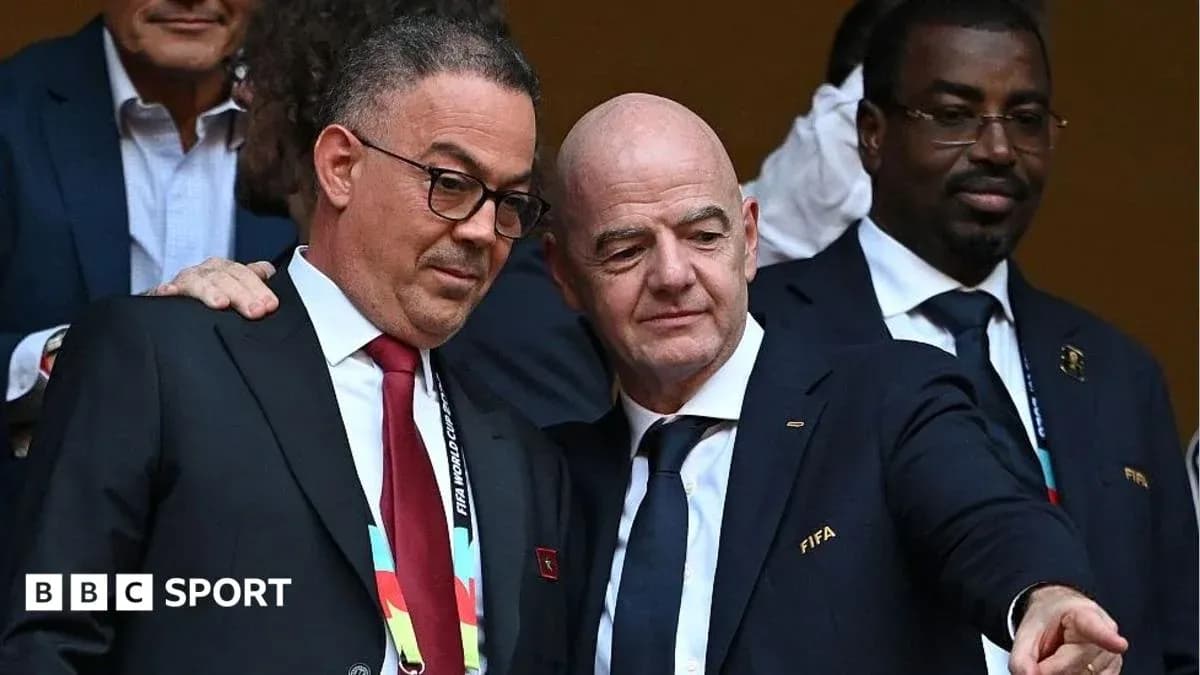
The 2030 World Cup is still six years away, but the battle for its showpiece match has already moved from the boardroom to the political stage.
Morocco’s prime minister Aziz Akhannouch has publicly told Fouzi Lekjaa, president of the Moroccan football federation (RMFF), to stop promising that Casablanca will host the final, warning him not to turn football’s biggest night into an election pledge.
The message was blunt. The setting, pointed. At a political rally, in front of supporters, Akhannouch called out Lekjaa’s recent declaration that Casablanca would have the “honour” of staging the 2030 final.
“Do not offer to host the big final game in Morocco while we still have not discussed the matter with our allies, Spain and Portugal,” Akhannouch said, urging restraint and unity within the three-nation bid.
“There should be some respect, brothers. Stop using electoral promises to pull the rug out from under us. These are huge matters. Deciding where the final will be held is a major issue.”
His intervention underlined how sensitive the question has become inside a joint bid that was sold to FIFA as a symbol of cross-continental cooperation.
A Shared World Cup, A Single Final
The 2030 men’s World Cup will be unlike any other. Morocco, Spain and Portugal will co-host the tournament, while the opening three matches are set for Uruguay, Argentina and Paraguay to mark the centenary of the first World Cup in 1930.
A list of proposed host stadiums is on the table, but nothing is locked in. Most crucially, FIFA has not yet decided where the final will be held.
World football’s governing body has kept its line tight: “a decision will be made in due course.” No hints, no favourites, at least not in public.
That vacuum has encouraged national federations to push their own case.
Spain Leaning on Its World Champion Status
In Spain, the tone is far more assertive. Rafael Louzan, president of the Spanish football federation (RFEF), has already said he expects the final to be played on Spanish soil and believes recent success has only strengthened their hand.
“Even though no decision has been taken, I believe Spain is the place because it cannot be any other way,” he told Cadena SER. “As you know, we are currently world champions.
“I believe Spain’s organisational capacity for major events is beyond question and that is why reality dictates that the grand final cannot and must not be held anywhere other than in Spain.”
Spain’s men’s team beat Argentina to win this year’s World Cup in July, a second global title that Louzan clearly sees as political capital. The country also has a long track record of hosting major football occasions and high-profile club finals.
Yet history offers a warning: the final venue is rarely confirmed early. For the 2026 World Cup, New Jersey was not announced as host of the final until February 2024, just two years before the tournament kicked off.
Stadiums as Statements of Power
Behind the rhetoric lies concrete, steel and capacity numbers.
Morocco is pressing ahead with plans for a new 115,000-seat stadium, a vast arena that would become the largest football stadium in the world. The project is a clear signal of intent: a venue built to impress FIFA and host the biggest game of all.
Spain counters with pedigree and modernisation. Real Madrid’s Santiago Bernabeu has undergone a major transformation and now holds 83,000, wrapped in a state-of-the-art shell designed for global events. Barcelona’s Spotify Camp Nou, once its renovation is complete, will rise to a capacity of 105,000, restoring its status as one of the game’s great cathedrals.
Each ground tells a different story. Morocco offers scale and symbolism, a new super-stadium anchoring a World Cup on African soil. Spain leans on tradition, infrastructure and the pull of two of the most famous club venues in the sport.
Allies, Rivals, and a Decision Still to Come
For now, all three European and African co-hosts are officially partners. They must present a united front to FIFA even as they lobby behind the scenes.
Akhannouch’s rebuke to Lekjaa laid bare the political tension that can sit beneath a joint bid. Spain’s confident positioning, Morocco’s ambitious construction plans, Portugal’s quieter role in the background – all of it feeds into a contest that FIFA alone will settle.
The stadiums will be ready. The bids will be polished. The arguments will be loud.
At some point, FIFA will pick a city and a stadium for the 2030 World Cup final. The real question now is whether this shared tournament can carry the weight of national ambition without cracking the alliance built to win it.