Pochettino's Vision for US Soccer: Beyond the World Cup
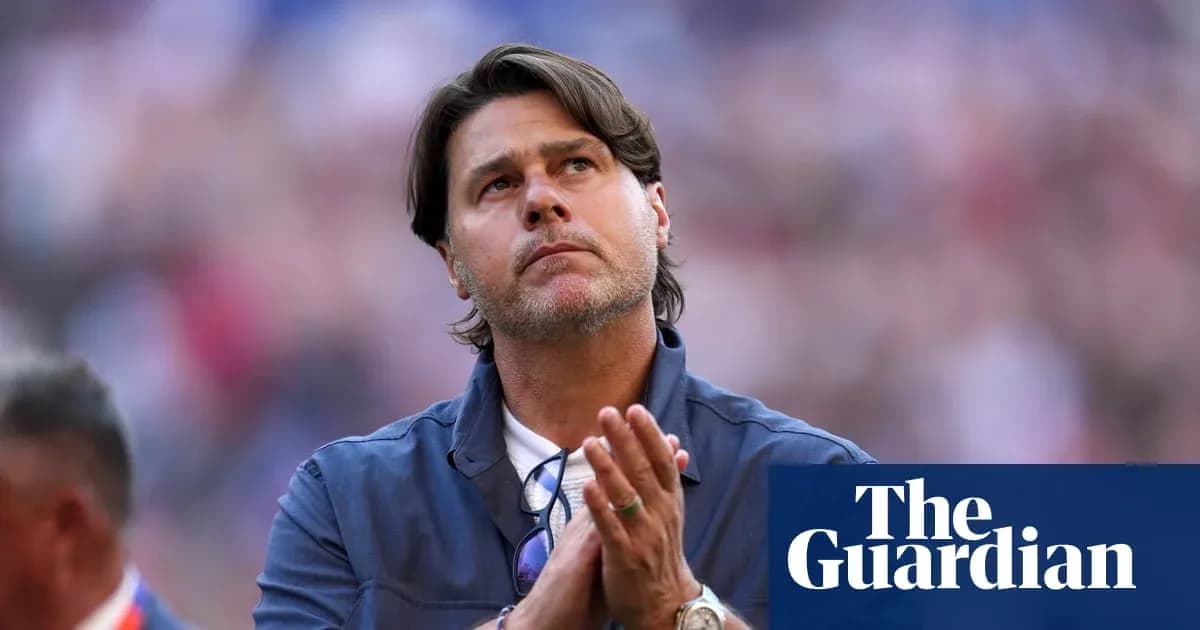
Two months after the World Cup collapse, Mauricio Pochettino is back on the training pitch, back in meeting rooms, back in the thick of it. The disappointment still hangs in the background, but the job in front of him has grown bigger than a single tournament, or even a single cycle.
When he took the US men’s national team job in 2024, many inside and outside the federation saw him as a short-term specialist: a high-end tournament coach hired to squeeze every drop out of a home World Cup. Instead, the relationship evolved. By August, US Soccer had put a new contract in front of him, and Pochettino had signed on for something far more ambitious than just getting through qualifying.
The friendlies against Peru, Chile, Mexico and Canada later this month will be the first glimpse of “Phase Two.” They matter, but not in the way qualifiers or knockout games do. These matches are tune-ups for a broader project: securing a place at the 2030 World Cup and, just as importantly, reshaping how the sport functions in the United States.
Pochettino, the architect
Pochettino has been clear about why he stayed.
For him, this is a chance to leave a mark that goes beyond a bracket or a final whistle. He talks about “a lasting impact on the sport in the country that has welcomed us so warmly” and about building something that outlives his tenure on the touchline. US Soccer’s announcement of his renewal underlined that shift. This is no longer just a head coach. This is a figure with influence across the entire pyramid.
The federation has given the Argentinian a louder voice in youth development, coaching education and collaboration with the professional leagues. No US coach has ever been handed this kind of reach. Technical directors and executives have shaped the sport here; now the national team manager is being asked to help steer the whole program.
He will not have to wait long to weigh in. US Soccer is in the middle of a major restructuring and is hiring two new directors to oversee the men’s and women’s senior and youth setups. Pochettino made it clear he wants to be part of that process, but not to dominate it. As he joked on Monday, this cannot simply be about “my guy.”
What he does want is scale.
“This is the future of the USA,” he said. Perform at the World Cup. Create something special with the fans. Build a legacy that pushes the country toward becoming “one of the most powerful countries in soccer.” He calls it a dream. He sounds like a coach who expects to be judged not only on scorelines, but on whether he helped push the sport into a different tier.
The calendar reflects those ambitions. The US will be at the Los Angeles Olympics in 2028. It is widely reported they may also play in Copa América that same summer. Two major tournaments on home soil, wrapped around a World Cup cycle, give Pochettino a rare runway to test young players, harden a core and sell a vision to a skeptical sporting public.
Balogun’s bruising deadline day
If the long-term project looks expansive, the short-term reality remains personal. Folarin Balogun felt that on deadline day.
The Monaco striker, fresh off a breakout World Cup, looked set for a big-money move. Everton came calling. The Premier League stage beckoned. Then, in the space of a few hours, the deal crumbled. Everton flagged a potential fitness concern. Monaco and Balogun pushed back. The move died anyway.
Balogun is not the first player to see a dream transfer vanish in the final hours of a window. That does not make it easier for a 25-year-old forward whose profile and confidence had just surged on the world stage.
Pochettino did not distance himself from the situation. He leaned in.
“Yes, it’s difficult because you cannot influence that decision,” he said. The club doctors, the executives, the lawyers — they control those last-minute calls. A national team coach can only watch. So he has chosen to support.
“In some special cases, like Flo’s, I will call in the next few days,” Pochettino added. He wanted to give Balogun a little space after the Everton collapse, to let the noise die down, then hear directly from the player what happened.
The message from the coach is simple: Monaco or somewhere else, Balogun remains central to the US project. “He’s an important player for us, he was an important player in the World Cup and I hope that he can find being in Monaco, or in another place, his best place to perform in the best way.”
For a team still searching for ruthless, reliable goals at the highest level, that hope is not a luxury. It is a requirement.
The delicate dance with dual nationals
Selection for the upcoming camp remains largely under wraps. One name, though, is already off the list: Augsburg center-back Noahkai Banks.
The 19-year-old, eligible for both Germany and the United States, is still weighing his international future. He has spoken publicly about wanting to decide by “the next international break, or at the latest by the international break after next.” In Germany, reports say new national team coach Jürgen Klopp has already scouted him in person. That sort of attention sharpens any teenager’s choices.
Banks will not feature for the US this window. Pochettino accepts that. He also knows that in the modern game, winning these battles at the margins — the players who can choose more than one flag — can tilt a generation.
“We are in contact with all the potential dual nationals,” he said. For him, the key is not pressure, but connection. Phone calls, visits, honest conversations about role and pathway. “That is the human connection that is so important.”
In Banks’s case — “Noki,” as Pochettino called him — there is no decision yet. That means no call-up, at least not now. Still, the federation keeps working, keeps talking, keeps the door open.
If a player feels ready “to defend and they want to fight and to be part of our national team,” Pochettino insists, and if the staff believes they have earned it, “of course we are going to call them up.”
The message to dual nationals is clear: the US will not beg, but it will not disappear either. The conversation continues until the player closes it.
A project stretching toward 2028 and beyond
The next few weeks will bring lineups, substitutions and tactical tweaks against Peru, Chile, Mexico and Canada. On the surface, they are friendlies. Underneath, they are early chapters in a longer story.
Pochettino is now more than a coach chasing qualification for 2030. He is being asked to help shape the sport’s infrastructure, influence who leads the youth pathways, and convince the next wave of talent — from Balogun to Banks and beyond — that the US is a place where they can compete with the world’s best.
The World Cup exit still stings. The Olympics in Los Angeles loom. Copa América may join the calendar. The stakes keep rising.
The question now is not whether the US can host the world. It is whether Pochettino can help turn the country into the kind of soccer power he keeps talking about — and whether this generation of players is ready to carry that weight.