
Pochettino's Potential Rebuild at Manchester United
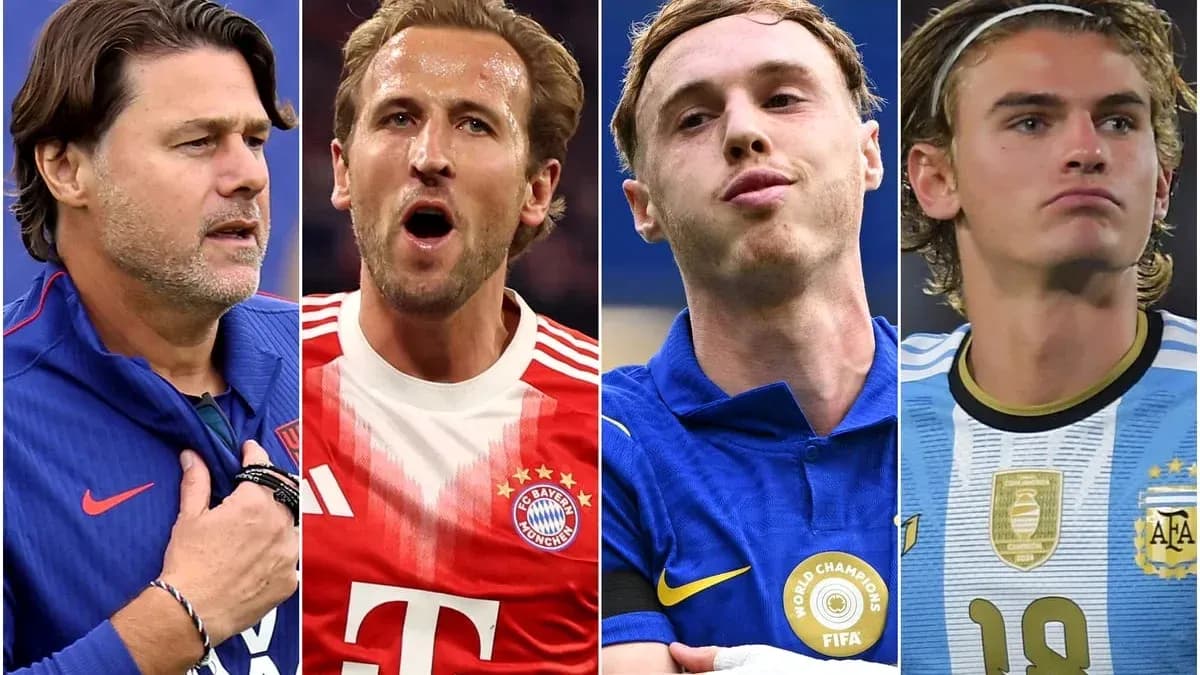
Manchester United’s hierarchy has slipped quietly into Monaco, but there is nothing discreet about the scale of the decision in front of them. Michael Carrick’s future is on the table. Mauricio Pochettino’s name is back in bold.
United sit in the relegation zone after their worst league start in 40 years. That is not a wobble. It is a crisis. And crises at Old Trafford usually end the same way: with a new man in the dugout and another attempt to rebuild a fallen giant.
This time, that man is expected to be Pochettino.
A rebuild with teeth
If United move for him, they know the price. Not just his contract, but the squad surgery that follows. Pochettino does not do half-measures. He demands intensity, athleticism, and a clear structure. To give him that, United would have to back him heavily in the transfer market in January and beyond.
The question almost writes itself: what would a Pochettino-era United actually look like on the pitch?
Start with the goalkeeper. Senne Lammens has made errors, including a few that have ended up in his own net, but he remains a recent signing with potential. He is not the headline problem. For now, that department survives the cull. If it is not completely broken, Pochettino tends to leave it alone and fix the chaos in front.
The full-back areas are another story entirely.
Full-backs: from weakness to weapon
At Tottenham, Pochettino turned full-backs into a superpower. Young, hungry, aggressive defenders who could run all day and squeeze opponents into submission. At United, those positions have become a recurring headache.
Luke Shaw’s injury record continues to wreck any rhythm he tries to build. Diogo Dalot, in his ninth season at Old Trafford, still has not convinced as a long-term answer. United’s flanks, once a source of thrust, now feel fragile.
Pochettino’s ideal fix? Profiles like Lewis Hall and Archie Gray. Hall, tied to a new contract, and Gray, flourishing at Spurs, are not easy targets, but they are the type he would push for. Both are young but already proven Premier League performers, comfortable on the ball, committed without it, and capable of sustaining the kind of high-tempo game he craves. Gray, in particular, carries the air of a future leader.
Whether United could actually prise them away is a different battle. The lure, though, is obvious: work under a coach with a track record of turning promising full-backs into some of the league’s best.
An Argentine spine and a rising star
At centre-back, the Argentina connection looms large. Lisandro Martinez, already a fan favourite for his aggression and bite, would sit right in Pochettino’s plans. The new manager’s fondness for high-ceiling young players makes that relationship almost inevitable.
Next to him, a defender like Leny Yoro fits the blueprint. At just 20, Yoro represents exactly the sort of long-term project Pochettino relishes: raw talent, mouldable, with the potential to anchor a back line for a decade.
Move into midfield and the blend changes: youth stitched to experience.
Youri Tielemans would be asked to set the tempo, to take responsibility in possession and guide the team through games. Alongside him, Kobbie Mainoo would learn in real time, growing into the role under a manager who has never been shy about trusting young midfielders in big moments.
Ahead of them, the creativity gets a reshuffle.
Palmer wide, a new No.10 in the middle
A reunion with Cole Palmer would be a tantalising subplot. Palmer played his best football in blue under Pochettino at Chelsea, blossoming into a ruthless, inventive forward. At United, he would be stationed on the right, drifting inside, linking play, and attacking the box.
But not as the central No.10. That space, in this imagined XI, is reserved for Bruno Fernandes’s successor.
One plausible candidate stands out: Nico Paz of Como. An Argentina international, Paz is exactly the type of No.10 Pochettino likes to challenge — technically gifted, still forming his identity at the top level, and open to being pushed to that “next step” that has defined so many of the Argentine’s success stories.
On the opposite flank, Marcus Rashford keeps his place on the left. Pochettino would demand more pressing, more consistency, more responsibility without the ball, but the raw tools — pace, direct running, finishing — remain too valuable to discard.
Which leaves the most scrutinised position of all at Old Trafford.
The striker problem, again
United’s search for a reliable No.9 has become a running saga. Benjamin Sesko would be studied closely, as would the rest of a thin market where genuine top-level strikers are rare and painfully expensive.
In this scenario, the solution is not a marquee superstar but Bryan Mbeumo.
The Cameroonian has spent much of this season playing out of position up front, yet still emerged as one of the few bright spots in a torrid spell under Carrick. Intelligent movement, relentless work-rate, and a knack for finding space between defenders make him a compelling option for a coach who values collective effort as much as individual brilliance.
Of course, in an ideal world, Pochettino would simply pick up the phone and bring Harry Kane with him. Their bond from Spurs, Kane’s all-round game, his guarantee of goals — it all fits. Reality intervenes. Kane has just become Europe’s highest-paid player by base salary after signing a new three-year deal with Bayern Munich. That door is shut.
So Mbeumo leads the line. Not the headline name many supporters dream of, but a forward who fits the system and the manager’s demands.
From Monaco boardrooms to Old Trafford’s dugout, the stakes are brutally clear. If United do turn to Pochettino and arm him with this kind of squad, the excuses run out quickly. The next chapter will not be about potential. It will be about whether one of the modern game’s most respected coaches can drag a drifting giant back into contention — or whether this is simply the latest ambitious blueprint destined to be torn up and rewritten.





